


































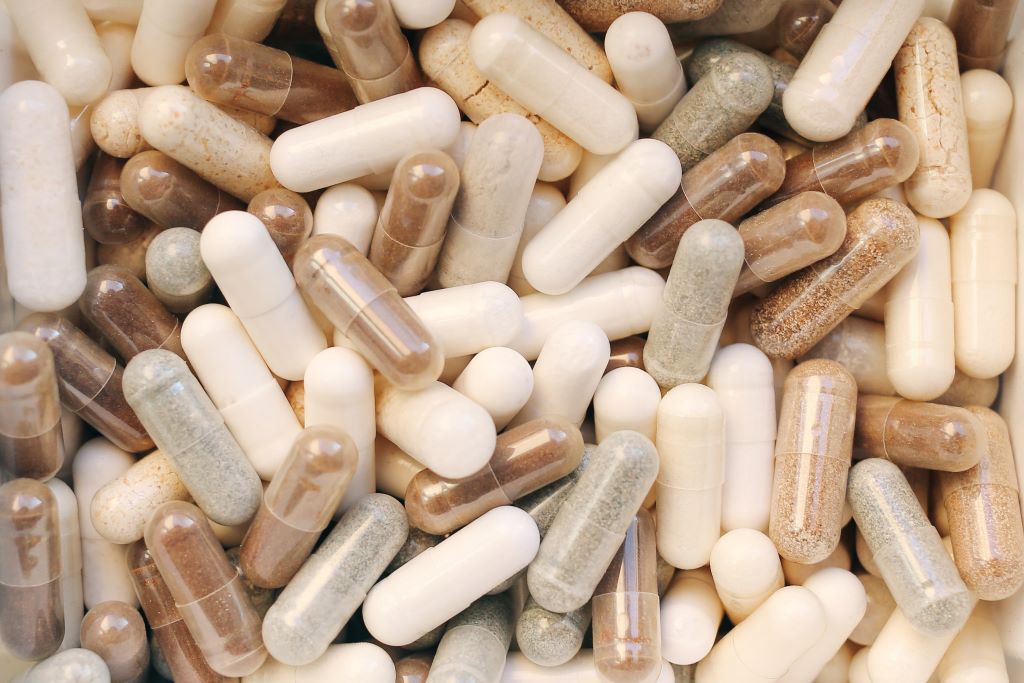
Whether launching a new brand or expanding an existing line, nutraceutical entrepreneurs must understand how active vs. inactive ingredients complement one another to create supplements that deliver consistency, stability, and consumer trust. While active ingredients are the core substances that deliver the intended nutritional purpose, inactive ingredients, often referred to as excipients, are equally important for ensuring the capsule’s stability, consistency, and usability.
For brand owners, recognizing the difference between active and inactive ingredients helps clarify not only how products are formulated but also why both types of ingredients are necessary for a reliable finished supplement.
What Are Active Ingredients in Capsules?
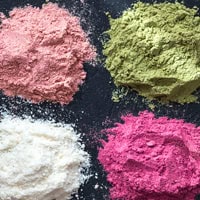
When asking “what is an active ingredient?”, it helps to think of it as the core dietary component that gives a supplement its identity. Active ingredients can include vitamins, minerals, herbs and other botanicals, amino acids, or other substances that supplement the diet. They may also appear in the form of concentrates, extracts, or blends, depending on the formulation.
The active ingredient is the primary element consumers look for when choosing a supplement. For example, in a capsule labeled as a turmeric supplement, turmeric extract serves as the active ingredient, while in a multivitamin, the active ingredients are the various essential vitamins and minerals.
For supplement brand owners, clearly identifying the active ingredient is fundamental. It ensures transparency, supports proper formulation, and communicates the health benefits of the product to consumers.
Common Active Ingredients Used in Capsule Supplements
There are hundreds of potential active ingredients that can be formulated into capsule supplements. While it isn’t practical to list them all, the examples below highlight some of the most common categories:
- Vitamins – A, D, E, K, C, thiamin, riboflavin, niacin, vitamin B6, vitamin B12, pantothenic acid, folate, biotin.
- Minerals – Calcium, magnesium, phosphorus, potassium, iron, zinc, selenium, chromium, copper, molybdenum, boron, trace minerals.
- Food Extracts – Soy isoflavones, phosphatidylserine, Alpha-GPC, Red Yeast Rice, MSM, Colostrum, proteolytic enzymes, grape seed/pine bark extracts, quercetin, resveratrol.
- Carotenoids – Beta-carotene, lutein/zeaxanthin, lycopene, astaxanthin.
- Amino Acids & Peptides – L-arginine, branched chain amino acids, L-carnitine, acetyl-L-carnitine, L-citrulline, creatine, L-cysteine, L-glutamine, L-glutathione, L-lysine, N-acetylcysteine, L- or DL-phenylalanine, S-adenosylmethionine, L-tryptophan, L-tyrosine.
- Fibers, Pectins & Sterols – Psyllium, apple pectin, beta-sitosterol.
- Vitamin Relatives – Coenzyme Q10, alpha lipoic acid, PQQ, tocotrienols, pantetheine.
- Miscellaneous Nutraceuticals – Glucosamine sulfate, chondroitin sulfate, calcium-D-glucarate, DHEA, betaine hydrochloride, probiotics, prebiotics, postbiotics.
- Herbs – Ashwagandha, Asian Ginseng, Astragalus, Black Cohosh, Chaste Berry, Echinacea, Eleuthero, Ginger, Green Tea, Guggul, Hawthorn, Maca, Milk Thistle, Rhodiola, Schizandra, Turmeric, Valerian.
What Are Inactive Ingredients (Excipients) in Capsules?
So, what do inactive ingredients mean? In capsule formulations, these are substances that are not considered dietary ingredients or nutraceuticals, and they do not provide the primary nutritional purpose of the supplement. Instead, inactive ingredients, often referred to as excipients, are carefully selected to support the product’s formulation, stability, and usability.
These components play an essential role in ensuring capsules are manufactured consistently, remain stable throughout their shelf life, and are easy for consumers to take. Without them, even the highest-quality active ingredients would be difficult to deliver in a reliable finished product.
Why Inactive Ingredients Matter
Inactive ingredients play an essential role in capsule formulation. They can improve the flowability of the powder during manufacturing, ensure that each capsule is filled to the correct volume, and provide other functional properties, such as aiding in disintegration or anti-caking, that enhance stability and usability. Without these supportive components, producing consistent, high-quality supplements would be far more difficult.
Common Inactive Ingredients Found in Capsules
Below are some of the more common types of inactive ingredients used in capsule dietary supplements:
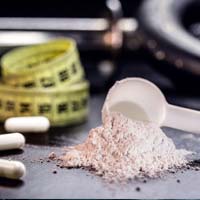
- Fillers – Fillers help increase the volume of the powder in the capsule so that there won’t be any empty space once the capsule is filled. Cellulose materials, rice powder, etc. are commonly used as fillers.
- Lubricants – These prevent ingredients from sticking to the manufacturing equipment. Magnesium stearate and stearic acid are commonly used lubricants, but “clean label” alternatives include specialized rice extracts.
- Anti-Caking Agents – These prevent the powdered ingredients from clumping together, ensuring proper flow during manufacturing and consistent dosage. Silicon dioxide (silica) is commonly used for this purpose.
- Coatings – Enteric coatings and other similar types of coatings are sometimes used to help the capsule resist disintegration in the acidic environment of the stomach and release the active ingredients in the alkaline environment of the intestine.
What is the Difference Between Active and Inactive Ingredients?
Now that we’ve defined active and inactive ingredients, it’s time to focus on the core question: What is the difference between active and inactive ingredients?



By now, I think you know the answer to this question. But, just as a reminder, active ingredients are the dietary components that define the product’s purpose, while inactive ingredients, also called excipients, support the manufacturing process and help ensure that the finished capsules are consistent, stable, and easy to use. Both types of ingredients are necessary for a reliable, high-quality supplement.
Some supplement brands highlight claims such as “no fillers” or “no excipients.” While this may sound appealing on the surface, in practice, excipients serve critical functions. Without fillers, capsules may contain empty space, which can give the impression of a low-quality product. Without anti-caking agents, powdered ingredients can clump together, disrupting production and requiring equipment shutdowns for cleaning. And without lubricants, powders may not flow properly through the machinery, resulting in inconsistent or incomplete capsule fills.
Where Can You Find Ingredient Information in Supplements?
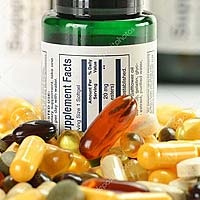
Consumers can find both active and inactive ingredients listed directly on a supplement label. Active ingredients appear within the Supplement Facts panel, while inactive ingredients are usually placed in the Other Ingredients section, located just below the panel. This distinction helps ensure transparency and allows consumers to clearly see which components define the product’s purpose and which support its overall formulation.
Trusted Online Databases for Ingredient Details
If you are seeking reliable information about ingredients used in dietary supplements, the following online databases are highly respected resources:
- Office of Dietary Supplements (National Institutes of Health) – The mission of this organization is to coordinate cutting-edge dietary supplement research across NIH ICOs and other federal agencies to foster knowledge and optimize health across the lifespan.
- Examine® – This group constitutes the largest database of nutrition and supplement research on the internet, with more than 30 researchers, half working full-time, to analyze the full body of evidence to help people become healthier.
- Linus Pauling Institute, Micronutrient Center (Oregon State University) – This organization is a source for scientifically accurate information on the functions and health effects of all micronutrients, as well as other nutrients and dietary factors, including many phytochemicals that may affect health.
Key Considerations for Selecting Capsule Supplements Based on Ingredients
When exploring potential active and inactive ingredients for your capsule supplement formulation, there are important factors you must consider. Both types of ingredients play vital roles in creating a product that is stable, consistent, and aligned with quality standards.
Considerations for Active Ingredients
When evaluating active ingredients for capsule supplements, several important factors should be assessed:
- Effectiveness – Does the active ingredient in question have adequate science supporting its suitability and effectiveness for the purpose intended? Will its inclusion in your formula at the levels provide support for the claims you want to make? If the answer to either of these questions is no, you may want to consider other choices.
- Safety Profile of Active Ingredients – Are your active ingredients classified as at least one of the following: 1) Generally Regarded as Safe (GRAS), 2) or do they have a New Dietary Ingredient (NDI) submission, 3) or are they on the Old Dietary Ingredient (ODI) list indicating that they were in commerce before October 1994? If the answer is no, they may not be lawfully considered to be suitable for use in dietary supplements
- Bioavailability – Be sure the active ingredients you select have acceptable bioavailability. If not, you may be able to find an alternative version of the same ingredient with better bioavailability. Remember, poor bioavailability means that it is unlikely that your customer will experience good results.
- Ingredient Stability – Some ingredients have poor stability. That means that it may lose a critical amount of its potency before your customer ever has the chance to use it. You’ll want to verify that your ingredients all have acceptable stability.
Considerations for Inactive Ingredients
When evaluating inactive ingredients, I advise you to keep the following factors in mind:
- Inert Excipients – Confirm that all excipients are truly inert and will not interfere with the absorption or function of the active ingredients. A reputable contract supplement manufacturer will rely on proven excipients that are widely recognized as safe and effective for formulation support.
- Safety and Tolerability – Ensure that the excipients selected have a strong history of safe use and tolerability. Partnering with an experienced capsule supplement manufacturer helps provide confidence that only appropriate excipients are included.
- Common Allergens and Sensitivities – Excipients are generally free from common allergens, but some manufacturers still use ingredients like lactose as fillers. Given the prevalence of lactose intolerance, it’s best to avoid such choices to ensure broader consumer acceptance.
Wrapping Up the Discussion About Active vs. Inactive Ingredients
Understanding the roles of active vs. inactive ingredients is essential for anyone developing capsule supplements. Active ingredients define the identity and purpose of the product, while inactive ingredients ensure proper formulation, stability, and consistency. Both are essential for producing supplements that are consistent, high-quality, and compliant with regulatory standards.
When selecting a capsule manufacturer, it’s important to partner with a contract development and manufacturing organization (CDMO) that demonstrates a proven commitment to quality. Look for third-party certifications such as GMP, NSF, NSF Certified for Sport, or FSSC 22000 to verify adherence to industry-leading standards. These certifications ensure your supplements are produced to the highest standards of integrity, safety, and consistency, reinforcing your brand’s reputation for quality
Are you ready to turn your knowledge of active and inactive ingredients into a premium capsule supplement? If so, call 800-526-9095 to speak with one of our knowledgeable production specialists or request a nutraceutical manufacturing price quote if you’ve already finalized your project requirements!
Frequently Asked Questions about Active vs. Inactive Ingredients in Capsules
Why is it important to know the active and inactive ingredients in supplements?
You want to make sure of the quality and efficacy of both the active and inactive ingredients in your supplement to be sure that they are the best choices to produce the best supplement with the greatest likelihood of providing safety and benefits
Can inactive ingredients affect the effectiveness of a supplement?
Yes. If a supplement contract manufacturer makes poor choices when selecting inactive ingredients, it can compromise the formulation. Inactive ingredients play an important role in factors such as bioavailability, stability, and capsule consistency. When selected improperly, they may reduce the overall quality and reliability of the finished supplement.
Are there any concerns with inactive ingredients in supplements?
Inactive ingredients are necessary to help facilitate a functional and consistent formulation. One “old school” inactive ingredient that should be avoided is the milk sugar, lactose. Many people are lactose intolerant, and there are plenty of preferred alternatives.
How can I check the ingredients in my supplements?
Good, reputable sources you can use to check the ingredients in your supplements include the Office of Dietary Supplements, Examine®, and the Linus Pauling Institute. Each of these provides scientifically accurate information on the functions and health effects of ingredients found in dietary supplements.