








































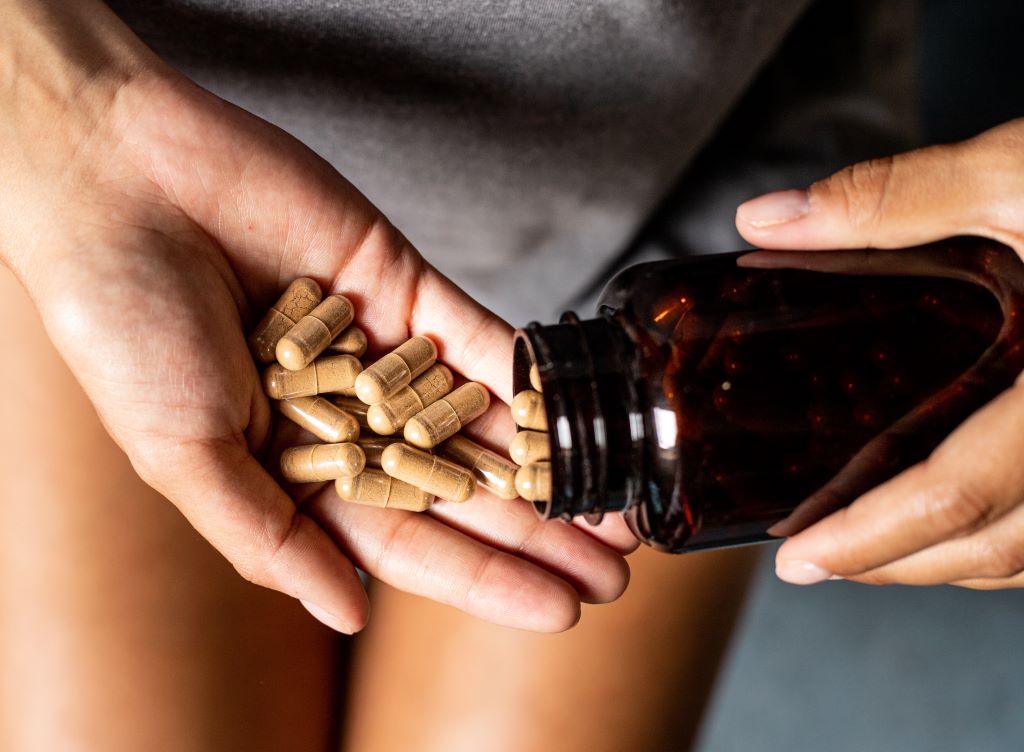
Ashwagandha has earned a strong reputation as a popular adaptogenic ingredient used to support overall wellness. Its market growth reflects that popularity. According to Future Market Insights1Ashwagandha Extract Market Set to Surpass USD 1,787.2 Million by 2035 Amid Rising Demand for Herbal Supplements | Future Market Insights, Inc. Future Market Insights Global and Consulting Pvt. Ltd. March 5, 2025. Retrieved October 15, 2025 from https://finance.yahoo.com/news/ashwagandha-extract-market-set-surpass-093000999.html?guccounter=1&guce_referrer=aHR0cHM6Ly93d3cuZ29vZ2xlLmNvbS8&guce_referrer_sig=AQAAAL53heKrUPFMTukpspfl3Q2HtZIbm6oNSXnIFDAYh_ZHsJoeVjoQd09L1L-rcWaJOFJhhsFqUJ5Bmof9HR-Ye5h_Y5r8JS7fGlWYWZSao403FwYfNLXTaimll3hxTTPBVth-mZRYDYVj6A5zJQoqwKOxK-zvdM3NTrBvrNwlvn9k, the global ashwagandha market is projected to reach $815.7 million by the end of 2025 and expand to $1.78 billion by 2035, representing a compound annual growth rate (CAGR) of 8.2%.
Given this rising demand, ashwagandha is now available in a range of supplement delivery formats, most notably gummies, capsules, and tablets. As a result, both consumers and supplement brand owners often ask the same question: Which is better, ashwagandha gummies, capsules, or tablets?
In this article, we’ll explore the differences between ashwagandha gummies vs. capsules and tablets, examining how each format affects factors such as formulation, user experience, and manufacturing considerations to help you choose the right format for your brand.
What is Ashwagandha and Why Take It?
For more than 3,000 years, ashwagandha (Withania somnifera) has been used in traditional Ayurvedic medicine.2Anonymous. Monograph. Withania somnifera. Altern Med Rev 2004;9:211-4. Nearly 2,000 years ago, Dioscorides described it as a “Rasayana”—meaning a rejuvenator “that promotes a youthful state of physical and mental health and expands happiness”.3Uddin, Q., Samiulla, L., Singh, V.K. and Jamil, S.S. Phytochemical and Pharmacological Profile of Withania somnifera Dunal: A Review. JAPS 2012;2:170-5.
Modern consumers continue to value ashwagandha for its adaptogenic properties,4Singh, N., Bhalla, M., de Jager, P. and Gilca, M. An Overview on Ashwagandha: A Rasayana (Rejuvenator) of Ayurveda. Afr J Tradit Complement Altern Med 2011;8:208-13. 5Provino R. The role of adaptogens in stress management. Aust J Med Herbal. 2010;22:41-9 which helps the body maintain balance and adapt to physical and mental stressors. Research suggests that ashwagandha may support healthy stress responses,6Lopresti AL, Smith SJ, Malvi H, Kodgule R. An investigation into the stress-relieving and pharmacological actions of an ashwagandha (Withania somnifera) extract: A randomized, double-blind, placebo-controlled study. Medicine (Baltimore). 2019 Sep;98(37):e17186. promote restful sleep,7Deshpande A, Irani N, Balkrishnan R, Benny IR. A randomized, double blind, placebo controlled study to evaluate the effects of ashwagandha (Withania somnifera) extract on sleep quality in healthy adults. Sleep Med. 2020 Aug;72:28-36. enhance energy and endurance,8Lopresti AL, Drummond PD, Smith SJ. A Randomized, Double-Blind, Placebo-Controlled, Crossover Study Examining the Hormonal and Vitality Effects of Ashwagandha ( Withania somnifera) in Aging, Overweight Males. Am J Mens Health. Mar-Apr 2019;13(2):1557988319835985. and contribute to overall wellness.9Tharakan a, Shukla H, Benny IR, et al. Immunomodulatory Effect of Withania somnifera (Ashwagandha) Extract—A Randomized, Double-Blind, Placebo Controlled Trial with an Open Label Extension on Healthy Participants. J Clin Med. 2021; 10(16): 3644.
Key Differences Between Ashwagandha Gummies and Pills
Understanding the distinctions between ashwagandha tablets and capsules vs. gummies is essential for supplement brand owners who want to balance formulation, consumer experience, and product performance.
| Feature | Ashwagandha Gummies | Ashwagandha Capsules and Tablets |
| Dosage | Typically lower dose | Higher concentration and more precise |
| Sugar Content | Contains sugar or sweeteners | No sugar or sweeteners |
| Taste | Bitter taste is difficult to mask | Taste is not a concern |
| Additional Ingredients | Coloring agents required | No coloring agents |
Dosage
There are a few clinically studied ashwagandha extracts, and even some studies on dehydrated plant powder. Most extract-based studies use around 600 mg per day, although some have found benefits at doses as low as 120 mg per day. Studies on dried plant powder typically use several grams daily.
Because ashwagandha has a naturally bitter taste, this affects how much can be used in flavored delivery systems.
- Ashwagandha Gummies: The bitterness of ashwagandha can be difficult to mask in a gummy format. To reduce bitterness, manufacturers often use smaller doses that may not deliver the same potency found in clinically studied extracts.
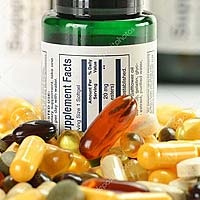
- Ashwagandha Capsules and Tablets: Since consumers don’t taste the ingredients, capsules and tablets can deliver a clinically relevant dose in just one or two servings.
Taste
- Ashwagandha Gummies: Some consumers enjoy the chewiness of gummies, but ashwagandha’s naturally bitter flavor often requires significant use of flavoring and masking agents. These additives are not always well-received by consumers seeking clean-label products
- Ashwagandha Capsules and Tablets: Standard capsules and tablets are flavorless and do not require taste-masking ingredients, making them ideal for consumers who prefer simplicity. However, taste does become important when formulating chewable ashwagandha tablets. In this case, chewable tablet supplement manufacturers must address the herb’s bitterness through careful flavor balancing and excipient selection to ensure a palatable experience without compromising dose integrity.
Sugar Content
- Ashwagandha Gummies: Many gummy supplements contain relatively large amounts of sugar. This is problematic since, according to Harvard Health, excessive sugar consumption, particularly of added sugar, is linked to a wide range of harmful health effects, including increased risk of type 2 diabetes, heart disease, certain cancers, and even depression.10The sweet danger of sugar. Harvard Health Publishing, Harvard Medical School. January 6, 2022. Retrieved July 9, 2025 from https://www.health.harvard.edu/heart-health/the-sweet-danger-of-sugar. Using artificial sweeteners instead of sugar is often poorly received by consumers as an alternative sweetening method.
- Ashwagandha Capsules and Tablets: These delivery forms generally do not require artificial colors or flavors, offering a simpler formulation that supports cleaner labeling and broader consumer appeal.
Additional Ingredients
- Ashwagandha Gummies: In addition to sugar and flavoring agents, gummies may also contain artificial colors, some of which have become controversial among health and nutrition authorities. Gummies may also appeal to children, which increases the risk of accidental overconsumption.
- Ashwagandha Capsules and Tablets: These delivery forms generally do not require artificial colors or flavors, offering a simpler formulation that supports cleaner labeling and broader consumer appeal.
Shelf Life and Storage
- Ashwagandha Gummies: Never forget that gummies are a confectionery (i.e., candy) delivery form and typically have a shorter shelf life than capsules or tablets. Over time, gummies may lose moisture and become firmer, especially if exposed to heat or humidity. Some formulas may also experience a gradual reduction in potency.
- Ashwagandha Capsules and Tablets: Capsules and tablets are more stable and have a longer typical shelf life, often 24 months or longer. This makes them more practical for long-term storage and larger production runs, which can benefit both consumers and brand owners.
So, now that you’ve reviewed the evidence on ashwagandha gummies vs. capsules and tablets effectiveness, let’s take a closer look at which format may best fit your brand and your customers’ health and wellness needs.
Which Is Better: Ashwagandha Gummies or Capsules and Tablets?
When asking the question, “Which is better, Ashwagandha gummies or capsules?” the evidence tends to favor capsules and tablets. Gummies often contain added sugars, artificial colors, and flavoring agents, and they generally have a shorter shelf life compared to solid dosage forms.
That said, gummies can still be a strategic choice for certain demographics, such as younger consumers or those who prefer a more enjoyable delivery format. However, brand owners should consider the following factors when selecting gummies as a delivery form:
- Formulation balance is critical. Gummies must align with clean-label expectations and still deliver a meaningful dose of ashwagandha without compromising taste or stability.
- Partnering with an experienced contract manufacturer is essential to achieve the right texture, flavor, and potency.
- Production timelines vary. Gummies generally require longer lead times, while capsules and tablets can typically be produced within 12–16 weeks for first-time orders and as quickly as 8 weeks for re-orders.
- Proper storage conditions are essential. Gummies can melt or clump together in hot, humid environments, making climate-controlled storage critical to maintain quality and shelf life. Gummies must also be stored under climate control, which can make warehousing more expensive.
For these reasons and others, capsules and tablets remain the preferred choice among most supplement brands and their customers. They deliver precise dosing, require fewer excipients, and provide greater stability during storage and transport. In the ongoing discussion of ashwagandha gummies vs. capsules and tablets, these advantages make solid dosage formats the more practical and efficient option for most formulations.
Concluding Thoughts
Ashwagandha continues to gain momentum as a leading adaptogenic ingredient, and choosing the right delivery format is key to product success. While gummies may have an appealing taste and are convenient to take, ashwagandha is bitter and presents sensory challenges. Also, capsules and tablets often deliver superior dosing accuracy, stability, and production efficiency.
As a trusted contract tablet supplement manufacturing and capsule supplement manufacturing company with over 45 years of experience, Vitaquest provides the expertise, technology, and scalability to help brand owners develop ashwagandha products their customers can trust and depend on.
Are you ready to custom manufacture high-quality ashwagandha capsules or tablets for your supplement business? If so, call 800-526-9095 to speak with one of our knowledgeable production specialists or request a nutraceutical manufacturing price quote if you’ve already finalized your project requirements!