











































Key Takeaways
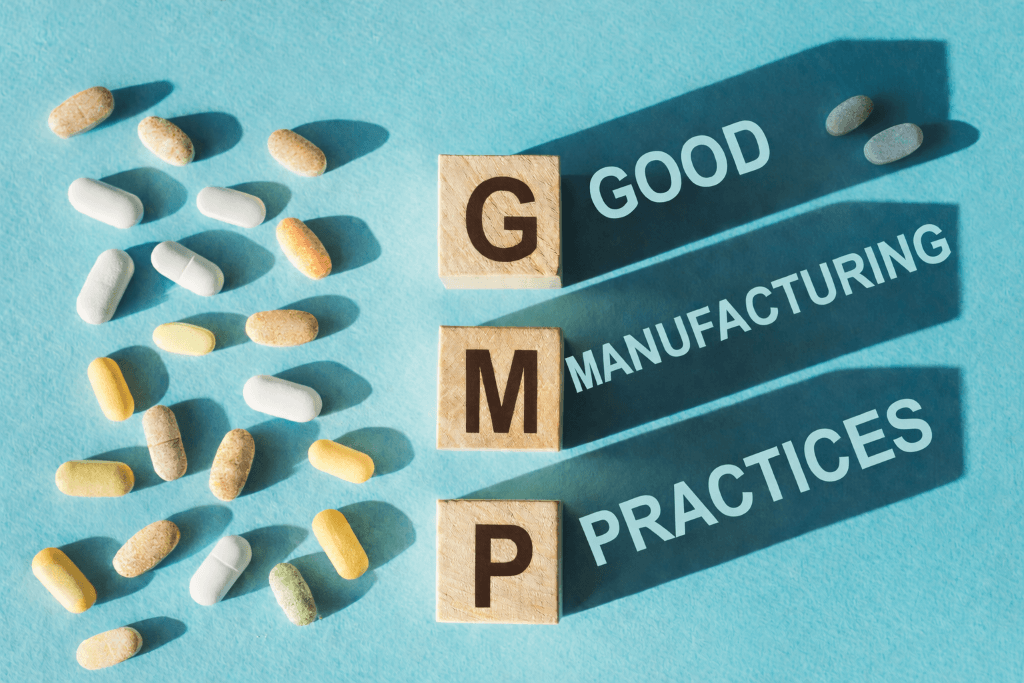
- GMP stands for Good Manufacturing Practices, a set of regulations requiring appropriate controls to ensure dietary supplements are consistently produced and meet identity, purity, strength, and composition quality standards.
- All supplement companies are required to comply with GMP regulations and to maintain programs that audit any contract manufacturing, packaging, and distribution partners to verify ongoing compliance.
- GMP-certified supplement manufacturers are facilities that have undergone independent audits by credible third-party organizations to verify adherence to GMP requirements and industry standards.
- Common third-party GMP certification organizations include NSF, USP, and the Natural Products Association (NPA).
Good Manufacturing Practices (GMPs) establish quality and safety standards for dietary supplement manufacturing, helping ensure products are consistently produced and properly controlled. While the term GMP Certified Supplements is widely used across the industry, certification does not apply to the supplements themselves but to the facilities in which they are manufactured. Understanding this distinction is critical for consumers and brands seeking meaningful assurance around manufacturing quality and oversight.
Consumer research reinforces the importance of these standards. In a survey of 1,000 adults1New Study: Most Americans Hold Retailers Responsible for Quality and Safety of Health and Wellness Products. NSF. September 14, 2021. Retrieved December 15, 2025 from https://www.nsf.org/news/americans-hold-retailers-responsible-quality-safety-products?utm_source=chatgpt.com., respondents consistently expressed concern about supplement quality and manufacturing practices. Notably, 97% indicated they want retailers to visit and inspect facilities that produce dietary supplements, personal care products, and OTC drugs, underscoring the importance of GMP compliance and facility quality. Nearly 85% also expect supplements to be tested for safety.
Trust and transparency remain key drivers of purchasing decisions. When asked what would increase their confidence in supplements, 61% cited labeling that indicates products are made in facilities inspected for GMPs, while 62% pointed to independent third-party certification from a health and safety organization. These findings highlight why GMP-related oversight plays a meaningful role in consumer trust.
In the sections that follow, we will define what a GMP-certified facility is, explain the difference between GMP compliance and certification, outline the FDA’s role in enforcing GMP requirements, and summarize what the certification process involves.
What Exactly Does GMP Certified Mean on Supplements?
GMP stands for Good Manufacturing Practices, a set of regulations designed to ensure dietary supplements are consistently produced and controlled according to established quality standards. These regulations require manufacturers to implement appropriate systems and controls to help ensure product identity, purity, strength, and composition.
GMP requirements apply to both domestic and foreign companies that manufacture, package, label, hold, test, or distribute dietary supplements intended for the U.S. market. This includes activities related to quality control, laboratory testing, packaging, labeling, and distribution. All companies involved in the dietary supplement supply chain are required to maintain GMP compliance and to implement programs that evaluate and audit the contract manufacturers, packaging facilities, and distributors they engage to verify adherence to GMP requirements.
What Is a GMP Certified Facility?
As noted earlier, it is important to clarify a common misconception in the supplement industry. Supplements themselves are not GMP certified, and there is no official GMP certified supplements list. Certification applies to the manufacturing facility, not the finished product.
A GMP-certified facility has been audited against Good Manufacturing Practice requirements by a credible, independent third-party organization (e.g., NSF). These audits evaluate whether appropriate systems, controls, and procedures are in place to support consistent product quality and regulatory compliance. GMP-certified manufacturers are typically subject to routine, often annual, audits to verify ongoing adherence to GMP requirements and to ensure quality standards are continuously maintained.
GMP Compliance vs GMP Certification: Understanding Key Differences and Roles
What is GMP Compliance?
Under the Dietary Supplement Health and Education Act of 1994 (DSHEA), all dietary supplement manufacturers are legally required to comply with Good Manufacturing Practice regulations. GMP compliance refers to meeting these mandatory federal requirements to ensure dietary supplements are consistently produced, properly controlled, and meet established quality standards.


In practical terms, GMP compliance means a manufacturer has systems, procedures, and controls in place to support product identity, purity, strength, and composition, as required by law. Compliance is not optional; it is a baseline regulatory obligation for any company involved in the manufacturing, packaging, labeling, holding, or distribution of dietary supplements for the U.S. market.
The FDA’s Role in Enforcing GMP Compliance: Key Rules and Regulations
The U.S. Food and Drug Administration (FDA) is the regulatory authority responsible for enforcing GMP compliance. It is important to note that the FDA does not approve or certify dietary supplements or manufacturing facilities. Instead, its role is to establish regulatory requirements and enforce compliance through inspections, warning letters, import alerts, and other regulatory actions when violations are identified.
GMP requirements for dietary supplements are codified in 21 CFR Part 111, which outlines comprehensive expectations for how supplements must be manufactured and controlled. Key subparts include:
- Subpart A — General Provisions: Scope, definitions, and applicability of Part 111.
- Subpart B — Personnel: Requirements for personnel qualifications, training, hygiene, and supervision.
- Subpart C — Physical Plant and Grounds: Standards for facilities, grounds, equipment placement, and sanitary operations.
- Subpart D — Equipment and Utensils: Design, construction, maintenance, cleaning, and calibration of equipment.
- Subpart E — Production and Process Control System: Written procedures to ensure dietary supplements are consistently manufactured to quality specifications.
- Subpart F — Quality Control: Duties of quality control personnel, including material review, approval/rejection decisions, and deviation handling.
- Subpart G — Components, Containers, and Closures: Requirements for receiving, testing, approval, rejection, and storage of raw materials and packaging components.
- Subpart H — Production and Process Control: Manufacturing steps, batch production records, in-process controls, and prevention of contamination and mix-ups.
- Subpart I — Packaging and Labeling Control: Control of labeling operations, reconciliation, label approval, and prevention of mislabeling.
- Subpart J — Holding and Distributing: Storage, warehousing, and distribution practices to prevent deterioration and contamination.
- Subpart K — Returns: Evaluation and disposition of returned dietary supplements.
- Subpart L — Complaint Handling: Procedures for receiving, reviewing, investigating, and documenting product complaints.
- Subpart M — Records and Recordkeeping: Required records, retention periods, access, and documentation practices.
- Subpart N — Returned Dietary Supplements: Specific controls for handling, evaluating, and disposing of returned products (distinct from complaints).
- Subpart O — Product Recalls: Requirements for recall procedures, documentation, and effectiveness checks.
- Subpart P — What You Must Do to Comply with Other Parts of the Act: Cross-references to other applicable FDA regulations (e.g., labeling requirements).
Together, these requirements form the regulatory foundation for GMP compliance and define the FDA’s enforcement authority within the dietary supplement industry.
The Scope of the FDA’s Enforcement Powers for GMP Non-Compliance
The FDA has broad authority to enforce compliance with current Good Manufacturing Practice requirements. Its enforcement powers include the ability to:
- Inspect manufacturing, packaging, labeling, and holding facilities
- Enforce current Good Manufacturing Practice (cGMP) requirements
- Take enforcement action against adulterated or misbranded supplements
- Require access to records under defined circumstances
- Initiate recalls, which may be voluntary or mandatory in certain situations
When manufacturers are found to be non-compliant, the FDA may pursue several types of enforcement actions, depending on the severity and nature of the violation.
- Administrative actions
- Issuing Form 483s, Warning Letters, or injunctions for violations.
- Product recalls for safety or labeling violations.
- Penalties for non-compliance, including fines and business shutdowns
- Legal actions to ensure companies follow the necessary regulations
- Civil & Judicial Actions
- Seizure of products
- Injunctions against companies or individuals
- Mandatory recalls (when products pose serious health risks)
- Civil monetary penalties (in certain cases)
- Criminal Enforcement
- Misdemeanor or felony prosecution (including strict liability)
- Applies even without intent if products are adulterated or misbranded
What is GMP Certification?
GMP certification is a voluntary, third-party verification process that confirms a manufacturer’s adherence to Good Manufacturing Practice requirements. This type of certification provides an added level of assurance for both consumers and business partners.
Below are key differences between NSF, USP, and NPA as third-party certification options:
| NSF | USP | NPA | |
| Full name | NSF International | U.S. Pharmacopeia | Natural Products Association |
| Primary focus | Facility GMP compliance + product certification options | GMPs and product quality standards | Industry-driven GMP compliance |
| Regulatory alignment | 21 CFR Part 111 | 21 CFR Part 111 + USP monographs | 21 CFR Part 111 |
| Rigor | Very high | Very high | Moderate–high |
| International recognition | Strong (FDA, retailers, global brands) | Strong (especially scientific/quality communities) | Primarily U.S. |
| Product testing included | Optional (NSF Certified for Sport®, product certification) | Often included for USP Verified products | Limited |
What Does the GMP Certification Process Involve?
To answer this question, let’s focus on what is involved for NSF certified supplement manufacturers when NSF is the third-party certifying body:
- Application – The company applies to NSF and identifies the facility location(s), activities (i.e., manufacturing, packaging, labeling, holding), and product categories. In turn, NSF reviews the application to determine audit duration, cost, and auditor expertise.
- Document Review (Pre-Audit) – NSF evaluates the company’s quality system documentation to confirm system readiness before the on-site audit.
- On-Site GMP Audit – NSF conducts a comprehensive, FDA-style inspection, typically lasting several days. The areas evaluated include Personnel & training, Facilities & sanitation, Equipment qualification, cleaning, and calibration, Component identity testing & supplier controls, Manufacturing & in-process controls, Packaging and labeling controls, Quality control authority & decision-making, Batch production records, Complaint handling and investigations, and Recall and traceability systems. The auditors interview staff, observe operations in real time, and review records for traceability and compliance.
- Audit Findings & Corrective Actions (CAPA) – NSF issues an audit report detailing non-conformances (minor or major). The company must submit root cause analysis, corrective and preventative action (CAPA) plans, and supporting evidence (i.e., revised SOPs, training records, etc.)
- Certification Decision – NSF’s technical review team independently evaluates audit results and CAPA effectiveness. If compliant, the facility is granted NSF GMP Certification.
- Ongoing Surveillance & Re-Certification – Annual surveillance audits (or periodic re-audits) are required.
GMP Compliance vs GMP Certification in a Nutshell
| GMP Compliance | GMP Certification | |
| Enforcement | Regulated and enforced by the FDA | Voluntary, verified by third-party auditors |
| Legal Requirement | Mandatory for all manufacturers | Optional, but adds credibility |
| Certification | Not provided by the FDA | Awarded by 3rd-party organizations like NSF, USP |
| Recognition | Domestic | International (in the case of some 3rd-party organizations |
Conclusion
One of the biggest misconceptions in the supplement industry is the belief that GMP Certified Supplements or a formal list of GMP-certified supplements exists. This is not the case. Certification applies to manufacturing facilities, not finished products, which is why understanding the answer to the question, “what does GMP certified mean for supplements?” is so important for brand owners and consumers alike.
As discussed in this article, manufacturing in a facility that has been independently audited and certified for GMP compliance provides greater confidence in product quality, consistency, and regulatory alignment. For brands seeking efficiency and risk reduction, partnering with experienced, turnkey supplement manufacturers can significantly streamline development and commercialization. Choosing a trusted supplement manufacturer in the USA further supports transparency, quality oversight, and supply chain control.
With more than 45 years of experience and NSF GMP–certified facilities, Vitaquest is well-positioned to support new and emerging dietary supplement brands. To learn more about how we can help you “Deliver What’s Next”, call 800-526-9095 to speak with one of our knowledgeable production specialists or request a nutraceutical manufacturing quote today.
Frequently Asked Questions About GMP Certification
Is GMP Certification Required for Dietary Supplements?
There is no GMP Certification for dietary supplements. Rather, dietary supplement manufacturing facilities may undertake voluntary, third-party GMP certification to increase consumer confidence.
How do I Check to See If a Supplement is GMP Certified?
Supplements are not GMP Certified. The manufacturing facility where they are made may be GMP certified. The best way to check is to ask the manufacturing facility if they are GMP certified, and by whom. You can then go to the website for that certifying agency and check to see if the manufacturer is listed.
What Happens If a Supplement Manufacturer Is Not GMP Certified?
Supplement manufacturers are not required to be GMP certified, but they are required to be compliant with GMP regulations. However, those with third-party GMP certification can provide a level of assurance to consumers that the products produced at their facility are indeed manufactured according to GMPs.
What’s the Difference Between FDA Approval and GMP Certification?
There is no FDA approval process for dietary supplements or GMPs. However, the FDA does conduct audits of manufacturing facilities to verify if they are compliant with GMP regulations. A third-party agency can also audit manufacturing facilities. Upon verification that the facility is compliant with GMP regulations, that facility may receive GMP certification.
How Can I Identify GMP Certified Supplements?
You can’t because dietary supplements aren’t GMP certified. Rather, the manufacturing facility where those dietary supplements are made may be GMP certified. Ask the manufacturing facility if they are GMP certified, and by whom. You can then go to the website for that certifying agency and check to see if the manufacturer is listed.
Is There an Official List of GMP Certified Supplements by the FDA?
No. The FDA doesn’t keep any such list.