






















Key Takeaways
- The global mushroom coffee market size was estimated at $2.71 billion in 2022 and is projected to reach $4.12 billion by 2030.
- The first documented instance of mushrooms being used as a coffee substitute occurred in World War II Europe, when coffee beans were scarce and rationed.
- Unsubstantiated and uncompliant claims made by some poorly formulated mushroom coffee products offer brand owners an opportunity to develop a superior product with substantiated claims.
- Mushrooms commonly used in mushroom coffee include Lion’s Mane, Chaga, Reishi, Cordyceps, Maitake, and Turkey Tail.
- Research shows benefits associated with using a specific blend of medicinal mushrooms.
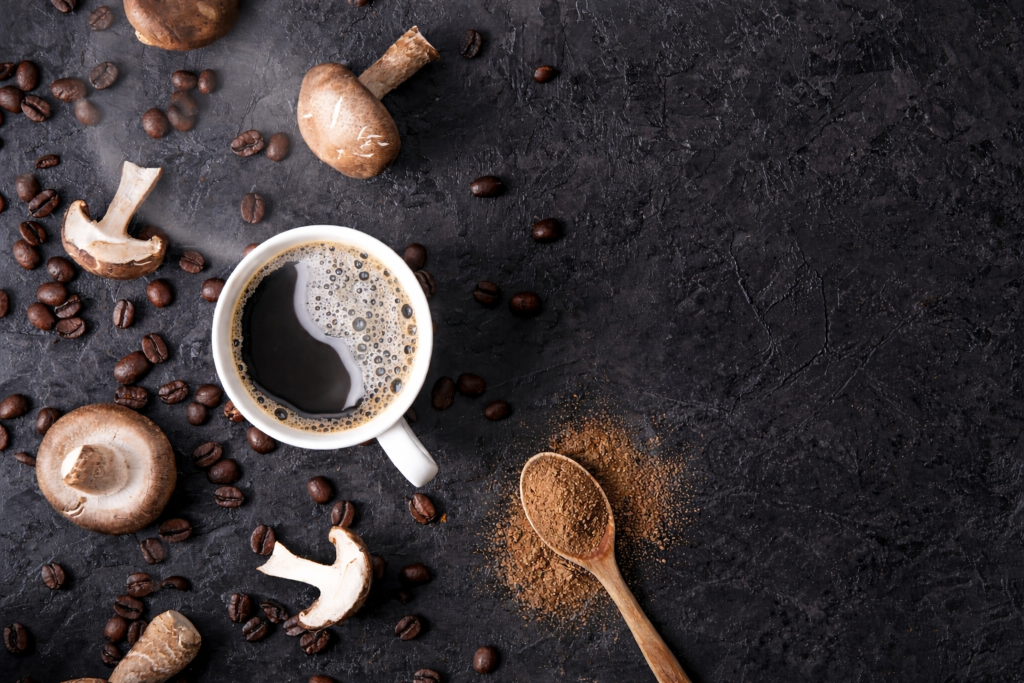
Due to rising interest among consumers, one of the most common questions we’ve been getting lately from aspiring and relatively new dietary supplement brand owners is “What is mushroom coffee?” Mushroom coffee is a beverage that combines ground coffee beans (or coffee extract) with functional mushroom extracts such as Lion’s Mane, Chaga, Reishi, Cordyceps, and Maitake.
Once we explain what mushroom coffee is, the follow-up question we often get is “What is mushroom coffee good for?” Alongside the energy and alertness associated with coffee, functional mushrooms are traditionally used to support focus, stress resilience, and immune health. Mushroom coffee may also contain half (or less) of the caffeine found in regular coffee, while still delivering a smoother lift.
The global mushroom coffee market size was estimated at $2.71 billion in 2022 and is projected to reach $4.12 billion by 2030, growing at a compounded annual growth rate (CAGR) of 5.5%. 1Mushroom Coffee Market (2023 – 2030). Grand View Research. Retrieved January 21, 2026 from https://www.grandviewresearch.com/industry-analysis/mushroom-coffee-market-report. Demand continues to climb as consumers seek functional beverages that balance taste, wellness positioning, and more mindful caffeine intake.
In this article, you’ll learn the origins of mushroom coffee and how it evolved into a mainstream functional beverage. You’ll also get expert formulation guidance, a breakdown of the most used mushrooms (and their key health benefits), and an overview of how an experienced supplement contract manufacturer, like Vitaquest, typically produces powdered mushroom coffee at scale.
The Origins of Mushroom Coffee
Historical Background:
Mushrooms have a long history of traditional use across many cultures, with some practices dating back more than 5,000 years. 2Halpern GM, Miller AH. Medicinal Mushrooms. New York: M. Evans & Company; 2002:59-74. The concept of using mushrooms as a coffee substitute emerged in World War II Europe, when coffee beans were scarce and rationed. In Finland, people brewed chaga because its dark, steeped liquid resembled coffee and helped stretch limited supplies. 3Bigras A. Mushroom Coffee: Benefits, Brands & Everything You Need to Know. Roast Love Blog. January 7, 2026. Retrieved January 21, 2026 from https://blog.roast.love/post/mushroom-coffee/.
Modern Popularity:
The category as we know it today began gaining traction in the 2010s, when Finnish entrepreneur Tero Isokauppila launched a brand that paired medicinal mushroom extracts with coffee. 4Sabetta L. Four Sigmatic embraces Finland’s mushroom coffee culture. Beverage Industry. Over the past decade, this beverage format has expanded beyond Finland and niche wellness communities into mainstream retail, e-commerce, and global specialty beverage markets. 5Devoney M. Is mushroom coffee here to stay, or just a passing trend? Coffee Intelligence. September 28, 2023. Retrieved January 21, 2026 from https://intelligence.coffee/2023/09/mushroom-coffee/.
Cultural Adoption:
Several reasons have contributed to the cultural adoption of mushroom coffee, including:
- Perceived health and function benefits 6Why mushroom coffee is trending in 2025. Retrieved January 21, 2026 from https://intelligence.coffee/2023/09/mushroom-coffee/?utm_source=chatgpt.com/.
- The idea of balanced, smooth energy 7Rasmussen Christian. Mushroom coffee benefits: Why everyone’s swapping their brew. Millennial. Retrieved January 21, 2026 from https://millennialmagazine.com/2025/03/14/mushroom-coffee/.
- Cognitive and stress-related claims 8Rasmussen Christian. Mushroom coffee benefits: Why everyone’s swapping their brew. Millennial. Retrieved January 21, 2026 from https://millennialmagazine.com/2025/03/14/mushroom-coffee/.
- Immune and antioxidant interest 9Borst H. What are the health benefits of mushroom coffee? Forbes. September 25, 2025. Retrieved January 21, 2026 from https://www.forbes.com/health/nutrition/mushroom-coffee/.
- Lifestyle/wellness trends 10Dahan, S. Mushroom Coffee Revolution: Why Coffee Shops Should Embrace Functional Mushrooms and Tailored Blends. LinkedIn. October 10, 2025. Retrieved January 21, 2026 from https://www.linkedin.com/pulse/mushroom-coffee-revolution-why-shops-should-embrace-functional-dahan-4tubc/.
- Lower acidity and tolerability 11Dahan, S. Mushroom Coffee Revolution: Why Coffee Shops Should Embrace Functional Mushrooms and Tailored Blends. LinkedIn. October 10, 2025. Retrieved January 21, 2026 from https://www.linkedin.com/pulse/mushroom-coffee-revolution-why-shops-should-embrace-functional-dahan-4tubc/.
Overall, consumers have embraced mushroom coffee for its perceived wellness benefits, smoother caffeine experience, and alignment with modern lifestyle and wellness trends. 12Borst H. What are the health benefits of mushroom coffee? Forbes. September 25, 2025. Retrieved January 21, 2026 from https://www.forbes.com/health/nutrition/mushroom-coffee/.
Formulation Advice for Mushroom Coffee
There is a clear opportunity for brand owners to add this type of functional beverage to their product line, but it must be formulated correctly to avoid common pitfalls.
One of the biggest issues in the current market is the use of exaggerated, unsubstantiated marketing claims, especially on social media. For example, a popular brand has promoted claims like “No More Inflammation,” which raises multiple concerns from both a scientific and regulatory standpoint. In many cases, these products do not provide clinically relevant doses of the mushrooms listed on the label, nor do they use well-researched extract forms. As a result, the claims are difficult to support and may create unnecessary compliance risk.
The good news is that these missteps create an opportunity for brand owners who take a more evidence-based approach. By using clinically relevant doses of mushroom extracts that have been studied in human research, you can build a formula that supports credible, defensible structure/function messaging.
What Are the Key Mushrooms Typically Used in Mushroom Coffee?
When evaluating what is in mushroom coffee and what the benefits of mushroom coffee are, it helps to look beyond the coffee base and focus on the functional mushroom blend.
Most formulas combine coffee beans (or coffee extract) with mushroom extracts or powders selected for their wellness-supporting properties. Common options include Lion’s Mane, Chaga, Reishi, Cordyceps, Maitake, and Turkey Tail.
| Mushroom | Active Compounds | Benefits |
| Lion’s Mane Mushroom | Hericenones and erinacines | Supports cognitive function (working memory, complex attention, and reaction time), mood, and happiness. |
| Chaga Mushroom | Polysaccharides, polyphenols and melanin | May support the modulation of immune signaling and act as an antioxidant against any free radicals. |
| Reishi Mushroom | Beta-glucans and triterpenes | Antioxidant support, and support for immune, cardiovascular, prostate, blood pressure, and liver health. |
| Cordyceps Mushroom | Nucleosides (e.g., cordycepin), polysaccharides, sterols, and D-mannitol | Support for cellular immunological function, quality of life, liver health, and possibly athletic endurance. |
| Maitake Mushroom | Beta-glucan | Supports healthy blood glucose levels already in a normal range, ovarian health, and may help reduce body weight. |
| Turkey Tail | Polysaccharides | Helps maintain cellular health in different tissues, including those of the breast, esophagus, stomach, lungs, liver, colon, and nasopharyngeal area |
What Are the Health Benefits of Mushroom Coffee?
Medicinal mushrooms have a growing body of research supporting their role in overall health and wellness. Studies suggest benefits across multiple areas, including cognitive function, mood, immune health (including antioxidant activity), cardiovascular support, prostate health, healthy blood pressure, liver health, ovarian health, and the maintenance of cellular health in different tissues.
Health Benefits of Lion’s Mane Mushrooms
Lion’s Mane contains key compounds, including hericenones and erinacines, which have been shown to stimulate nerve growth factor (NGF) synthesis, an important mechanism linked to brain and autonomic nervous system function.13Nagano M, Shimizu K, Kondo R, Hayashi C, Sato D, Kitagawa K, Ohnuki K. Reduction of depression and anxiety by 4 weeks Hericium erinaceus intake. Biomed Res. 2010 Aug;31(4):231-7. doi: 10.2220/biomedres.31.231. PMID: 20834180.
Research has shown that supplementation with this mushroom helped maintain and promote cognitive function 14Saitsu Y, Nishide A, Kikushima K, Shimizu K, Ohnuki K. Improvement of cognitive functions by oral intake of Hericium erinaceus. Biomed Res. 2019;40(4):125-131. 15Mori K, Inatomi S, Ouchi K, Azumi Y, Tuchida T. Improving effects of the mushroom Yamabushitake (Hericium erinaceus) on mild cognitive impairment: a double-blind placebo-controlled clinical trial. Phytother Res. 2009 Mar;23(3):367-72. and a more balanced mood. 16Nagano M, Shimizu K, Kondo R, Hayashi C, Sato D, Kitagawa K, Ohnuki K. Reduction of depression and anxiety by 4 weeks Hericium erinaceus intake. Biomed Res. 2010 Aug;31(4):231-7. In one randomized, double-blind, placebo-controlled, crossover study 17La Monica MB, Raub B, Ziegenfuss EJ, Hartshorn S, Grdic J, Gustat A, Sandrock J, Ziegenfuss TN. Acute Effects of Naturally Occurring Guayusa Tea and Nordic Lion’s Mane Extracts on Cognitive Performance. Nutrients. 2023 Dec 6;15(24):5018. doi: 10.3390/nu15245018. PMID: 38140277; PMCID: PMC10745489., 1 gram daily of a specific Lion’s Mane extract improved various parameters on cognitive tests and improved subjective ratings of “happiness compared to peers” and “getting the most out of everything”. In short, Lion’s Mane helped improve working memory, complex attention, reaction time 2 hours post-ingestion, and perceptions of happiness.
Health Benefits of Chaga Mushrooms
Chaga (Inonotus obliquus) contains polysaccharides, polyphenols, and melanin, which have demonstrated antioxidant activity and reduced oxidative stress in human cells in vitro. 18Camilleri E, Blundell R, Baral B, Karpinski TM, Aruci E, Atrooz OM. A brief overview of the medicinal and nutraceutical importance of Inonotus obliquus (chaga) mushrooms. Heliyon. 2024 Aug 6;10(15):e35638. doi: 10.1016/j.heliyon.2024.e35638. PMID: 39170453; PMCID: PMC11336990. Additional research suggests Chaga’s bioactive compounds may influence immune signaling and inflammatory pathways in cell and animal models, including effects on cytokines and free radicals. 19Camilleri E, Blundell R, Baral B, Karpinski TM, Aruci E, Atrooz OM. A brief overview of the medicinal and nutraceutical importance of Inonotus obliquus (chaga) mushrooms. Heliyon. 2024 Aug 6;10(15):e35638. doi: 10.1016/j.heliyon.2024.e35638. PMID: 39170453; PMCID: PMC11336990. However, there are currently no controlled human clinical trials, so brands should be cautious and conservative when positioning Chaga-related benefits. 20Szychowski KA, Skóra B, Pomianek T, Gmiński J. Inonotus obliquus - from folk medicine to clinical use. J Tradit Complement Med. 2020 Aug 22;11(4):293-302. doi: 10.1016/j.jtcme.2020.08.003. PMID: 34195023; PMCID: PMC8240111.
Health Benefits of Reishi Mushrooms
Reishi mushrooms (Ganoderma lucidum) have been used in Traditional Chinese Medicine (TCM) for more than 2,000 years and is often associated with longevity and vitality. 21Halpern GM, Miller AH. Medicinal Mushrooms. New York: M. Evans & Company; 2002:51-57.
The Chinese name ling zhi translates as the “herb of spiritual potency” and was highly prized as an important longevity elixir. 22Willard T. Reishi Mushroom: Herb of Spiritual Potency and Wonder. Issaquah, WA: Sylvan Press; 1990:11. In TCM, it is used for general fatigue, sleep support, and respiratory health. 23Halpern GM, Miller AH. Medicinal Mushrooms. New York: M. Evans & Company; 2002:51-57. Reishi’s primary active constituents include polysaccharides (such as beta-glucans) and triterpenes. 24Wasser SP, Weis AL. Therapeutic effects of substances occurring in higher Basidiomycetes mushrooms: a modern perspective. Crit Rev Immunol 1999;19:65-96. 25Yuen JW, Gohel MD. Anticancer effects of Ganoderma lucidum: a review of scientific evidence. Nutr Cancer 2005;53:11-7. 26Gao Y, Zhou S, Jiang W, et al. Effects of ganopoly (a Ganoderma lucidum polysaccharide extract) on the immune functions in advanced-stage cancer patients. Immunol Invest 2003;32:201-15.
Research suggests Reishi extracts may provide antioxidant and immune-modulating effects 27Wasser SP, Weis AL. Therapeutic effects of substances occurring in higher Basidiomycetes mushrooms: a modern perspective. Crit Rev Immunol 1999;19:65-96., along with support for cardiovascular wellness, prostate health 28Noguchi M, Kakuma T, Tomiyasu K, et al. Effect of an extract of Ganoderma lucidum in men with lower urinary tract symptoms: a double-blind, placebo-controlled randomized and dose-ranging study. Asian J Androl. 2008;10:651-8., healthy blood pressure levels already in a normal range 29Jin H, Zhang G, Cao X, et al. Treatment of hypertension by ling zhi combined with hypotensor and its effects on arterial, arteriolar and capillary pressure and microcirculation. In: Nimmi H, Xiu RJ, Sawada T, Zheng C (eds). Microcirculatory Approach to Asian Traditional Medicine. New York: Elsevier Science, 1996, 131–8., and healthy liver function. 30Hobbs C. Medicinal Mushrooms. Santa Cruz, CA: Botanica Press, 1995, 96-107.
Health Benefits of Cordyceps Mushrooms
Cordyceps has a long history of traditional use, with early documentation dating back roughly 1,500 years in western China. 31Halpern GM. Cordyceps: China’s Healing Mushroom. Garden City Park, New York: Avery Publishing; 1999:7-14. Research suggests Cordyceps may support immune function through mechanisms such as increasing T helper cells 32Chen GZ, Chen GL, Sun T, et al. Effects of Cordyceps sinensis on murine T lymphocyte subsets. Chin Med J (English) 1991;104:4-8., enhancing natural killer cell activity 33Liu C, Lu S, Ji MR. [Effects of Cordyceps sinensis (CS) on in vitro natural killer cells]. Chung Kuo Chung Hsi I Chieh Ho Tsa Chih 1992;12:267-9, 259. 34Xu RH, Peng XE, Chen GZ, Chen GL. Effects of cordyceps sinensis on natural killer activity and colony formation of B16 melanoma. Chin Med J (English) 1992;105:97-101., stimulating blood mononuclear cells 35Chen YJ, Shiao MS, Lee SS, Wang SY. Effect of Cordyceps sinensis on the proliferation and differentiation of human leukemic U937 cells. Life Sci 1997;60:2349-59., increase levels of interferon-gamma, tumor necrosis factor-alpha, and interleukin-1, 36Chen YJ, Shiao MS, Lee SS, Wang SY. Effect of Cordyceps sinensis on the proliferation and differentiation of human leukemic U937 cells. Life Sci 1997;60:2349-59. and prolong the survival of lymphocytes. 37Zhu XY, Yu HY. [Immunosuppressive effect of cultured Cordyceps sinensis on cellular immune response]. Chung Hsi I Chieh Ho Tsa Chih 1990;10:485-7, 454. Key compounds include nucleosides (e.g., cordycepin), polysaccharides, sterols, and D-mannitol. 38Shashidhar MG, Giridhar P, Udaya Sankar K, Manohar B. Bioactive principles from Cordyceps sinensis: A potent food supplement – A review. J Funct Foods. 2013 Jul;5(3):1013-1030. doi: 10.1016/j.jff.2013.04.018. Epub 2013 May 24. PMID: 32288795; PMCID: PMC7104994.
Human research on Cordyceps suggests that supplementation may promote cellular immunological function, support quality of life 39Zhou DH, Lin LZ. [Effect of Jinshuibao capsule on the immunological function of 36 patients with advanced cancer]. Chung Kuo Chung Hsi I Chieh Ho Tsa Chih 1995;15:476-8., support liver health 40Zhou L, Yang W, Xu Y, et al. [Short-term curative effect of cultured Cordyceps sinensis (Berk.) Sacc. Mycelia in chronic hepatitis B]. Chung Kuo Chung Yao Tsa Chih 1990;15:53-5, 65. 41Wang XB, Jiang YY, Zhao CY. [Clinical research of xinganbao capsule on the treatment of chronic hepatitis B liver fibrosis]. [Article in Chinese] Zhongguo Zhong Xi Yi Jie He Za Zhi. 2012 Mar;32(3):325-8., and possibly promote athletic endurance. 42Halpern GM, Miller AH. Medicinal Mushrooms. New York: M. Evans & Company; 2002:59-74.
Health Benefits of Maitake Mushrooms
Maitake mushrooms (Grifola frondosa) contain the polysaccharide beta-glucan, the D-fraction of which appears to be the most active and potent form. In TCM, it is known as the “dancing mushroom”, since legend holds that those who found it began dancing with joy. 43Hobbs C. Medicinal Mushrooms: An exploration of tradition, healing and culture. Santa Cruz, CA: Botanica Press; 1995. Traditionally used as a tonic and adaptogen, Maitake has been studied in humans for supporting healthy blood glucose levels already within a normal range. 44Konno S, Tortorelis DG, Fullerton SA, et al. A possible hypoglycaemic effect of maitake mushroom on Type 2 diabetic patients. Diabet Med 2001;18:1010. Research also suggests potential benefits for ovarian health in women 45Chen JT, Tominaga K, Sato Y, et al. Maitake mushroom (Grifola frondosa) extract induces ovulation in patients with polycystic ovary syndrome: a possible monotherapy and a combination therapy after failure with first-line clomiphene citrate. J Altern Complement Med 2010;16:1295-9., as well as promote healthy body weight management. 46Yokota M. Observatory trial of anti-obesity activity of maitake (Grifola frondosa). Anshin 1992; 7:202-4.
Health Benefits of Turkey Tail
Turkey tail (Trametes versicolor) is one of the most researched medicinal mushrooms, with longstanding use across China and Japan. 47Kidd P.M. The use of mushroom glucans and proteoglycans in cancer treatment. Alternative Medicine Review. 2000;5:4–27. It contains polysaccharide compounds that have demonstrated immunomodulating activity, including support for healthy white blood cell function, natural killer cell activity, and antibody levels. Research also suggests certain Turkey Tail compounds may help support cellular health across multiple tissue types, including those of the breast, esophagus, stomach, lungs, liver, colon, and nasopharyngeal region. 48Maehara Y, Inutsuka S, Takeuchi H, et al. Postoperative PSK and OK-432 immunochemotherapy for patients with gastric cancer. Cancer Chemother Pharmacol 1993;33:171-5. 49Iino Y, Yokoe T, Maemura M, et al. Immunochemotherapies versus chemotherapy as adjuvant treatment after curative resection of operable breast cancer. Anticancer Res 1995;15:2907-11. 50Ogoshi K, Satou H, Isono K, et al. Immunotherapy for esophageal cancer. A randomized trial in combination with radiotherapy and radiochemotherapy. Cooperative Study Group for Esophageal Cancer in Japan. Am J Clin Oncol 1995;18:216-22. 51Yokoe T, Iino Y, Takei H, et al. HLA antigen as predictive index for the outcome of breast cancer patients with adjuvant immunochemotherapy with PSK. Anticancer Res 1997;17:2815-8. 52Nakazato H, Koike A, Saji S, et al. Efficacy of immunochemotherapy as adjuvant treatment after curative resection of gastric cancer. Study Group of Immunochemotherapy with PSK for Gastric Cancer. Lancet 1994;343:1122-6. 53Sugimachi K, Maehara Y, Ogawa M, et al. Dose intensity of uracil and tegafur in postoperative chemotherapy for patients with poorly differentiated gastric cancer. Cancer Chemother Pharmacol 1997;40:233-8. 54Hayakawa K, Mitsuhashi N, Saito Y, et al. Effect of Krestin as adjuvant treatment following radical radiotherapy in non-small cell lung cancer patients. Cancer Detect Prev 1997;21:71-7. 55Morimoto T, Ogawa M, Orita K, et al. Postoperative adjuvant randomised trial comparing chemoendocrine therapy, chemotherapy and immunotherapy for patients with stage II breast cancer: 5-year results from the Nishinihon Cooperative Study Group of Adjuvant Chemoendocrine Therapy for Breast Cancer (ACETBC) of Japan. Eur J Cancer 1996;32A:235-42. 56Suto T, Fukuda S, Moriya N, et al. Clinical study of biological response modifiers as maintenance therapy for hepatocellular carcinoma. Cancer Chemother Pharmacol 1994;33 Suppl:S145-8. 57Toi M, Hattori T, Akagi M, et al. Randomized adjuvant trial to evaluate the addition of tamoxifen and PSK to chemotherapy in patients with primary breast cancer. 5-Year results from the Nishi-Nippon Group of the Adjuvant Chemoendocrine Therapy for Breast Cancer Organization. Cancer 1992;70:2475-83. 58Mitomi T, Tsuchiya S, Iijima N, et al. Randomized, controlled study on adjuvant immunochemotherapy with PSK in curatively resected colorectal cancer. The Cooperative Study Group of Surgical Adjuvant Immunochemotherapy for Cancer of Colon and Rectum (Kanagawa). Dis Colon Rectum 1992;35:123-30. 59Nio Y, Tsubono M, Tseng CC, et al. Immunomodulation by orally administered protein-bound polysaccharide PSK in patients with gastrointestinal cancer. Biotherapy 1992;4:117-28. 60Kondo T, Sakamoto J, Nakazato H. Alternating immunochemotherapy of advanced gastric carcinoma: a randomized comparison of carbazilquinone and PSK to carbazilquinone in patients with curative gastric resection. Biotherapy 1991;3:287-95. 61Torisu M, Hayashi Y, Ishimitsu T, et al. Significant prolongation of disease-free period gained by oral polysaccharide K (PSK) administration after curative surgical operation of colorectal cancer. Cancer Immunol Immunother 1990;31:261-8. 62Go P, Chung CH. Adjuvant PSK immunotherapy in patients with carcinoma of the nasopharynx. J Int Med Res 1989;17:141-9.
Health Benefits of Mushroom Combinations
It should be noted that there can be a benefit of combining mushrooms together, as might be found in a mushroom coffee formulation. There may be added value in combining multiple mushroom species within a single formulation.
One study 63Stamets P. Potentiation of Cell-Mediated Host Defense Using Fruitbodies and Mycelia of Medicinal Mushrooms. International Journal of Medicinal Mushrooms. 2003; 5: 179–191. compared seven mushroom species individually and as a combined blend to evaluate immune-related outcomes. The mushrooms included Maitake, Chaga, Reishi, Lion’s Mane, Cordyceps sinensis, Phellinus linteus, and Agaricus blazei. Results showed the seven-species blend increased immune cells by 97.6%, while individual species increased immune cells by 53–92.9%. This supports the concept that blended mushroom formulas may offer broader immune-support benefits than single-mushroom approaches.
How Is Mushroom Coffee Made?
Sourcing and Extracting Mushrooms
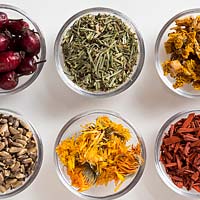
Depending on the mushroom species, ingredients may be wild-harvested from natural habitats (forests, birch trees, alpine regions, etc.) or cultivated under controlled conditions using wood logs, sterilized grain or sawdust, or liquid fermentation (mycelium culture). After harvesting, mushrooms may undergo hot water extraction to yield compounds such as polysaccharides or alcohol (ethanol) extraction to yield compounds such as triterpenes, hericenones, phenolics, and sterols.
Blending with Coffee
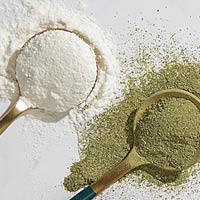
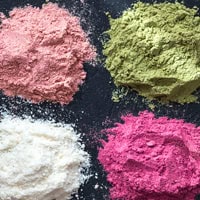
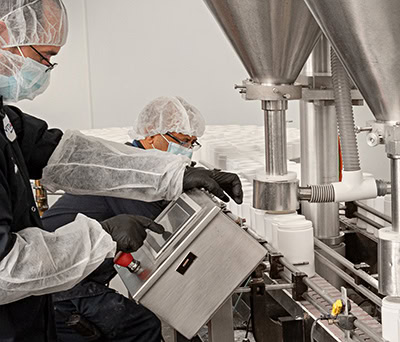
In most commercial formulations, instant coffee powder (often made from roasted Arabica coffee beans) is blended with whole mushroom powder or mushroom extract powders. Before blending, both powders are typically milled and sieved to achieve similar particle sizes, which helps improve flowability, bulk density, and moisture control. This reduces ingredient separation during shipping and supports more consistent dosing per scoop or sachet. Blending is commonly performed using ribbon blenders, V-blenders, or tumble blenders.
Flavor and Taste
Traditional coffee has brighter acidity (especially lighter roasts), noticeable bitterness from caffeine and roasted compounds, and aromatic notes such as fruit, chocolate, caramel, and nuts. When brewed properly, it often has a clean finish. In comparison, mushroom-infused blends tend to have less sharp acidity, smoother and rounder bitterness, and more earthy, woody, or savory undertones. Many consumers are surprised that well-formulated products typically do not taste strongly like mushrooms.
Quality Control and Safety Testing
As with any dietary supplement product, quality control testing is essential. Ingredient identity and potency testing confirm that each ingredient is the correct mushroom species and contains the intended key compounds at appropriate levels. Microbiological testing helps verify that the product does not contain unsafe levels of microorganisms such as E. coli. Heavy metal testing for lead, mercury, cadmium, and arsenic should also be performed. Testing is typically conducted through the quality systems of a GMP-certified contract manufacturer and may also be supported by qualified third-party laboratories.
Packaging and Storage Considerations
Mushroom coffee blends can be more sensitive than traditional coffee due to the presence of coffee components and bioactive mushroom compounds. To protect the product from oxygen, moisture, light, and heat, several supplement packaging design formats are commonly used.
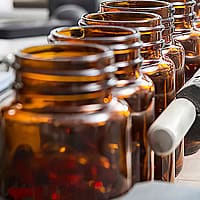
For example, stand-up pouches offer a strong barrier, are lightweight, cost-effective, and resealable for consumers. Rigid canisters or jars, often made from HDPE plastic, provide strong physical protection and a premium appearance. Single-serve stick packs or sachets can offer precise dosing, strong freshness protection, and often the longest practical shelf life.
Conclusion
This article answered one of the most common questions we hear from new and aspiring supplement business owners: “What is mushroom coffee?”
We explored its historical roots and its evolution into a modern functional beverage. You also learned expert formulation best practices, the most commonly used mushrooms and their wellness-supporting benefits, and how contract manufacturers typically produce powdered mushroom coffee through sourcing, extraction, blending, testing, and packaging.
Now it’s time to choose the right manufacturing partner. While a capsule supplements manufacturer or tablet supplements manufacturer may support certain product formats, mushroom coffee is ultimately a powdered product, which means you need a proven powder supplement manufacturer with the right equipment, QA systems, and packaging capabilities. In most cases, working with experienced powder manufacturers is the smartest path to a consistent, scalable, market-ready product.
Are you ready to custom manufacture a powdered mushroom coffee supplement with Vitaquest? Call 800-526-9095 to speak with one of our knowledgeable production specialists or request a competitive nutraceutical manufacturing price quote if you’ve already finalized your project requirements!
Frequently Asked Questions About Mushroom Coffee Supplements
What does mushroom coffee taste like?
Mushroom coffee has less acidity, smoother, rounder bitterness, more earthy, woody, or savory undertones, and often a softer finish with less bite than regular coffee. If well formulated, it doesn’t taste like mushrooms or soup.
What is the point of mushroom coffee?
In addition to the general energy-promoting effects of coffee, the mushroom part of this beverage can support cognitive function, mood, immune health (including antioxidant activity), cardiovascular, prostate, healthy blood pressure levels already in a normal range, liver health, ovarian health, and maintaining cellular health in different tissues, depending upon the mushrooms used in the formulation.