














































Key Takeaways
- Fiber is moving beyond digestive health. You can now consider it for protein, healthy aging, prenatal, beauty-from-within, cognitive-support, and other multi-benefit formulations where it can complement the product’s primary positioning.
- The right fiber can do more than add nutritional value. Depending on the type and structure, fiber can influence viscosity, water binding, gel formation, texture, moisture management, and other formulation characteristics.
- Successful fiber formulation requires trade-offs. Serving size, dosage form, flow, hydration, processing, excipients, and consumer convenience all need to be considered before deciding how much fiber to add and which type to use.
- Fiber can help you build more differentiated products. By pairing fiber with proteins, probiotics, botanicals, vitamins, minerals, and other actives, you can develop more complex cross-category formulations that address multiple consumer needs within a single product
Fiber is evolving beyond its traditional role in digestive health into a versatile formulation ingredient with applications across multiple supplement categories. A dietary fiber supplement can support digestive health, satiety, texture, and broader gut health positioning, while fiber itself can also function as a cross-category supplement ingredient.
If you’re developing a new supplement or expanding an existing product line, fiber can give you added formulation flexibility across powders and solid dosage forms while helping you address multiple consumer needs within a single product.
In this article, you’ll learn:
- What fiber supplements are and why they have grown in popularity
- What does cross-category supplement formulation mean for fiber?
- How you can use fiber across other supplement categories
- Key formulation challenges you should understand
- Where fiber may fit into the future of cross-category supplement formulation
What Are Fiber Supplements?
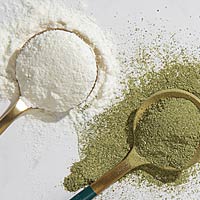
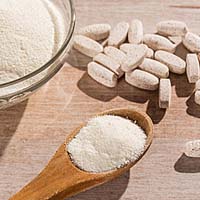
If you’re wondering what fiber supplements are, they are dietary supplements formulated to provide soluble fiber, insoluble fiber, or a combination of both. These products can be delivered as a fiber supplement powder, capsule, or tablet, giving you flexibility to select a format that aligns with your formulation, serving size, and target consumer.1Questions and Answers on Dietary Fiber. U.S. Food and Drug Administration. 7/25/2024. Retrieved September 15, 2026 from https://www.fda.gov/food/nutrition-food-labeling-and-critical-foods/questions-and-answers-dietary-fiber.
Unlike naturally fiber-rich foods, supplements provide a measured and consistent amount of fiber per serving. This can make it easier for you to formulate around specific fiber types and target amounts while maintaining greater control over the finished product.
NIH’s Dietary Supplement Label Database includes commercial examples containing soluble fiber alone, as well as combinations of soluble and insoluble fiber.2Psyllium Super Fiber Capsules. Dietary Supplement Label Database. Retrieved September 15, 2026 from dsld.od.nih.gov.
Why Fiber Supplements Have Grown in Popularity
Consumer interest in fiber supplements has grown as awareness of fiber intake gaps and digestive health continues to increase. More consumers are also looking for convenient ways to increase their daily fiber intake, creating opportunities for you to incorporate fiber into supplement formulas that address a broader range of health and wellness goals.
Consumer Awareness of Fiber Gaps and Digestive Health
Many Americans consume less fiber than recommended, and growing awareness of this gap is contributing to increased interest in fiber supplementation.
Adequate fiber intake can support bowel regularity, with a 2026 systematic review finding small-to-modest improvements in stool consistency, frequency, and transit time. Research also indicates that certain fibers may beneficially influence the gut microbiome, including by increasing Bifidobacterium and Lactobacillus.3Balk EM, Couch E, Mai HJ, Chen Y, Adam GP, Kanaan G, Caputo EL, Trikalinos TA, Williams G, Duncanson K, Talley NJ, Lichtenstein AH. Fiber intake and laxation in people with normal bowel function: a systematic review. Am J Clin Nutr. 2026 Mar;123(3):101212. doi: 10.1016/j.ajcnut.2026.101212. Epub 2026 Jan 27. PMID: 41611088; PMCID: PMC12975388. 4So D, Whelan K, Rossi M, Morrison M, Holtmann G, Kelly JT, Shanahan ER, Staudacher HM, Campbell KL. Dietary fiber intervention on gut microbiota composition in healthy adults: a systematic review and meta-analysis. Am J Clin Nutr. 2018 Jun 1;107(6):965-983. doi: 10.1093/ajcn/nqy041. PMID: 29757343.
As consumer interest in digestive health continues to grow, you have an opportunity to develop products that help meet this demand while supporting broader daily wellness goals.
Growing Interest in Maximizing Daily Fiber Intake
The rise of “fibermaxxing,” a social media-driven trend focused on intentionally increasing daily fiber intake, reflects a shift from simply recognizing the fiber gap to actively trying to consume more fiber each day. As this behavior gains momentum, consumers are increasingly looking for fiber beyond traditional, dedicated fiber products, including in supplements they already purchase.
This creates opportunities for you to incorporate fiber into a broader range of formulations designed around digestive health, prebiotic support, and other wellness goals. Circana reports growing demand for fiber-forward products, including powders, gummies, prebiotic blends, and digestive-wellness supplements.5Dunkin MA. Fibermaxxing: Is this TikTok trend good for you? Mayo Clinic Press. February 5, 2026. Retrieved September 15, 2026 from https://mcpress.mayoclinic.org/nutrition-fitness/fibermaxxing-is-this-tiktok-trend-good-for-you/.



What Does “Cross-Category” Supplement Formulation Mean for Fiber?
Cross-category formulation means incorporating fiber into products designed to address broader nutritional or wellness goals, rather than positioning it exclusively as a digestive-health ingredient.
For example, you can incorporate fiber into protein blends that combine substantial protein with prebiotic fiber, as well as healthy-aging and wellness formulations that include multiple nutrients and bioactives.6Spectra Infinite Nutrition. Dietary Supplement Label Database. Retrieved September 15, 2026 from https://dsld.od.nih.gov/label/32220.
Similar opportunities may exist in prenatal formulations and personalized supplement regimens, where fiber can complement established nutrient combinations. This approach allows you to consider fiber as a multifunctional formulation component that contributes nutritional value while supporting broader product positioning.
Functional Benefits That Go Beyond Digestive Health
Fiber can offer supplement formulation design advantages that extend beyond digestive-health positioning. Depending on the type and structure, it can increase bulk, viscosity, water-holding capacity, swelling, and gel formation, helping you manage texture and moisture within a finished product.
These properties can make fiber useful as a multifunctional excipient or structural ingredient. As a result, fiber supplement benefits can extend beyond digestive support, giving you additional flexibility when developing products where fiber was not originally the primary focus.7Elleuch M, Bedigian D, Roiseux O, et al. Dietary fibre and fibre-rich by-products of food processing: Characterisation, technological functionality and commercial applications: A review. Food Chemistry; 2011; 124(2): 411-421. https://doi.org/10.1016/j.foodchem.2010.06.077. 8Li X, Wang L, Tan B, Li R. Effect of structural characteristics on the physicochemical properties and functional activities of dietary fiber: A review of structure-activity relationship. Int J Biol Macromol. 2024;269(2):132214. https://doi.org/10.1016/j.ijbiomac.2024.132214.
Flexibility to Pair with Other Ingredients
Fiber’s versatility gives you the flexibility to pair different fiber types with proteins, vitamins, minerals, botanicals, and other active ingredients, while adding functional properties such as viscosity, water binding, or gel formation.9Li YO, Komarek AR. Dietary fibre basics: Health, nutrition, analysis, and applications, Food Quality and Safety. 2017;1(1):47–59. https://doi.org/10.1093/fqsafe/fyx007. 10Poutanen K, Fiszman S, Marsaux C, et al. Recommendations for characterization and reporting of dietary fibers in nutrition research. Am J Clin Nutr. 2018;108:437-444.
Rather than replacing your product’s core benefit, fiber can complement it. The key is ensuring compatibility with the other ingredients in your formulation.
This flexibility becomes especially apparent across the supplement categories examined next.
Protein and Meal-Support Powders
You can incorporate fiber into protein and meal-support powders to enhance the overall nutritional profile while potentially supporting feelings of fullness.
However, the evidence for satiety varies considerably depending on the type and amount of fiber used, and systematic reviews have reported mixed results. For that reason, it is recommended to consult with a labeling expert to determine whether qualifying language such as “may help promote feelings of fullness” is more appropriate rather than suggesting a guaranteed effect.11Clark MJ, Slavin JL. The effect of fiber on satiety and food intake: a systematic review. J Am Coll Nutr. 2013;32(3):200-11. doi: 10.1080/07315724.2013.791194. PMID: 23885994. 12Salleh SN, Fairus AAH, Zahary MN, Bhaskar Raj N, Mhd Jalil AM. Unravelling the Effects of Soluble Dietary Fibre Supplementation on Energy Intake and Perceived Satiety in Healthy Adults: Evidence from Systematic Review and Meta-Analysis of Randomised-Controlled Trials. Foods. 2019 Jan 6;8(1):15. doi: 10.3390/foods8010015. PMID: 30621363; PMCID: PMC6352252.
Prenatal and Healthy-Aging Formulas
Fiber can be incorporated into prenatal and healthy-aging formulas as a complementary nutritional component, particularly when digestive regularity and comfort are important considerations.
Constipation is common during pregnancy, and clinical evidence indicates that fiber supplementation may help improve stool frequency and consistency.13Bradley CS, Kennedy CM, Turcea AM, Rao SS, Nygaard IE. Constipation in pregnancy: prevalence, symptoms, and risk factors. Obstet Gynecol. 2007 Dec;110(6):1351-7. doi: 10.1097/01.AOG.0000295723.94624.b1. PMID: 18055731. 14Jewell DJ, Young G. Interventions for treating constipation in pregnancy. Cochrane Database Syst Rev. 2001;(2):CD001142. doi: 10.1002/14651858.CD001142. PMID: 11405974. Digestive regularity can also become a greater concern with age, making fiber a relevant ingredient to consider when developing healthy-aging formulations.15Emmanuel A, Mattace-Raso F, Neri MC, Petersen KU, Rey E, Rogers J. Constipation in older people: A consensus statement. Int J Clin Pract. 2017 Jan;71(1). doi: 10.1111/ijcp.12920. Epub 2016 Dec 9. PMID: 27933718.
Digestive and Multi-Ingredient Combination Products
You can combine fiber with probiotics, prebiotics, and other digestive-health ingredients in multi-ingredient formulations, including synbiotic products, rather than relying on fiber as a standalone ingredient.16Pandey KR, Naik SR, Vakil BV. Probiotics, prebiotics and synbiotics- a review. J Food Sci Technol. 2015 Dec;52(12):7577-87. doi: 10.1007/s13197-015-1921-1. Epub 2015 Jul 22. PMID: 26604335; PMCID: PMC4648921.
You may also choose to use multiple fiber sources to take advantage of different characteristics such as solubility, viscosity, fermentability, and water-holding capacity. This approach is sometimes informally referred to as “fiber stacking.” Combining complementary fiber types can help you balance formulation performance while supporting a broader range of functional benefits.17Gill SK, Rossi M, Bajka B, et al. Dietary fibre in gastrointestinal health and disease. Nat Rev Gastroenterol Hepatol. 2021;18:101–116. https://doi.org/10.1038/s41575-020-00375-4.
Cognitive & Nootropic Blends
You can also consider fiber for microbiome-focused formulations positioned around the gut-brain axis. Certain fermentable fibers can provide substrates for gut microbes and influence microbial composition and short-chain fatty acid production, creating a rationale for pairing them with nootropics and other cognitive-support ingredients.18La Torre D, Verbeke K, Dalile B. Dietary fibre and the gut-brain axis: microbiota-dependent and independent mechanisms of action. Gut Microbiome (Camb). 2021 Sep 8;2:e3. doi: 10.1017/gmb.2021.3. PMID: 39296317; PMCID: PMC11406392.
However, you should avoid suggesting that fiber itself improves cognitive function. While research into the relationship between prebiotics, the gut microbiome, and cognitive health continues to evolve, human evidence remains limited and mixed.19Dalile B, Boyle NB, Ruiz FT, Chakrabarti A, Respondek F, Dodd GF, Kadosh KC, Hepsomali P, Brummer RJ, McArthur S, Dam V, Zanzer YC, Vermeiren Y, Schellekens H. Targeting Cognitive Resilience through Prebiotics: A Focused Perspective. Adv Nutr. 2025 Jan;16(1):100343. doi: 10.1016/j.advnut.2024.100343. Epub 2024 Nov 16. PMID: 39551433; PMCID: PMC11663957.
Beauty-from-Within Supplement Categories
Beauty-from-within formulations are expanding beyond traditional hair, skin, and nail nutrients to include fiber and other microbiome-focused ingredients.
This approach reflects growing interest in the gut-skin axis, through which gut microbiota, immune signaling, and microbial metabolites may influence skin health.20Jimenez-Sanchez M, Celiberto LS, Yang H, Sham HP, Vallance BA. The gut-skin axis: a bi-directional, microbiota-driven relationship with therapeutic potential. Gut Microbes. 2025 Dec;17(1):2473524. doi: 10.1080/19490976.2025.2473524. Epub 2025 Mar 6. PMID: 40050613; PMCID: PMC11901370. 21Sinha S, Lin G, Ferenczi K. The skin microbiome and the gut-skin axis. Clin Dermatol. 2021 Sep-Oct;39(5):829-839. doi: 10.1016/j.clindermatol.2021.08.021. Epub 2021 Sep 3. PMID: 34785010.
This creates an opportunity for you to connect digestive wellness with broader beauty and healthy-aging positioning. However, clinical evidence supporting these relationships is still emerging, so claims should remain appropriately qualified.22Millman JF, Kondrashina A, Walsh C, Busca K, Karawugodage A, Park J, Sirisena S, Martin FP, Felice VD, Lane JA. Biotics as novel therapeutics in targeting signs of skin ageing via the gut-skin axis. Ageing Res Rev. 2024 Dec;102:102518. doi: 10.1016/j.arr.2024.102518. Epub 2024 Oct 9. PMID: 39389239.
Advanced Multi-Nutrient Stacks
Fiber can be incorporated into multi-nutrient formulations alongside vitamins, minerals, botanicals, probiotics, and other functional ingredients as one component of a broader nutritional formula.
Because fiber can vary significantly in its functional properties depending on the type used, you can select specific fibers based on the goals of the finished product and how they interact with the rest of the formulation.23Armet AM, Deehan EC, Thöne JV, Hewko SJ, Walter J. The Effect of Isolated and Synthetic Dietary Fibers on Markers of Metabolic Diseases in Human Intervention Studies: A Systematic Review. Adv Nutr. 2020 Mar 1;11(2):420-438. doi: 10.1093/advances/nmz074. PMID: 31342059; PMCID: PMC7442353. 24Xiang M, Qiao L, Han Q, Zha Y, Sui X, Wang Q. Effects of Supplementation With Different Specificities of Dietary Fiber on Health-Related Indicators in Adults With Overweight or Obesity: A Systematic Review and Meta-analysis of Randomized Controlled Trials. Nutr Rev. 2025 Jul 1;83(7):e1544-e1563. doi: 10.1093/nutrit/nuae193. PMID: 39821284.
This gives you greater flexibility to use fiber as a complementary ingredient rather than making it the primary focus of the product.
Supporting Healthy Glucose Response
Certain fibers, particularly soluble and viscous fibers, may help support a healthy post-meal glucose response by slowing digestion and carbohydrate absorption.25Xie Y, Gou L, Peng M, Zheng J, Chen L. Effects of soluble fiber supplementation on glycemic control in adults with type 2 diabetes mellitus: A systematic review and meta-analysis of randomized controlled trials. Clin Nutr. 2021 Apr;40(4):1800-1810. doi: 10.1016/j.clnu.2020.10.032. Epub 2020 Oct 23. PMID: 33162192.
Research has also examined the effects of fiber supplementation on markers related to glucose metabolism and insulin sensitivity. However, results can vary depending on the type and amount of fiber used, as well as individual characteristics.26Jovanovski E, Khayyat R, Zurbau A, Komishon A, Mazhar N, Sievenpiper JL, Blanco Mejia S, Ho HVT, Li D, Jenkins AL, Duvnjak L, Vuksan V. Should Viscous Fiber Supplements Be Considered in Diabetes Control? Results From a Systematic Review and Meta-analysis of Randomized Controlled Trials. Diabetes Care. 2019 May;42(5):755-766. doi: 10.2337/dc18-1126. Epub 2019 Jan 7. Erratum in: Diabetes Care. 2019 Aug;42(8):1604. doi: 10.2337/dc19-er08a. PMID: 30617143.
If you are developing a formulation in this area, ingredient selection and appropriately qualified structure/function claims are especially important.
Formulation Challenges Brand Owners Should Understand
Adding fiber to a supplement formulation can introduce technical challenges that extend beyond selecting the appropriate amount. Depending on its source and physicochemical properties, fiber may increase bulk or serving volume, absorb moisture, swell, or alter viscosity and mouthfeel.
These effects can complicate powder flow, blending, compression, encapsulation, and reconstitution. Fiber characteristics such as solubility, water-holding capacity, particle size, and viscosity can also change under different processing conditions.
As you’re developing a fiber supplement product, you’ll need to balance your nutritional objectives with the physical and processing requirements of the finished dosage form.27Ariyarathna P, Mizera P, Walkowiak J, Dziedzic K. Physicochemical and Functional Properties of Soluble and Insoluble Dietary Fibers in Whole Grains and Their Health Benefits. Foods. 2025 Jul 11;14(14):2447. doi: 10.3390/foods14142447. PMID: 40724270; PMCID: PMC12295008.
Selecting the Right Fiber for the Formula
Choosing the right fiber involves more than identifying an ingredient as soluble or insoluble. Different fibers can vary significantly in molecular structure, particle size, solubility, fermentability, viscosity, water-holding capacity, and swelling behavior.
These characteristics can affect both how the fiber functions and how it performs during manufacturing. When selecting an ingredient, you’ll need to consider its specific physicochemical properties, source, processing history, and compatibility with your intended dosage form.28Poutanen KS, Fiszman S, Marsaux CFM, Pentikäinen SP, Steinert RE, Mela DJ. Recommendations for characterization and reporting of dietary fibers in nutrition research. Am J Clin Nutr. 2018 Sep 1;108(3):437-444. doi: 10.1093/ajcn/nqy095. PMID: 29901686; PMCID: PMC6134289.
Managing Dose, Serving Size, and Format Constraints
The amount of fiber needed to make a meaningful nutritional contribution can create practical formulation challenges because fiber may require considerable volume.
In a fiber powder dietary supplement, this can lead to a larger serving size, while capsules and tablets place tighter limits on how much material you can deliver per unit. Higher fiber levels may therefore require multiple capsules, larger tablets, or larger powder servings.
As you develop the formula with your contract supplement manufacturer, you’ll need to balance the desired fiber contribution with consumer convenience and the physical limitations of the selected dosage form.29Yang P, Zhao J. Variations on gut health and energy metabolism in pigs and humans by intake of different dietary fibers. Food Sci Nutr. 2021 Jun 23;9(8):4639-4654. doi: 10.1002/fsn3.2421. PMID: 34401110; PMCID: PMC8358348.
Excipients and Processing Considerations
Fiber’s physical characteristics can affect blending, flow, hydration, compression, and other manufacturing processes. Properties such as water-holding capacity, particle size, swelling, and viscosity can also influence how fiber interacts with excipients and other ingredients during production.
Some fibers require proper dispersion and hydration to achieve their intended functional properties. As a result, you may need to adjust excipient selection and processing parameters to maintain product uniformity, manufacturability, and the desired characteristics of the finished dosage form.
Testing and Quality Control
Fiber-containing supplements require appropriate testing and quality-control procedures to help ensure the finished product consistently meets established specifications.
Depending on the formulation, this may include evaluating identity, potency, uniformity, moisture, physical characteristics, and other relevant quality attributes throughout production. Because different fibers can behave differently during processing, testing methods and specifications should be appropriate for the specific ingredient, dosage form, and finished product.30AUDIT STANDARDS COMPARISON TO THE CURRENT GOOD MANUFACTURING PRACTICES (CGMPS) FOR DIETARY SUPPLEMENTS REGULATION. Retrieved September 15, 2026 from https://www.fda.gov/media/133209/download.
Balancing Fiber with the Overall Formula
Adding fiber to a multi-ingredient formula can create trade-offs among nutritional goals, dosage-form requirements, and manufacturing performance. Fiber may increase bulk, alter viscosity or moisture behavior, affect powder flow, or change how other ingredients disperse and process.
These interactions may require adjustments to excipients, particle size, processing conditions, or serving size. The goal is not simply to add fiber, but to integrate it in a way that supports the overall formula without compromising the performance or intended characteristics of the finished product.
The Future of Fiber in Cross-Category Supplement Formulation
As consumer expectations shift toward multi-benefit supplements, fiber is well positioned to expand into additional categories as a complementary formulation component.
An experienced contract development and manufacturing organization (CDMO), like Vitaquest, can help you select appropriate fiber types, blends, and delivery formats while evaluating ingredient sourcing, formulation performance, testing, and scale-up requirements.
Why Fiber Belongs in Your Next Supplement Formulation
Fiber is becoming a more versatile formulation ingredient as brands look beyond traditional digestive-health positioning and explore broader applications across protein, healthy-aging, prenatal, cognitive-support, beauty-from-within, and wellness products. For you, the opportunity is not simply to create a dietary fiber supplement, but to determine how fiber can complement the broader goals of your formula.
Working with an experienced provider of nutraceutical contract manufacturing services can help you evaluate fiber type, serving size, dosage form, processing requirements, testing, and scale-up. Vitaquest can support powder development as well as your needs for a capsule contract manufacturer and tablet supplement manufacturing, helping you bring more complex fiber-containing products from concept to commercialization.
To learn more about how Vitaquest can help you “Deliver What’s Next” in cross-category dietary fiber supplements, call 800-526-9095 to speak with one of our knowledgeable production specialists, or request a competitive nutraceutical manufacturing price quote if you’ve already finalized your project requirements!
Frequently Asked Questions about Dietary Fiber Supplements
Can fiber be added to any supplement format?
Fiber can be incorporated into many supplement formats, including powders, capsules, and tablets. However, not every fiber is suitable for every format. Factors such as bulk, solubility, viscosity, moisture sensitivity, serving size, and processing requirements can determine which delivery system is most practical for your specific formulation.
Can multiple fiber types be combined in one product?
Yes. You can combine multiple fiber types to take advantage of complementary nutritional and functional characteristics. Blending fibers with different levels of solubility, viscosity, fermentability, and water-holding capacity can help you achieve specific formulation goals while balancing processing performance, finished-product characteristics, and the desired nutritional profile.
How much fiber can fit into a single capsule?
The amount depends on the capsule size, fiber’s bulk density, particle characteristics, and other formulation ingredients. Because fiber can be relatively bulky, meaningful doses often require multiple capsules or a higher-volume delivery format.
Is soluble or insoluble fiber better for formulation?
Neither is universally better; the appropriate choice depends on the product’s intended benefits and dosage form. Soluble fibers may offer advantages for viscosity and dispersion, while insoluble fibers can contribute bulk and water-holding capacity.
Does adding fiber change a product’s shelf life?
It can, particularly when the fiber has significant moisture-binding or water-activity effects that influence other ingredients or physical stability. Stability testing of the complete finished formulation is therefore important to determine whether fiber affects its shelf life.