













































Key Takeaways
- Learn why the most common powder supplement complaints, including poor mixability, clumping, settling, segregation, floating, and dustiness, occur and how they affect product quality and consumer satisfaction.
- Read how particle engineering techniques such as agglomeration can improve flowability, wettability, suspension, mixability, and overall powder performance.
- Understand how formulation decisions, ingredient compatibility, moisture control, and manufacturing processes influence powder stability throughout the product lifecycle.
- Understand how partnering with an experienced contract manufacturer can help you prevent common powder performance issues, improve manufacturing efficiency, and deliver a superior consumer experience.
The powder supplement category continues to grow as consumers seek convenient delivery systems for protein, hydration, greens, reds, collagen, fiber, probiotics, and sports nutrition products.
As demand increases, understanding the common powder supplement complaints consumers experience has become increasingly important for brands looking to develop high-quality products that stand out in a competitive marketplace.
Many of the most common consumer complaints have little to do with the active ingredients themselves. Instead, they result from how those ingredients behave as powders during manufacturing, packaging, shipping, mixing, and everyday use. Particle size, density, moisture, flow characteristics, and ingredient compatibility all influence whether a powder supplement delivers an exceptional consumer experience or a disappointing one.
Fortunately, most powder performance issues can be anticipated and addressed before formulation and manufacturing. By understanding the causes of these common challenges, you can develop powder supplements that meet consumer expectations while improving product quality, consistency, and overall brand satisfaction.
Common Powder Supplement Complaints, Their Root Causes and How to Avoid Them
The most common powder supplement issues consumers encounter include poor mixability in water, powder clumping in stick packs, particles floating on the surface of water, powder settling after mixing, segregation of blended powders, and excessive dustiness. While these challenges may appear unrelated, they are often symptoms of the same underlying issue: inconsistent particle characteristics.
Fortunately, with the right formulation design strategy and supplement contract manufacturing expertise, these powder supplement issues can be anticipated and engineered long before a product reaches the marketplace.
Poor Mixability in Water
Poor mixability is one of the most common powder supplement complaints and often shapes a consumer’s first impression of a product. Understanding why a powder mixes poorly can help you develop formulations that deliver a smoother, more consistent drinking experience.
How it Impacts Consumers
Poorly mixing powders can leave clumps, grit, or undissolved particles that create the perception of low product quality. They may also produce inconsistent flavor, uneven ingredient distribution, and an unpleasant drinking experience that discourages repeat purchases.
How Brands Can Avoid It
Improving mixability starts with thoughtful formulation and powder engineering services. Agglomeration creates larger, porous particles that wet quickly and disperse more uniformly, while optimized ingredient selection, instantizing, and functional excipients can further enhance dispersion, suspension, and overall consumer experience.
Powder Clumping Inside Stick Packs
Powder clumping is a common quality issue that can occur before a product reaches the consumer. Understanding the causes of clumping during formulation, manufacturing, and packaging can help you develop powder supplements that remain free-flowing throughout their shelf life.
How it Impacts Consumers
Consumers expect their powders to pour freely from stick packs and scoops. Soft or hard clumps can create the perception of poor quality, reduce mixability, contribute to inconsistent dosing, and leave consumers questioning the product’s freshness and overall performance.
How Brands Can Avoid It
Preventing clumping starts with controlling moisture throughout formulation and manufacturing. Selecting compatible ingredients, standardizing moisture and water activity, using agglomeration when appropriate, maintaining humidity-controlled production environments, and choosing high-barrier packaging materials all help preserve powder flowability and product quality.




Powder Floating on the Surface of Water
Powders that float instead of wetting immediately can create a poor first impression and reduce confidence in product quality. Understanding why a powder may resist hydration can help you develop formulations that disperse quickly and mix more effectively.
How it Impacts Consumers
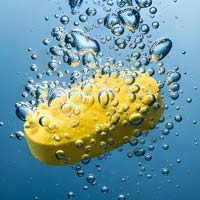
Consumers expect powders to begin mixing shortly after they contact water. When particles float on the surface, they can form clumps or “fish eyes” that require excessive stirring or shaking, creating a frustrating experience and diminishing perceived product quality.
How Brands Can Avoid It
Improving powder wettability begins with optimizing particle characteristics during formulation and manufacturing. Agglomeration creates larger, more porous particles that hydrate more rapidly, while optimizing particle size, density, and ingredient selection helps powders sink, disperse, and mix more efficiently.
Powder Settling Out of Solution After Mixing
Some powder settling is expected in certain formulations, but excessive sedimentation can negatively affect a consumer’s experience. Understanding why particles separate after mixing can help you develop formulations that maintain better suspension and deliver a more consistent drinking experience.
How it Impacts Consumers
Watching a freshly mixed powder quickly separate and settle to the bottom of the glass can leave consumers questioning the quality of a product. Although some settling is expected in products containing protein, fiber, and botanical ingredients, excessive sedimentation creates a gritty drinking experience and can diminish confidence in the product.
How Brands Can Avoid It
Settling is driven by gravity acting on particles with different sizes, densities, and solubility characteristics. While it cannot always be eliminated, brands can significantly reduce sedimentation through particle engineering techniques such as agglomeration and minimizing particle size distribution. Lecithin, gums, and functional suspension systems can also help maintain particle dispersion and improve suspension throughout consumption.
Segregation of Blended Powders
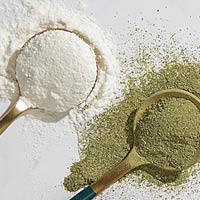
Powder segregation can occur at multiple stages of manufacturing, packaging, and distribution, even when a blend starts uniform. Understanding what causes ingredients to separate can help you develop formulations that maintain consistency from the first serving to the last.
How it Impacts Consumers
Powder segregation is one of the most common causes of inconsistent product quality. Even when a powder leaves the blender perfectly uniform, ingredients can separate during conveying, packaging, transportation, or storage. The result may be inconsistent potency, uneven flavor, variable appearance, and differences in nutrient delivery from the first serving to the last.
How Brands Can Avoid It
Segregation typically occurs when ingredients differ significantly in particle size, density, shape, or flow characteristics.
Brands can minimize segregation by designing formulations with more compatible particle characteristics, optimizing blending strategies, and utilizing agglomeration to create larger, more uniform particles. Advanced agglomeration techniques can transform individual ingredient particles into reengineered particles that contain all formulation components, helping preserve blend integrity throughout manufacturing and into the finished product.
Excessive Dustiness
Excessive dustiness affects both manufacturing efficiency and consumer experience. Understanding what causes powders to generate fine airborne particles can help you develop formulations that are easier to manufacture, package, handle, and mix.
How it Impacts Consumers
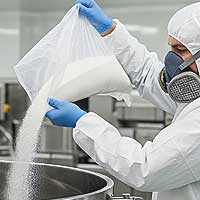
Dusty powders create challenges throughout manufacturing and for consumers. Fine airborne particles contribute to product loss, operator exposure, and manufacturing inefficiencies. Consumers often associate dusty powders with lower quality because they are messy to handle, difficult to scoop, and frequently more difficult to mix.
How Brands Can Avoid It
Reducing dust begins with improving particle size, strength, and uniformity. Agglomeration converts fragile fine particles into larger, more durable granules that generate significantly less dust while improving flowability, handling, packaging efficiency, and mixability. A more uniform particle size distribution also reduces fines generation and improves powder performance throughout manufacturing, packaging, and consumer use.
Turn Common Powder Supplement Complaints into a Competitive Advantage
Understanding common powder supplement complaints is only the first step. Preventing them requires thoughtful formulation, advanced particle engineering, and manufacturing expertise that considers how a powder performs throughout its entire lifecycle, from ingredient handling and high-speed packaging to the first scoop and final sip.
At Vitaquest, we combine formulation science with advanced wet and dry granulation, agglomeration, specialty drying, and microencapsulation technologies to develop powders that deliver consistent performance throughout manufacturing and in consumers’ hands.
By designing for manufacturability, mixability, stability, and consumer experience from the very beginning, brands can reduce production challenges, improve product consistency, strengthen customer loyalty, and bring higher-performing products to market.
Ready to solve your powder formulation challenges? Call Vitaquest today at 800-526-9095 to discuss your project with one of our experienced production specialists or send us your request for a competitive nutraceutical manufacturing quote if you’ve already finalized your project requirements.
Frequently Asked Questions about Common Powder Supplement Complaints
Why do powder supplements sometimes fail to mix properly?
Powder supplements may fail to mix properly when one or more ingredients repel water, causing particles to float on the surface or sink to the bottom. Very fine particles can also require more aggressive mixing because of their larger surface area, while clumping can prevent the powder from dispersing evenly. Thoughtful formulation and particle engineering help improve wettability, dispersion, and overall mixability.
Why is excessive dustiness a concern in powder supplements?
Excessive dustiness can reduce manufacturing efficiency by contributing to product loss, lower yields, and blend segregation that affects content uniformity. For consumers, dusty powders are often messy to handle, difficult to scoop, and can create the perception of lower product quality, resulting in a less satisfying user experience.
How can brands improve overall powder supplement quality?
Producing a high-quality powder supplement starts with sourcing high-quality raw materials and developing formulations designed for both manufacturability and long-term stability. Powders should deliver consistent content uniformity, mix well as directed, and provide an enjoyable flavor and drinking experience. Working with an experienced contract manufacturer also helps ensure the formulation can be successfully scaled from development through commercial production.