















































Key Takeaways
- The supplement industry is entering a new phase of innovation, driven by personalized nutrition, healthy aging, cognitive wellness, clean-label formulations, and multifunctional products that address multiple consumer needs.
- Consumer expectations are changing rapidly. Brands that embrace ingredient transparency, science-backed formulations, convenient delivery formats, and evidence-based messaging will be better positioned to compete in 2027 and beyond.
- Successful product launches require more than identifying trending ingredients. Manufacturing capabilities, formulation expertise, regulatory compliance, and ingredient stability all play a critical role in bringing innovative products to market.
- Preparing now creates a competitive advantage. Understanding where consumer demand is headed today allows brands to build differentiated supplement products that are ready for tomorrow’s marketplace.
As 2027 approaches, the dietary supplements market is expected to be shaped by increasingly informed, prevention-focused consumers seeking science-backed wellness solutions.
For brand owners planning new capsule, tablet, and powder formulations, understanding emerging supplement trends will be critical to developing products that resonate with evolving consumer demand. Successful brands will differentiate themselves through clinically supported formulations, transparent product positioning, and manufacturing strategies that deliver quality, scalability, and speed to market.
This article explores the supplement trends expected to shape 2027, including emerging consumer preferences, innovations in supplement manufacturing, and formulation opportunities for brand owners. We’ll also examine key factors influencing the dietary supplements market and discuss the manufacturing and supply chain considerations companies should address when preparing for the next generation of dietary supplement products.
Why 2027 Will Be a Strategic Year for Supplement Innovation
Why will 2027 be a strategic year for supplement innovation? Supplement industry statistics point to continued, robust growth, with the global dietary supplements market projected to exceed $228 billion in 2026 and expand at an estimated compound annual growth rate (CAGR) of 9.5% through 2033. This growth is being fueled by preventive wellness, personalized nutrition, healthy aging, active lifestyles, and increasing consumer awareness of ingredient quality and efficacy.1Dietary Supplements Market (2026 – 2033). Grand View Research. Retrieved July 23, 2026 from https://www.grandviewresearch.com/industry-analysis/dietary-supplements-market-report.
At the same time, online supplement sales statistics reveal that today’s consumers are more informed than ever. They routinely compare ingredient labels, dosages, health claims, delivery formats, and brand transparency before making a purchase, rewarding companies that combine scientific credibility with clear, honest product positioning.2Pione A, et al. The trends defining the $1.8 trillion global wellness market in 2024. McKinsey & Company. 2024, January 16. https://www.mckinsey.com/industries/consumer-packaged-goods/our-insights/the-trends-defining-the-1-point-8-trillion-dollar-global-wellness-market-in-2024
To remain competitive in this evolving marketplace, brand owners should begin product development well in advance and work with an experienced supplement contract manufacturer capable of efficiently bringing innovative, evidence-based formulations to market.
Top Supplement Trends for 2027
The following dietary supplement trends are expected to shape product innovation and consumer demand in 2027. Key categories include:
- Sleep supplements
- Gut health supplements
- Fiber supplements
- Women’s wellness supplements
- Longevity supplements
- Nootropic supplements
- Sports nutrition supplements
- Men’s wellness supplements
- Children’s multivitamins
- Immune support supplements
Sleep Supplements: Expanding Beyond Melatonin
Sleep formulations are moving beyond single-ingredient melatonin products as consumers increasingly view quality sleep as an essential component of overall wellness. Rather than addressing sleep alone, today’s formulations often support stress management, emotional well-being, gut health, and daily recovery through complementary ingredient combinations and innovative delivery formats.
Commonly used ingredients include:
- Tomato fruit extract – A phytomelatonin source that offers an alternative to synthetic melatonin.3De Jesus M, Bergquist K, Bruno G. Effects of Somato® TOMATO Fruit Extract on Key Physiological and Psychological Domains Associated with Sleep Quality, Autonomic Function, and Health-Related Quality of Life: A Pilot Study. Altern Ther Health Med. 2026 Jan;32(1):20-24.
- Magnesium glycinate – Commonly used to promote relaxation.4Schuster J, Cycelskij I, Lopresti A, Hahn A. Magnesium Bisglycinate Supplementation in Healthy Adults Reporting Poor Sleep: A Randomized, Placebo-Controlled Trial. Nat Sci Sleep. 2025 Aug 30;17:2027-2040. doi: 10.2147/NSS.S524348.
- L-theanine – Supports relaxation and a calm mental state.5Bulman A, D’Cunha NM, Marx W, et al. The effects of L-theanine consumption on sleep outcomes: A systematic review and meta-analysis. Sleep Medicine Reviews. 2025; 81:102076. https://doi.org/10.1016/j.smrv.2025.102076.
- Ashwagandha – Helps the body adapt to occasional stress.6Cheah KL, et al. Effects of Ashwagandha (Withania somnifera) extract on sleep: A systematic review and meta-analysis. PLOS ONE. 2021;16:e0257843.
- Magnesium L-threonate – Supports cognitive function and sleep quality.7Hausenblas HA, Lynch T, Hooper S, et al. Magnesium L-threonate improves sleep quality and daytime functioning in adults with self-reported sleep problems: A randomized controlled trial. Sleep Medicine X. 2024;8:100121.
- Probiotics – Help support the gut-brain axis.8Kim N, Yun M, Oh YJ, Choi HJ. Mind-altering with the gut: Modulation of the gut-brain axis with probiotics. Journal of Microbiology. 2018;56(3):172-182.
- Fiber – Helps maintain a healthy gut microbiome, which is associated with overall wellness and sleep quality.9hoe U. Role of dietary fiber and short-chain fatty acids in preventing neurodegenerative diseases through the gut-brain axis. J Func Foods. 2025; 129:106870. https://doi.org/10.1016/j.jff.2025.106870.
Gut Health Supplements: From Digestive Support to Whole-Body Wellness
Gut health formulations have expanded far beyond traditional digestive support as research continues to demonstrate the microbiome’s influence on immune function, metabolism, cognitive health, and overall wellness.
As consumer awareness grows, brands are developing more comprehensive products that support multiple aspects of health rather than digestion alone. This includes probiotics that influence the oral microbiome and oral health.
Many formulations combine complementary ingredients such as:



- Probiotics – To replenish beneficial microorganisms.10Hill C, Guarner F, Reid G, et al. Expert consensus document: The International Scientific Association for Probiotics and Prebiotics consensus statement on the scope and appropriate use of the term probiotic. Nature Reviews Gastroenterology & Hepatology. 2014;11:506-514.
- Prebiotics – To nourish beneficial gut bacteria.11Gibson GR, Hutkins R, Sanders ME, et al. The International Scientific Association for Probiotics and Prebiotics (ISAPP) consensus statement on the definition and scope of prebiotics. Nature Reviews Gastroenterology & Hepatology. 2017;14:491-502.
- Postbiotics – To provide beneficial microbial metabolites.12Salminen S, Collado MC, Endo A, et al. The International Scientific Association of Probiotics and Prebiotics (ISAPP) consensus statement on the definition and scope of postbiotics. Nature Reviews Gastroenterology & Hepatology. 2021;18:649-667.
- Digestive enzymes – To support nutrient breakdown and digestive comfort.13 Ianiro G, Pecere S, Giorgio V, Gasbarrini A, Cammarota G. Digestive enzyme supplementation in gastrointestinal diseases. Current Drug Metabolism. 2016;17(2):187-193.
- Bacteriophages (phages) – To selectively target undesirable bacteria while helping maintain a healthy microbial balance.14Gindin M, Febvre HP, Rao S, et al. A randomized, placebo-controlled study evaluating the safety and efficacy of a bacteriophage preparation targeting Escherichia coli in healthy adults. Microbiome. 2019;7:156.
Fiber Supplements: Evolving into Multi-Benefit Wellness Solutions
Fiber has evolved well beyond digestive regularity to become a cornerstone ingredient in multifunctional wellness formulations. Emerging research continues to demonstrate fiber’s role in supporting metabolic health, immune function, cognitive wellness, and the gut microbiome through the production of beneficial short-chain fatty acids.
Commonly incorporated ingredients include:
- Acacia fiber – Valued for its digestive tolerance and prebiotic activity.15Cherbut C, Michel C, Raison V, et al. Acacia gum is a bifidogenic dietary fiber with high digestive tolerance in healthy humans. Microbial Ecology in Health and Disease. 2003;15(1):43-50.
- Arabinogalactan – Supports immune and microbiome health.16Kelly GS. Larch arabinogalactan: Clinical relevance of a novel immune-enhancing polysaccharide. Alternative Medicine Review. 1999;4(2):96-103.
- Beta-glucans – Studied for cardiometabolic and immune benefits.17Ho HVT, Sievenpiper JL, Zurbau A, et al. The effect of oat β-glucan on LDL cholesterol, non-HDL cholesterol and apoB: A systematic review and meta-analysis of randomized controlled trials. British Journal of Nutrition. 2016;116(8):1369-1382.
- Resistant starch – Supports beneficial microbial fermentation and metabolic health.18Birt DF, Boylston T, Hendrich S, et al. Resistant starch: Promise for improving human health. Advances in Nutrition. 2013;4(6):587-601.
These ingredients enable manufacturers to develop differentiated formulations that extend well beyond traditional digestive health products.
Women’s Wellness Supplements
Women’s wellness formulations continue to expand beyond menopause support to address health needs across every stage of life, including reproductive health, perimenopause, menopause, healthy aging, and overall wellness. Increasing interest in personalized nutrition is driving demand for targeted formulations rather than general-purpose multivitamins.
Frequently incorporated ingredients include:
- Siberian rhubarb – Supports menopausal symptom management.19Kaszkin M, et al. Special extract ERr 731® from Rheum rhaponticum for menopausal symptoms: Clinical efficacy and safety. Archives of Gynecology and Obstetrics. 2018;297:303-312.
- Shatavari – Traditionally used to support women’s hormonal health and healthy aging, including bone health ii
- Vitex – Traditionally used to support menstrual cycle health and hormone balance.20Verkaik S, et al. Vitex agnus-castus in premenstrual syndrome: A systematic review and meta-analysis. American Journal of Obstetrics and Gynecology. 2017;217(2):150-166.
- Maca root – Supports vitality and menopausal wellness.21Gonzales GF. Ethnobiology and ethnopharmacology of Lepidium meyenii (maca): A review. Evidence-Based Complementary and Alternative Medicine. 2012;2012:193496.
- Magnesium – Supports mood, sleep, and normal muscle function.22Abbasi B, et al. The effect of magnesium supplementation on primary insomnia in elderly: A double-blind placebo-controlled clinical trial. Journal of Research in Medical Sciences. 2012;17(12):1161-1169.
- Probiotics – Support vaginal, urinary, digestive, and immune health.23Reid G, et al. The human microbiota and the importance of probiotics in women’s health. Current Opinion in Obstetrics and Gynecology. 2013;25(5):435-440.
- Black cohosh – Commonly used to help manage vasomotor symptoms associated with menopause.24Sarri G, Pedder H, Dias S, et al. Black cohosh (Cimicifuga racemosa) for menopausal symptoms: A systematic review and meta-analysis. BJOG. 2016;123(1):17-26.
- Cranberry and D-Mannose – Support urinary tract health and help maintain a healthy urinary environment.
Longevity Supplements: Healthy Aging Becomes a Mainstream Focus
Healthy aging has become one of the industry’s fastest-growing areas of innovation as consumers increasingly seek to maintain vitality, cognitive performance, cellular health, and overall wellness throughout life. Rather than focusing solely on aging-related concerns, manufacturers are developing formulations that support long-term health by targeting multiple biological pathways associated with healthy aging.
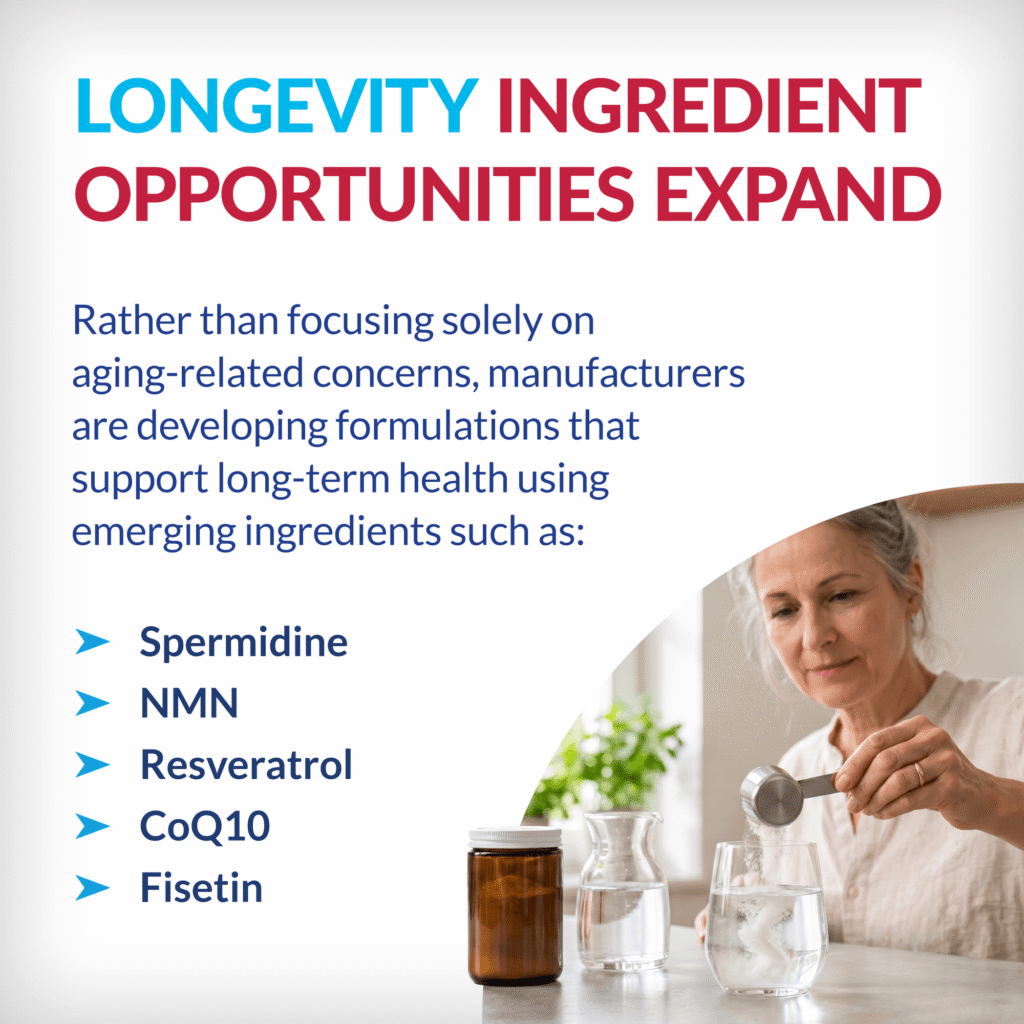
Emerging ingredients include:
- Spermidine (from rice germ extract) – Supports cellular renewal through autophagy.25Bruno G, La Monica M, Ziegenfuss TN. Effects of Spermidine-Rich Rice Germ Extract Supplement on Biomarkers of Healthy Aging and Autophagy-Proof-of-Concept Pilot Study. Altern Ther Health Med. 2025 Oct;31(6):9-13.
- NMN – A precursor to NAD+ involved in cellular energy metabolism.26Yoshino J, et al. Nicotinamide mononucleotide increases muscle insulin sensitivity in prediabetic women. Science. 2021;372:1224-1229.
- Resveratrol – Studied for its role in longevity-related signaling pathways.27Baur JA, Sinclair DA. Therapeutic potential of resveratrol: The in vivo evidence. Nature Reviews Drug Discovery. 2006;5:493-506.
- CoQ10 – Supports mitochondrial energy production and antioxidant activity.28Hernández-Camacho JD, et al. Coenzyme Q10 supplementation in aging and disease. Frontiers in Physiology. 2018;9:44.
- Fisetin – A flavonoid currently being studied for its potential senolytic properties and healthy aging applications.29 Yousefzadeh MJ, et al. Fisetin is a senotherapeutic that extends health and lifespan. EBioMedicine. 2018;36:18-28.
Nootropic Supplements
Demand for cognitive wellness products continues to expand as consumers seek ingredients that support memory, focus, learning, productivity, and healthy cognitive aging. These products now appeal not only to older adults but also to students, professionals, and active individuals looking to maintain mental performance throughout life.
Frequently used ingredients include:
- Creatine – Supports cellular energy production in the brain.30Avgerinos KI, Spyrou N, Bougioukas KI, Kapogiannis D. Effects of creatine supplementation on cognitive function of healthy individuals: A systematic review of randomized controlled trials. Experimental Gerontology. 2018;108:166-173.
- Magnesium L-threonate – Supports cognitive function and synaptic health.31 Liu G, et al. Enhancement of learning and memory by elevating brain magnesium. Neuron. 2010;65(2):165-177.
- Citicoline – Supports memory and attention through phospholipid and acetylcholine production.32McGlade E, et al. Improved attentional performance following citicoline administration in healthy adult women. Food and Nutrition Sciences. 2012;3:769-773.
- Lion’s mane – Studied for its potential to support nerve growth factor activity.33Saitsu Y, et al. Hericium erinaceus improves cognitive function in patients with mild cognitive impairment: A double-blind, placebo-controlled clinical trial. Phytotherapy Research. 2009;23(3):367-372.
- Bacopa monnieri – Clinically studied for its effects on memory, learning, and cognitive performance.34Kongkeaw C, Dilokthornsakul P, Thanarangsarit P, et al. Meta-analysis of randomized controlled trials on cognitive effects of Bacopa monnieri extract. Journal of Ethnopharmacology. 2014;151(1):528-535.
Sports Nutrition
Sports nutrition has expanded well beyond competitive athletics to support active lifestyles, healthy aging, strength, recovery, and sustained energy. Today’s formulations increasingly combine ingredients that support muscle performance, hydration, recovery, and cognitive function within a single product.
Popular ingredients include:
- Creatine – Supports muscle strength and cellular energy production.35Kreider RB, Kalman DS, Antonio J, et al. International Society of Sports Nutrition position stand: Safety and efficacy of creatine supplementation in exercise, sport, and medicine. Journal of the International Society of Sports Nutrition. 2017;14:18.
- Protein – Supports muscle repair and growth.36Morton RW, Murphy KT, McKellar SR, et al. A systematic review, meta-analysis and meta-regression of the effect of protein supplementation on resistance training-induced gains in muscle mass and strength in healthy adults. British Journal of Sports Medicine. 2018;52(6):376-384.
- Electrolytes – Help maintain hydration.37 Maughan RJ, Shirreffs SM. Hydration and performance during exercise. Journal of Sports Sciences. 2010;28(Suppl 1):S11-S17.
- Beta-alanine – Supports muscular endurance.38Saunders B, Elliott-Sale K, Artioli GG, et al. β-Alanine supplementation to improve exercise capacity and performance: A systematic review and meta-analysis. British Journal of Sports Medicine. 2017;51(8):658-669.
- Adaptogens – Including ashwagandha and rhodiola to support stress resilience, recovery, and physical performance.39Panossian A, Wikman G. Effects of adaptogens on the central nervous system and the molecular mechanisms associated with their stress-protective activity. Pharmaceuticals. 2010;3(1):188-224.
Men’s Wellness Supplements
Men’s wellness products have evolved beyond testosterone support into comprehensive formulations designed to support energy, metabolic health, cognitive performance, healthy aging, and overall vitality. Consumers increasingly prefer targeted products that address multiple aspects of long-term wellness through clinically supported ingredient combinations.
Common ingredients include:
- Ashwagandha – Supports stress resilience and physical performance.40Bonilla DA, et al. Effects of Ashwagandha (Withania somnifera) on physical performance: Systematic review and Bayesian meta-analysis. Journal of Functional Morphology and Kinesiology. 2021;6(1):20.
- Zinc – Supports immune function and normal testosterone metabolism.41Prasad AS. Zinc in human health: Effect of zinc on immune cells. Molecular Medicine. 2008;14(5-6):353-357.
- Magnesium – Supports muscle function, sleep, and energy production.42Gröber U, Schmidt J, Kisters K. Magnesium in prevention and therapy. Nutrients. 2015;7(9):8199-8226.
- Creatine – Supports strength, cellular energy, and cognitive performance.43Kreider RB, et al. International Society of Sports Nutrition position stand: Safety and efficacy of creatine supplementation in exercise, sport, and medicine. Journal of the International Society of Sports Nutrition. 2017;14:18.
- Vitamin D – Supports musculoskeletal, immune, and overall health.44Holick MF. Vitamin D deficiency. New England Journal of Medicine. 2007;357:266-281.
Kids’ Multivitamins: Clean Labels and Targeted Nutrition
Children’s nutritional products continue to evolve beyond basic multivitamins into targeted formulations designed to support healthy growth, bone development, cognitive function, immune health, and digestive wellness. Parents increasingly seek products with transparent ingredient sourcing, evidence-based dosages, clean-label formulations, and convenient delivery formats such as powders and chewable tablets.
Commonly incorporated ingredients include:
- Vitamin D – Supports bone and immune health.45Munns CF, et al. Global Consensus Recommendations on Prevention and Management of Nutritional Rickets. Journal of Clinical Endocrinology & Metabolism. 2016;101(2):394-415.
- Omega-3 fatty acids – Support brain and eye development.46Gould JF, Smithers LG, Makrides M. The effect of maternal omega-3 (n-3) LCPUFA supplementation during pregnancy on early childhood cognitive and visual development: A systematic review and meta-analysis. American Journal of Clinical Nutrition. 2013;97(3):531-544.
- Magnesium – Supports normal neuromuscular function.47Gröber U, Schmidt J, Kisters K. Magnesium in prevention and therapy. Nutrients. 2015;7(9):8199-8226.
- Probiotics – Support digestive health and a healthy immune system.48Thomas DW, Greer FR; Committee on Nutrition; Section on Gastroenterology, Hepatology and Nutrition. Probiotics and prebiotics in pediatrics. Pediatrics. 2010;126(6):1217-1231.
- Choline – Supports healthy brain development and cognitive function in children.
- Iron – Supports cognitive development and healthy red blood cell production.49Lozoff B, Beard J, Connor J, Barbara F, Georgieff M, Schallert T. Long-lasting neural and behavioral effects of iron deficiency in infancy. Nutrition Reviews. 2006;64(5 Pt 2):S34-S43.
Immune Support Supplements
Immune health products have evolved from seasonal cold-and-flu formulations into year-round wellness solutions that support overall resilience. Consumers increasingly recognize the relationship between immune function, gut health, nutrition, stress management, and healthy lifestyle habits, driving demand for more comprehensive formulations.
Manufacturers are combining established nutrients with emerging functional ingredients, including:
- Vitamin D – Supports normal immune function.50Aranow C. Vitamin D and the immune system. Journal of Investigative Medicine. 2011;59(6):881-886.
- Zinc – Supports healthy immune cell function.51Gammoh NZ, Rink L. Zinc in infection and inflammation. Nutrients. 2017;9(6):624.
- Vitamin C – Provides antioxidant support while contributing to normal immune function.52Carr AC, Maggini S. Vitamin C and immune function. Nutrients. 2017;9(11):1211.
- Beta-glucans – Help support innate immune responses.53Vetvicka V, Vetvickova J. β-Glucan improves conditions of chronic fatigue and supports immune function: Review of clinical evidence. Journal of the American Nutraceutical Association. 2015.
- Medicinal mushroom extracts – Including reishi, shiitake, and turkey tail, which contain bioactive polysaccharides that support healthy immune function.54El Enshasy HA, et al. Bioactive compounds of medicinal mushrooms and their immunomodulatory properties: A review. International Journal of Molecular Sciences. 2024;25:1680.
Supplement Manufacturing Trends for 2027
Manufacturing innovation continues to reshape how dietary supplements are developed and brought to market.
In 2027, key areas of focus include clean-label ingredients, sustainable manufacturing practices, and emerging delivery formats that enhance both product performance and the consumer experience.
Clean Label Ingredients and Sustainable Manufacturing
Consumers are placing greater emphasis on ingredient transparency, looking beyond product efficacy to evaluate ingredient sourcing, processing methods, and environmental impact.55International Food Information Council (IFIC). 2024 Food & Health Survey. Demand continues to grow for products made with recognizable ingredients, responsibly sourced raw materials, sustainable packaging, and clear documentation that reinforces quality and traceability.56Asioli D, Aschemann-Witzel J, Caputo V, et al. Making sense of the “clean label” trends: A review of consumer food choice behavior and discussion of industry implications. Food Research International. 2017;99(Pt 1):58-71.

Manufacturers can help brands meet these expectations by sourcing verified ingredients, maintaining transparent supply chain documentation, and developing clean-label formulations that uphold product quality, regulatory compliance, and consumer confidence while supporting long-term sustainability goals.57Council for Responsible Nutrition (CRN). 2024 CRN Consumer Survey on Dietary Supplements.
Emerging Delivery Formats
Convenience continues to influence how consumers purchase and use dietary supplements, driving demand for formats that fit easily into busy lifestyles. Stick packs, ready-to-mix powders, functional beverages, chewable tablets, and nutrient-fortified snacks are gaining popularity because they offer portability, ease of use, and an improved overall consumer experience.
These innovative delivery formats also create opportunities for brands to differentiate their products while improving adherence and meeting evolving consumer expectations for convenient, on-the-go wellness solutions.58 Council for Responsible Nutrition (CRN). 2024 CRN Consumer Survey on Dietary Supplements. 59Top Ten Food and Beverage Trends 2025. Innova Market Insights. Retrieved July 23, 2026 from https://www.innovamarketinsights.com/press-releases/top-ten-trends-2025/.
Consumer Trends Driving Supplement Innovation in 2027
Consumer expectations continue to shape both product development and brand strategy. The most influential trends include growing demand for targeted health solutions, greater emphasis on ingredient transparency, interest in multifunctional formulations, and more research-driven purchasing decisions.
Consumers Are Prioritizing Specific Need States
Consumers are increasingly selecting supplements based on specific health objectives rather than general wellness. Areas such as cognitive performance, gut health, immune support, sleep, and healthy aging continue to attract significant interest.
As a result, products with clearly defined, science-backed benefits are becoming more competitive. Brands that develop targeted formulations and communicate those benefits with credible scientific support are well-positioned to meet evolving consumer expectations.60Pione A, Medalsy J, Weaver K, Callaghan S, Rickert S. The Future of Wellness Trends. McKinsey & Company. 2025. Retrieved July 23, 2026 from https://www.mckinsey.com/industries/consumer-packaged-goods/our-insights/future-of-wellness-trends 61Council for Responsible Nutrition (CRN). 2024 CRN Consumer Survey on Dietary Supplements.
Ingredient Transparency Is Becoming a Purchase Requirement
Ingredient transparency has evolved from a differentiator to an expectation. Today’s consumers routinely evaluate ingredient quality, sourcing, and scientific support before making purchasing decisions, often looking beyond front-label claims to better understand what is included in a formulation.
Brands that emphasize transparent labeling, clinically supported ingredients, and clear communication about ingredient quality and function are better positioned to build credibility and consumer trust.62ATLAS 2023 Consumer Research: 2024 Consumer Food Preference Trends. Ingredion. Retrieved July 23, 2026 from https://www.ingredion.com/na/en-us/be-whats-next/2023-consumer-food-preference-trends. 632023 Food Ingredient Survey. International Food Information Council (IFIC). Retrieved July 23, 2026 from https://ific.org/wp-content/uploads/2025/04/2023-Food-Ingredient-Survey.pdf.
Consumers Expect Multi-Benefit Solutions
Consumers increasingly prefer products that address multiple wellness goals within a single formulation. Ingredients that support areas such as energy, cognitive performance, stress resilience, immune health, sleep, and gut health are often combined to provide more comprehensive daily wellness support.

This shift creates opportunities for brands to develop differentiated formulations that deliver complementary benefits while simplifying supplement routines and enhancing overall consumer value.64Pione A, Medalsy J, Weaver K, Callaghan S, Rickert S. The Future of Wellness Trends. McKinsey & Company. 2025. Retrieved July 23, 2026 from https://www.mckinsey.com/industries/consumer-packaged-goods/our-insights/future-of-wellness-trends
Research-Led Purchasing Is Accelerating
Consumers are investing more time in researching supplement ingredients before making purchasing decisions, increasing the importance of educational content and scientific substantiation.
As awareness of emerging ingredients continues to grow, compounds such as postbiotics, bacteriophages, and citicoline often require additional explanation regarding their mechanisms of action, intended benefits, and supporting clinical evidence.
Brands that communicate the science behind their formulations clearly and accurately are more likely to build consumer confidence, differentiate their products, and encourage adoption of innovative ingredients.65Salminen S, Collado MC, Endo A, et al. The International Scientific Association of Probiotics and Prebiotics (ISAPP) consensus statement on the definition and scope of postbiotics. Nature Reviews Gastroenterology & Hepatology. 2021;18:649-667. 66Gindin M, Febvre HP, Rao S, et al. A randomized, placebo-controlled study evaluating the safety and efficacy of a bacteriophage preparation targeting Escherichia coli in healthy adults. Microbiome. 2019;7:156. 67Grieb P. Citicoline: A Superior Form of Choline? Nutrients. 2014;6(11):4560-4571.
Formulation Challenges Brand Owners Should Plan for in 2027
As ingredient innovation continues to accelerate, successful product development requires more than identifying promising ingredients. Brand owners should also account for formulation, manufacturing, and regulatory considerations that can affect product quality, stability, and long-term commercial success.
Ingredient Stability and Shelf-Life Testing
Moisture, heat, oxidation, and ingredient interactions can all affect the stability, potency, and shelf life of dietary supplements. Ingredients such as probiotics, botanicals, minerals, and powdered formulations often require careful consideration during formulation, packaging, and storage to help preserve product quality.68Tripathi MK, Giri SK. Probiotic functional foods: Survival of probiotics during processing and storage. Journal of Functional Foods. 2014;9:225-241. 69Tsimogiannis D, Oreopoulou V. The contribution of flavonoid C-ring on the DPPH free radical scavenging efficiency: A kinetic approach for antioxidant activity evaluation. Innovative Food Science & Emerging Technologies. 2006;7(1-2):140-146.

Addressing stability early in the product development process helps maintain label claim compliance throughout the product’s shelf life while reducing the likelihood of reformulation, manufacturing delays, or quality issues after commercialization.70 ICH Harmonised Guideline Q1A(R2): Stability Testing of New Drug Substances and Products. 2003. 71Current Good Manufacturing Practice (CGMP) in Manufacturing, Packaging, Labeling, or Holding Operations for Dietary Supplements (21 CFR Part 111) 72USP General Chapter <2750> Manufacturing Practices for Dietary Supplements.
Claims, Compliance, and Label Review
As new products are introduced to market, product positioning should be supported by compliant structure-function claims and credible scientific evidence. Manufacturers and brand owners should substantiate ingredient benefits using high-quality sources such as National Institutes of Health Office of Dietary Supplements fact sheets, PubMed-indexed human clinical studies, and authoritative scientific reviews.
A thoughtful approach to claims substantiation and label review not only supports regulatory compliance but also strengthens consumer confidence and helps establish long-term brand credibility.73U.S. Food and Drug Administration (FDA). Structure/Function Claims. https://www.fda.gov/food/nutrition-food-labeling-and-critical-foods/structurefunction-claims 74National Institutes of Health (NIH), Office of Dietary Supplements. Dietary Supplement Fact Sheets. https://ods.od.nih.gov/factsheets/list-all/ 75Bailey RL. Current regulatory guidelines and resources to support research of dietary supplements in the United States. Crit Rev Food Sci Nutr. 2020;60(2):298-309. doi: 10.1080/10408398.2018.1524364.
Preparing Your Brand for 2027 Supplement Trends
The supplement trends shaping 2027 reflect a more informed, health-conscious consumer who expects science-backed formulations, clean-label ingredients, convenient delivery formats, and targeted wellness solutions. At the same time, advances in manufacturing, personalization, automation, and sustainable production are creating new opportunities for brands to differentiate themselves in an increasingly competitive marketplace.
Successfully manufacturing and bringing these products to the market requires more than selecting trending ingredients. It also requires a contract manufacturing partner with the formulation expertise, regulatory knowledge, quality systems, and scalable production capabilities to transform innovative concepts into commercially successful products.
If you’re planning your 2027 product lineup, Vitaquest can help. Our experienced team specializes in developing custom, science-based formulations across a wide range of dosage forms, supported by industry-leading quality standards and manufacturing expertise. Call 800-526-9095 to speak with one of our knowledgeable production specialists or request a competitive nutraceutical manufacturing price quote to get started on your next product launch.
Frequently Asked Questions about 2027 Supplement Trends
Which supplement formats are expected to remain important in 2027?
Capsules and tablets will remain foundational supplement formats in 2027 because they offer accurate dosing, manufacturing efficiency, and broad consumer acceptance. At the same time, powders, stick packs, chewables, and functional beverages are expected to gain market share as consumers seek more convenient, portable, and personalized wellness solutions.
Why are powder supplements growing in popularity?
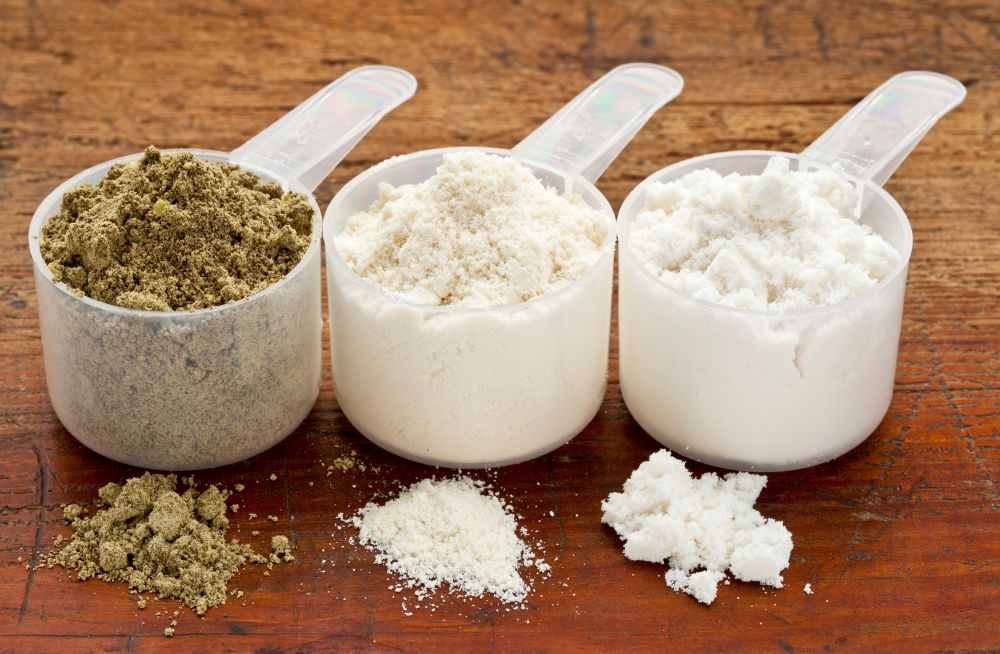
Powder supplements continue to gain popularity because they accommodate higher ingredient loads and offer greater formulation flexibility than many capsules or tablets. They are ideal for proteins, collagen, fiber, electrolytes, and other multifunctional ingredients, while providing consumers with convenient, customizable options that fit easily into everyday wellness routines.
How can supplement brands create differentiated products in 2027?
Brands can differentiate themselves by combining clinically studied ingredients, targeted health benefits, and consumer-preferred delivery formats with transparent labeling and science-backed product positioning. Partnering with an experienced contract manufacturer can also help accelerate innovation while maintaining product quality, regulatory compliance, and manufacturing scalability.
Why should brand owners work with a supplement contract manufacturer?
An experienced supplement contract manufacturer provides the formulation expertise, quality systems, regulatory support, and production capabilities needed to efficiently bring new products to market. Working with the right partner helps reduce development risk, improve speed to market, maintain consistent product quality, and support long-term brand growth.