





































Key Takeaways
- Menopause is creating a growing opportunity for targeted probiotic products. Changes in hormones, digestive health, and the vaginal microbiome are increasing interest in formulations designed specifically for women in midlife.
- The right probiotic strain matters more than simply offering a high CFU count. Clinical evidence is strain-specific, making strain selection, clinically relevant dosing, stability, and substantiation critical when developing a credible menopause-focused product.
- Probiotic formulations can address multiple areas of women’s wellness. Research on specific strains points to opportunities across digestive comfort, vaginal microbial balance, menopausal wellness, and metabolic health, giving brands several potential avenues for product differentiation.
- Successful products require more than promising ingredients. Delivery format, moisture control, viability testing, strain identification, complementary ingredients, and the right manufacturing capabilities can all influence product quality, stability, and market credibility.
As more women seek targeted solutions for the changes that accompany menopause, gut health is emerging as an important and potentially underdeveloped category opportunity for supplement brands. For brands exploring the best probiotics for menopause, the focus should be on evidence-based probiotic strains supported by relevant scientific research.
The gut-hormone connection is especially relevant because changes in estrogen levels during menopause are associated with changes in the gut microbiome, while gut microbes can also participate in estrogen metabolism through the estrobolome, the group of gut bacteria and their genes that help process and regulate estrogen.1Liaquat M, Minihane AM, Vauzour D, Pontifex MG. The gut microbiota in menopause: Is there a role for prebiotic and probiotic solutions? Post Reprod Health. 2025 Jun;31(2):105-114. doi: 10.1177/20533691251340491. Epub 2025 May 7. PMID: 40335047; PMCID: PMC12209548. 2Wang H, Shi F, Zheng L, Zhou W, Mi B, Wu S and Feng X. Gut microbiota has the potential to improve health of menopausal women by regulating estrogen. Front Endocrinol. 2025;16:1562332. doi: 10.3389/fendo.2025.1562332.
These hormonal and microbial changes may also be relevant to digestive experiences during midlife. Gastrointestinal symptoms reported during the menopausal transition include bloating, constipation, indigestion, abdominal pain, and nausea.3Liaquat M, Minihane AM, Vauzour D, Pontifex MG. The gut microbiota in menopause: Is there a role for prebiotic and probiotic solutions? Post Reprod Health. 2025 Jun;31(2):105-114. doi: 10.1177/20533691251340491. Epub 2025 May 7. PMID: 40335047; PMCID: PMC12209548. This growing area of research creates an opportunity for your brand to develop products designed around women’s changing needs during midlife.
In this article, we’ll explore evidence-based probiotics, including probiotic strains with relevant research, as well as formulation design strategies that can support product quality and differentiation. We’ll also examine key considerations when developing a menopause-focused gut health product, from strain selection and clinically relevant doses to stability, delivery format, and complementary ingredients. While evidence supporting menopause probiotics for women is promising, it remains limited and strain-specific, making careful formulation and appropriate substantiation particularly important.4Barrea L, Verde L, Auriemma RS, et al. Probiotics and Prebiotics: Any Role in Menopause-Related Diseases? Curr Nutr Rep. 2023;12:83–97. https://doi.org/10.1007/s13668-023-00462-3. 5Szydłowska I, Marciniak A, Brodowska A, Loj B, Ciećwież S, Skonieczna-Żydecka K, Palma J, Łoniewski I, Stachowska E. Effects of probiotics supplementation on the hormone and body mass index in perimenopausal and postmenopausal women using the standardized diet. A 5-week double-blind, placebo-controlled, and randomized clinical study. Eur Rev Med Pharmacol Sci. 2021 May;25(10):3859-3867. doi: 10.26355/eurrev_202105_25953. PMID: 34109594.
Understanding How Menopause Affects Gut and Microbiome Health
Menopause brings substantial changes in estrogen and progesterone levels, and emerging research suggests that these hormonal shifts are associated with changes in the composition and function of the gut microbiome. The relationship appears to be bidirectional: gut microbes participate in estrogen metabolism through the estrobolome, while changing estrogen levels may influence the microbial environment.
However, evidence regarding overall bacterial diversity is mixed. A 2022 systematic review found differences in certain bacterial genera after menopause but no consistent differences in overall diversity, while a 2026 systematic review and meta-analysis similarly found no significant difference in alpha diversity between hypoestrogenic and premenopausal women.6Yang M, Wen S, Zhang J, Peng J, Shen X, Xu L. Systematic Review and Meta-analysis: Changes of Gut Microbiota before and after Menopause. Dis Markers. 2022 Jul 25;2022:3767373. doi: 10.1155/2022/3767373. PMID: 35923245; PMCID: PMC9343210. 7Saravinovska K, Santi D, Costantino F, Prete A, Šojat AS, Spaggiari G, Ivović M, Lambrinoudaki I, Armeni E, Jurišić A, Mihajlović S, Vujović S, Marina LV. The impact of estrogen status on the gut microbiome: a systematic review and meta-analysis. Front Endocrinol (Lausanne). 2026 Apr 2;17:1780806. doi: 10.3389/fendo.2026.1780806. PMID: 42006274; PMCID: PMC13082958.
Digestive changes can also be among the commonly reported experiences during the menopausal transition, including bloating, constipation, altered bowel regularity, and abdominal discomfort. These observations have contributed to growing interest in whether targeted probiotics for menopause may help support gut balance during this stage of life.
Several human studies have investigated specific probiotic strains or combinations in perimenopausal and postmenopausal women, providing a useful starting point for evaluating strain-specific approaches.8Barrea L, Verde L, Auriemma RS, Vetrani C, Cataldi M, Frias-Toral E, Pugliese G, Camajani E, Savastano S, Colao A, Muscogiuri G. Probiotics and Prebiotics: Any Role in Menopause-Related Diseases? Curr Nutr Rep. 2023 Mar;12(1):83-97. doi: 10.1007/s13668-023-00462-3. Epub 2023 Feb 7. PMID: 36746877; PMCID: PMC9974675.
Key Probiotic Strains for Menopausal Women
The following section provides an overview of probiotic strains commonly used in menopause-focused formulations. Strain specificity is important because different probiotic strains may support different wellness goals.
| Probiotic Strain | Primary Wellness Focus |
| Lactobacillus rhamnosus GR-1
Lactobacillus rhamnosus CA15 |
Vaginal microbiome support and broader microbial wellness. |
| Lactobacillus reuteri RC-14 | Vaginal microbiome and overall wellness support in postmenopausal women. |
| Lactobacillus crispatus IP174178 | Vaginal microbiome and microbial balance support. |
| Lactobacillus acidophilus YT1 | Menopausal wellness support. |
| Bifidobacterium lactis DN-173 010 | Gut health and digestive support. |
| Multi-strain probiotic blends | Comprehensive digestive and women’s wellness support. |
| Akkermansia muciniphila 001 postbiotic | Metabolic health and weight management support. |
Lactobacillus rhamnosus for Women’s Microbiome Support
Lactobacillus rhamnosus is an important species to consider in women-focused probiotic formulations, although benefits are strain-specific and should not be generalized across the species.



The NIH Office of Dietary Supplements notes that probiotic effects can vary according to the specific strain and may include supporting a balanced intestinal microbiota, inhibiting undesirable microorganisms, producing bioactive metabolites, and influencing intestinal function.9National Institutes of Health, Office of Dietary Supplements. Probiotics—Health Professional Fact Sheet. Updated 2025.
Certain L. rhamnosus strains also have clinical evidence in women. For example, L. rhamnosus GR-1, combined with L. fermentum RC-14, increased the proportion of women whose vaginal microbiota returned to a lactobacilli-dominated state in a randomized, placebo-controlled trial.10Reid G, Charbonneau D, Erb J, et al. Oral probiotics can resolve urogenital infections. Clinical Infectious Diseases. 2003;37(11):1440-1446. PMID: 12628548.
Similarly, L. rhamnosus CA15 (DSM 33960) significantly increased lactobacilli and reduced potentially undesirable microorganisms in women with vaginal dysbiosis.11Rapisarda AMC, Pino A, Grimaldi RL, et al. Lacticaseibacillus rhamnosus CA15 (DSM 33960) strain as a new driver in restoring the normal vaginal microbiota: a randomized, double-blind, placebo-controlled clinical trial. Frontiers in Surgery. 2023;9:1075612. doi:10.3389/fsurg.2022.1075612. PMID: 36700035.
These findings support the consideration of well-characterized L. rhamnosus strains when developing women-focused formulations intended to support microbial balance and overall women’s wellness.
Lactobacillus reuteri for Vaginal Microbiome & Wellness
Lactobacillus reuteri, particularly L. reuteri RC-14, is commonly included in women-focused probiotic formulations, often paired with L. rhamnosus GR-1. This combination has been investigated for its ability to support a Lactobacillus-dominant vaginal microbiome, which is generally associated with vaginal health.
In a randomized, double-blind, placebo-controlled trial involving postmenopausal women, oral GR-1 and RC-14 improved Nugent scores in significantly more participants than placebo, suggesting potential support for vaginal microbial balance.12Petricevic L, Unger FM, Viernstein H, Kiss H. Randomized, double-blind, placebo-controlled study of oral lactobacilli to improve the vaginal flora of postmenopausal women. European Journal of Obstetrics & Gynecology and Reproductive Biology. 2008;141(1):54-57. doi:10.1016/j.ejogrb.2008.06.003. PMID: 18701205. Another study found that the combination increased the relative abundance of vaginal Lactobacillus and decreased Atopobium in postmenopausal women.13Macklaim JM, Clemente JC, Knight R, Gloor GB, Reid G. A systems biology approach investigating the effect of probiotics on the vaginal microbiome and host responses in a double blind, placebo-controlled clinical trial of post-menopausal women. PLoS One. 2015;10(3). doi:10.1371/journal.pone.0116952.
For brand owners and key decision makers researching the best probiotics for vaginal health and menopause support, these findings highlight the importance of evaluating strain-specific clinical evidence. L. reuteri RC-14 may be relevant for formulations intended to support vaginal microbial balance and overall women’s wellness, although these benefits should not be generalized to all L. reuteri strains.
Lactobacillus crispatus for Vaginal Microbiome Health
Lactobacillus crispatus is considered one of the most important bacterial species associated with a healthy vaginal microbiome. It is frequently dominant in Lactobacillus-rich vaginal communities and produces lactic acid, which helps maintain the naturally acidic vaginal environment and supports microbial balance.14Petrova MI, Reid G, Vaneechoutte M, Lebeer S. Lactobacillus species and vaginal microbiota: a review. Microbial Ecology in Health and Disease. 2017;28(1):1320849. doi:10.1080/16512235.2017.1320849. 15Ravel J, Gajer P, Abdo Z, et al. Vaginal microbiome of reproductive-age women. Proceedings of the National Academy of Sciences of the United States of America. 2011;108(Suppl 1):4680-4687. doi:10.1073/pnas.1002611107.
Because of these characteristics, L. crispatus is an attractive option for women-focused probiotic formulations designed to support vaginal microbial balance. Human clinical research has shown that specific L. crispatus strains can colonize the vagina and influence microbial composition.
In a randomized controlled trial, oral and vaginal formulations containing specific L. crispatus strains were evaluated for their effects on vaginal health and microbial balance.16Mändar R, Sõerunurk G, Štšepetova J, et al. Impact of Lactobacillus crispatus-containing oral and vaginal probiotics on vaginal health: a randomised double-blind placebo controlled clinical trial. Beneficial Microbes. 2023;14(2):143-152. doi:10.3920/BM2022.0091. PMID:36856121. Additional clinical research has also investigated specific L. crispatus strains for their ability to support a healthy vaginal microbiome.17Cohen CR, Wierzbicki MR, French AL, et al. Efficacy of Lactobacillus crispatus CTV-05 in prevention of bacterial vaginosis recurrence. Cell Host & Microbe. 2020;27(5):672-680.e7. doi:10.1016/j.chom.2020.03.004.
These findings support the consideration of strain-specific L. crispatus in vaginal wellness formulations.
Lactobacillus acidophilus for Menopausal Symptoms
A particularly relevant strain is Lactobacillus acidophilus YT1, which has been studied specifically in women experiencing menopausal symptoms. In a multicenter, randomized, double-blind, placebo-controlled trial, women ages 40–60 received 1 × 10⁸ CFU/day of L. acidophilus YT1 for 12 weeks.
Compared with placebo, supplementation was associated with significant improvements in the total Kupperman Menopausal Index and in physical, psychosocial, vasomotor, and sexual quality-of-life measures. Importantly, the intervention did not significantly alter estradiol or FSH concentrations, suggesting that the observed effects were not attributable to changes in circulating reproductive hormones.18Lim EY, Lee SY, Shin HS, et al. The effect of Lactobacillus acidophilus YT1 (MENOLACTO) on improving menopausal symptoms: a randomized, double-blinded, placebo-controlled clinical trial. Journal of Clinical Medicine. 2020;9(7):2173. doi:10.3390/jcm9072173. PMID: 32660010.
These findings make strain-specific L. acidophilus YT1 particularly interesting for menopause-focused probiotic formulations intended to support overall menopausal wellness, although additional independent trials would help strengthen the evidence base.
Bifidobacterium Strains for Gut Health Support
Bifidobacterium strains are frequently incorporated into women-focused probiotic formulations because they are important members of the intestinal microbiota and can contribute to microbial balance and normal digestive function. Their inclusion is particularly relevant in products positioned around digestive comfort, regularity, and overall wellness.
For example, a randomized controlled trial in 197 women found that fermented milk containing Bifidobacterium lactis DN-173 010 significantly improved gastrointestinal well-being and reduced digestive-symptom scores compared with a control product.19Guyonnet D, Schlumberger A, Mhamdi L, Jakob S, Chassany O. Fermented milk containing Bifidobacterium lactis DN-173 010 improves gastrointestinal well-being and digestive symptoms in women reporting minor digestive symptoms: a randomised, double-blind, parallel, controlled study. British Journal of Nutrition. 2009;102(11):1654-1662. doi:10.1017/S0007114509990882. PMID:19622191. A subsequent pooled analysis of two trials involving 538 women similarly found improvements in gastrointestinal well-being and digestive symptoms.20Marteau P, Guyonnet D, Lafaye de Micheaux P, Gelu S. A randomized, double-blind, controlled study and pooled analysis of two identical trials of fermented milk containing probiotic Bifidobacterium lactis CNCM I-2494 in healthy women reporting minor digestive symptoms. Neurogastroenterology & Motility. 2013;25(4):331-e252. doi:10.1111/nmo.12078. PMID:23480238.
For supplement brands researching good probiotics for menopause bloating, these findings provide a useful starting point for evaluating strains with evidence related to digestive comfort. However, research also indicates that probiotic effects are strain-specific. A systematic review of Bifidobacterium trials found that benefits for abdominal pain varied according to strain, dosage, and delivery method.21Pratt C, Campbell MD. The effect of Bifidobacterium on reducing symptomatic abdominal pain in patients with irritable bowel syndrome: a systematic review. Probiotics and Antimicrobial Proteins. 2020;12(3):834-839. doi:10.1007/s12602-019-09609-7. PMID:31741311.
Consequently, formulation decisions should emphasize well-characterized strains with human clinical evidence rather than relying on species-level claims.
Akkermansia muciniphila Postbiotic for Weight & Metabolic wellness
Postbiotics are preparations of inanimate microorganisms and/or their components that may provide health benefits despite no longer being alive. One example is pasteurized Akkermansia muciniphila, which is being studied for its potential role in metabolic wellness.
In a 90-day randomized, double-blind, placebo-controlled clinical intervention, 60 adults with overweight received Akkermansia muciniphila 001 postbiotic (AKK001) combined with 150 mg of butyrate or placebo. Compared with placebo, the intervention group showed statistically significant improvements in body weight, body fat percentage, BMI, waist and hip circumference, abdominal subcutaneous fat thickness, and abdominal visceral fat thickness.
The intervention group also showed statistically significant differences in total cholesterol, triglycerides, HDL cholesterol, LDL cholesterol, insulin, and basal metabolic rate.22Bruno G, Dan C, Lin F, Zhang Z. Akkermansia muciniphila 001 (AKK001™) Postbiotic and Butyrate (Tributyrin) Impact on Body Morphology Measures and Metabolic Indicators in an Overweight Population: A Randomized, Controlled Trial. Altern Ther Health Med. 2026. Accepted for publication. These findings make AKK001 an interesting ingredient for formulations focused on weight and metabolic wellness. However, because AKK001 was studied in combination with butyrate, the observed effects cannot be attributed to the postbiotic alone.
Multi-Functional Menopause Wellness Blends
Brands are increasingly combining probiotics with complementary ingredients to create multi-benefit menopause formulations rather than addressing gut health in isolation. Probiotics and prebiotics can be paired to support microbial balance and digestive comfort, while vitamin D and magnesium can help support bone, muscle, and metabolic health.
Collagen peptides may complement formulations positioned around skin, connective tissue, and musculoskeletal wellness, while selected botanical extracts may support areas such as temperature regulation, sleep, mood, and overall menopausal wellness.
Recent systematic reviews indicate that probiotics show promise for several menopause-related outcomes, although the evidence remains strain-specific and additional high-quality research is needed. Likewise, vitamin D and certain botanicals have demonstrated potential benefits for selected menopause-related outcomes.23Andrews RAF, Lacey A, Roach H, Tomlinson R, Kidd EJ, Bache K. Investigating the effects of probiotics during the menopause transition: A systematic review & meta-analysis. Clin Nutr ESPEN. 2025 Oct;69:241-256. doi: 10.1016/j.clnesp.2025.07.009. Epub 2025 Jul 8. PMID: 40639456. 24Maunder A, Mardon AK, Rao V, Torkel S, Metri NJ, Liu J, Yang G, Giese N, Mantzioris E, Abdul Jafar NK, Rodrigues de Souza GE, Al-Kanini I, Romero L, Panay N, Pedder H, Ee C. Complementary therapies for management of menopausal symptoms: a systematic review to inform the update of the International Menopause Society recommendations on women’s midlife health. Climacteric. 2026 Apr;29(2):165-209. doi: 10.1080/13697137.2025.2584061. Epub 2026 Jan 7. PMID: 41498229.
This approach allows brand owners to build complementary, evidence-based combinations that support digestive health, menopausal wellness, mood, and overall vitality without overloading the formulation with unnecessary ingredients.
What Makes a High-Quality Probiotic Supplement Formula
Several factors contribute to a high-quality probiotic formula. These include appropriate CFU counts, formulation quality, evidence-based ingredients, the strategic combination of prebiotics, probiotics, and postbiotics, and delivery format considerations.
CFU Counts and Formulation Quality
Published probiotic research spans a wide range of doses, with 10–20 billion CFU/day serving as a useful reference point for some general wellness formulations. However, there is no universal optimal dose because efficacy depends on the specific strain, formulation, and intended health objective.25Ouwehand AC. A review of dose-responses of probiotics in human studies. Benef Microbes. 2017 Apr 26;8(2):143-151. doi: 10.3920/BM2016.0140. Epub 2016 Dec 23. PMID: 28008787.
Third-party testing can also help strengthen perceptions of product quality and consumer trust by independently verifying strain identity, purity, potency, and label accuracy. An expert panel published in Frontiers in Microbiology specifically recommended third-party evaluation as a means of improving end-user confidence in commercial probiotic products.26Jackson SA, Schoeni JL, Vegge C, Pane M, Stahl B, Bradley M, Goldman VS, Burguière P, Atwater JB, Sanders ME. Improving End-User Trust in the Quality of Commercial Probiotic Products. Front Microbiol. 2019 Apr 17;10:739. doi: 10.3389/fmicb.2019.00739. PMID: 31105649; PMCID: PMC6499161.
Evidence-Based Ingredients and Formulations
Evidence-based probiotic formulations are important because probiotic benefits can be strain- and condition-specific. Clinical research should therefore support the particular strains, doses, and intended benefits used in a product.27McFarland LV, Evans CT, Goldstein EJC. Strain-specificity and disease-specificity of probiotic efficacy: a systematic review and meta-analysis. Frontiers in Medicine. 2018;5:124. doi:10.3389/fmed.2018.00124.
Clinically studied strains can strengthen product credibility by providing brands with substantiated evidence behind their formulations and helping consumers distinguish research-supported products from those relying primarily on general probiotic claims.28Jackson SA, Schoeni JL, Vegge C, et al. Improving end-user trust in the quality of commercial probiotic products. Frontiers in Microbiology. 2019;10:739. doi:10.3389/fmicb.2019.00739.
Transparent strain identification, appropriate dosing, and robust quality controls can further reinforce consumer confidence.
Combining Prebiotics, Probiotics, and Postbiotics
Combining prebiotics, probiotics, and postbiotics can provide complementary approaches to gut health support. Prebiotics provide substrates that selectively nourish beneficial microorganisms, probiotics supply live microorganisms, and postbiotics provide bioactive components from inactivated microorganisms.
Together, these ingredients may help support microbial balance, intestinal barrier function, and gastrointestinal wellness. However, potential benefits depend on the specific ingredients, strains, doses, and overall formulation.29Swanson KS, Gibson GR, Hutkins R, Reimer RA, Reid G, Verbeke K, Scott KP, Holscher HD, Azad MB, Delzenne NM, Sanders ME. The International Scientific Association for Probiotics and Prebiotics (ISAPP) consensus statement on the definition and scope of synbiotics. Nat Rev Gastroenterol Hepatol. 2020 Nov;17(11):687-701. doi: 10.1038/s41575-020-0344-2. Epub 2020 Aug 21. PMID: 32826966; PMCID: PMC7581511. 30Salminen S, Collado MC, Endo A, Hill C, Lebeer S, Quigley EMM, Sanders ME, Shamir R, Swann JR, Szajewska H, Vinderola G. The International Scientific Association of Probiotics and Prebiotics (ISAPP) consensus statement on the definition and scope of postbiotics. Nat Rev Gastroenterol Hepatol. 2021 Sep;18(9):649-667. doi: 10.1038/s41575-021-00440-6. Epub 2021 May 4. Erratum in: Nat Rev Gastroenterol Hepatol. 2021 Sep;18(9):671. doi: 10.1038/s41575-021-00481-x. Erratum in: Nat Rev Gastroenterol Hepatol. 2022 Aug;19(8):551. doi: 10.1038/s41575-022-00628-4. PMID: 33948025; PMCID: PMC8387231.
Delivery Format Considerations
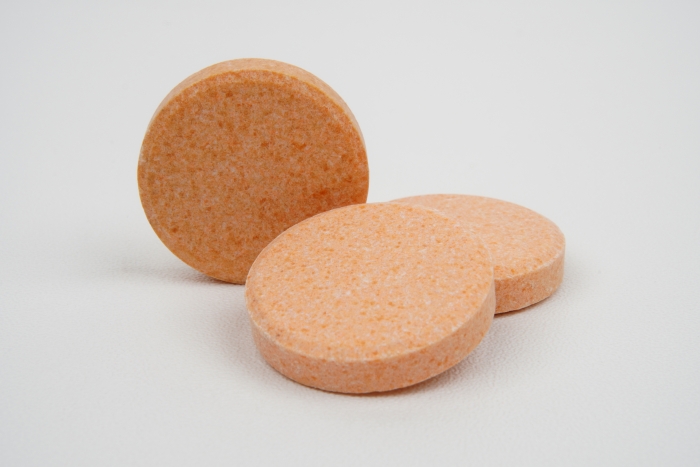
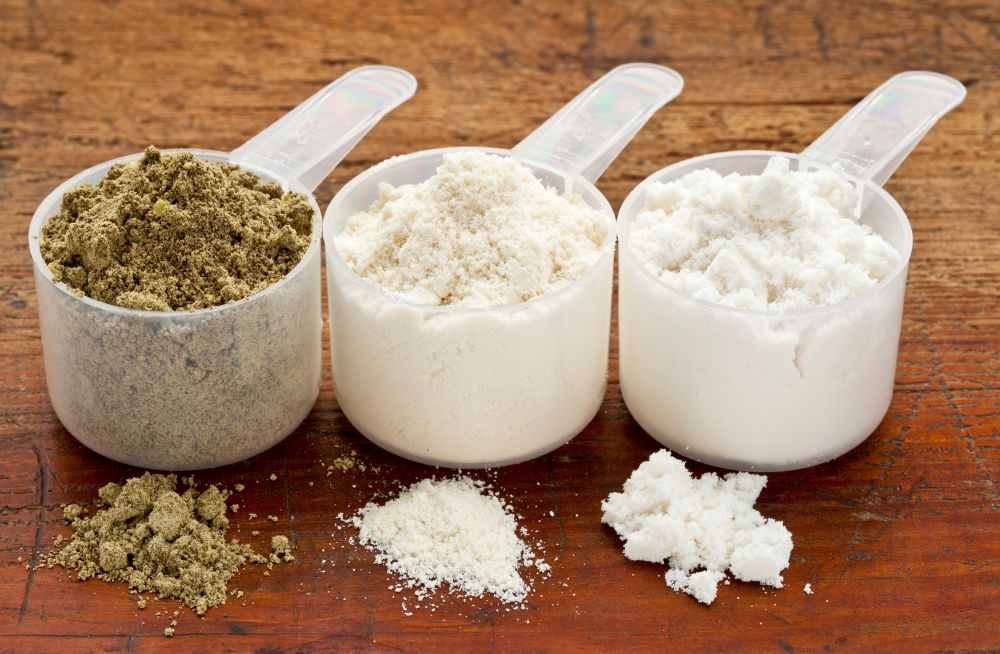
Capsules, tablets, and powders can all provide stable probiotic delivery when appropriately dried, protected, packaged, and stored. Powders offer formulation flexibility, while tablets can provide convenient, compact dosing but require careful compression processes to help minimize viability losses.
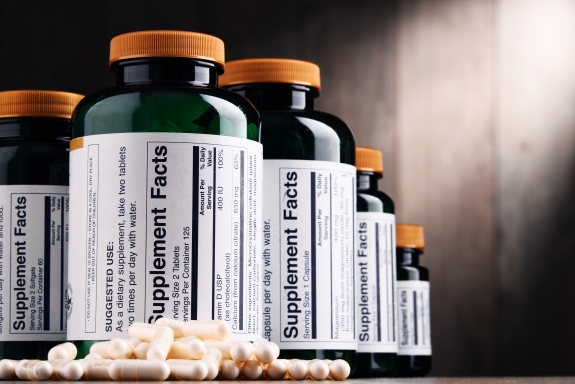
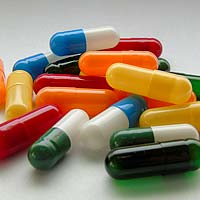
Capsules are widely used because they combine convenience with a low-moisture environment and can help protect probiotic cells from environmental stressors. Across delivery formats, controlling moisture and limiting exposure to humidity are particularly important for maintaining probiotic viability and supporting shelf life.31Fenster K, Freeburg B, Hollard C, Wong C, Rønhave Laursen R, Ouwehand AC. The Production and Delivery of Probiotics: A Review of a Practical Approach. Microorganisms. 2019 Mar 17;7(3):83. doi: 10.3390/microorganisms7030083. PMID: 30884906; PMCID: PMC6463069. 32Klayraung S, Viernstein H, Okonogi S. Development of tablets containing probiotics: Effects of formulation and processing parameters on bacterial viability. Int J Pharm. 2009 Mar 31;370(1-2):54-60. doi: 10.1016/j.ijpharm.2008.11.004. Epub 2008 Nov 18. PMID: 19059323.
Create a Market-ready Menopause Probiotic Supplement with the Right Manufacturer
The best probiotics for menopause are not defined simply by a high CFU count or number of strains. Strong formulations align clinically studied strains, appropriate CFU levels, and validated stability and quality controls with the intended wellness benefits. Because probiotic efficacy is strain- and condition-specific, evidence-based formulation is essential.
If you are evaluating probiotic supplement manufacturers to develop a credible menopause-focused product, Vitaquest offers a state-of-the-art Probiotics Manufacturing Suite in Parsippany, New Jersey. This dedicated facility expands our capacity and capabilities to meet growing demand for probiotic supplements while supporting innovation, quality, and long-term brand partnerships.
As an experienced probiotics contract supplement manufacturer, Vitaquest provides specialized probiotic manufacturing capabilities, including strain-specific identification, viability testing, and dedicated low-humidity production environments designed to help protect probiotic stability and potency.
Ready to capitalize on the growing opportunity for evidence-based menopause probiotics? Contact Vitaquest today at 800-526-9095 to speak with one of our knowledgeable sales executives or request a nutraceutical manufacturing price quote if you have already finalized your project requirements.
Frequently Asked Questions about the Best Probiotics for Menopause
How do I know which probiotic strains are best for menopause?
The best probiotic strains for menopause are those supported by strain-specific human clinical research relevant to the intended wellness goal, such as digestive health, vaginal microbiome balance, or overall menopausal wellness. For example, Lactobacillus acidophilus YT1 has been studied in menopausal women, although additional high-quality research is still needed.
How do probiotics support gut health during menopause?
Probiotics may support gut health during menopause by helping maintain microbial balance and, depending on the strain, supporting digestive comfort and bowel regularity. Emerging research also suggests certain probiotics may support broader aspects of menopausal wellness, although benefits are strain-specific and additional high-quality clinical studies are needed.
How can brand owners choose the right probiotic formulation for menopausal customers?
Brand owners should select well-characterized probiotic strains supported by human clinical research relevant to menopause-focused wellness goals rather than relying solely on species or high CFU counts. Formulations should also consider the intended benefit, clinically studied doses, stability, delivery format, ingredient compatibility, and manufacturing quality when developing a differentiated product.
How does Vitaquest ensure quality in its probiotic formulations?
Vitaquest supports probiotic quality through strain-specific identification, potency and viability testing, moisture and water-activity controls, and microbiological testing of ingredients and finished products. Its dedicated low-humidity probiotic manufacturing environment is designed to minimize exposure to moisture, heat, and oxygen, helping protect CFU potency and product stability throughout shelf life.