











































Key Takeaways
- Non-GMO and Organic certifications are not interchangeable. Non-GMO claims focus on the absence of genetically engineered ingredients, while Organic certification encompasses broader standards for agriculture, sourcing, processing, and handling.
- The Non-GMO Project Verified seal provides third-party verification. Unlike a self-declared non-GMO claim, Non-GMO Project Verified Products undergo independent review, supply chain evaluation, and ongoing compliance requirements.
- USDA Organic certification is federally regulated. Products must comply with established National Organic Program standards governing ingredient sourcing, agricultural practices, and handling requirements throughout the supply chain.
- Certification choices can impact business strategy. Sourcing complexity, production costs, speed to market, retailer expectations, and consumer preferences should all be considered when deciding whether to pursue non-GMO certification, Organic certification, or both.
Non-GMO vs Organic: Is there a difference? Absolutely.
While “Non-GMO” and “Organic” are often used interchangeably in dietary supplement marketing, they represent distinct standards with different legal definitions and production requirements. Understanding the difference is important because consumers often conflate the two labels with product quality, sustainability, and natural sourcing, even though each addresses distinct aspects of ingredient production, sourcing, and manufacturing.
For supplement brands, these distinctions can influence purchasing decisions among consumers who prioritize environmental stewardship, ingredient sourcing transparency, agricultural practices, and clean-label products.
This article explores the legal definitions behind Non-GMO and Organic certifications, what each label does and does not guarantee, and how to determine whether one or both certifications align with your product goals and target market.
The Short Answer: No, Non-GMO and Organic Are Not the Same Thing
A non-GMO claim generally indicates that ingredients were not genetically modified or produced using genetically engineered organisms.
Organic certification is broader. It typically includes requirements related to farming practices, pesticide use, soil management, processing methods, and ingredient handling that must meet established organic standards.
While many organic products also meet non-GMO requirements, the reverse is not always true. A product can be non-GMO without qualifying for Organic certification.
What Does “Non-GMO” Actually Mean?
In dietary supplements, a non-GMO claim generally means that the finished product or its ingredients were not produced using genetic engineering or biotechnology methods that modify an organism’s DNA.
However, there is an important distinction between a general non-GMO claim and the Non-GMO Project Verified seal.
A company may self-declare a product as being non-GMO based on its own sourcing practices, supplier documentation, and internal standards. In contrast, the Non-GMO Project Verified seal requires independent third-party verification, supply chain reviews, and ongoing testing to confirm compliance with the Non-GMO Project’s established standards.
Understanding this difference can help consumers evaluate label claims, ingredient transparency, and the level of verification behind a product’s non-GMO status.
Non-GMO Project Verified – The Gold Standard
The Non-GMO Project Verified seal is a voluntary third-party verification program that evaluates products against the Non-GMO Project’s standards for GMO avoidance.


To earn verification, products typically undergo ingredient risk assessments, supply chain documentation reviews, ingredient testing (when appropriate), and periodic renewals to maintain certification status.
Many brands pursue this verification because it provides independent validation and can help build consumer confidence beyond a self-declared non-GMO claim.
It is important to understand that the non-GMO Project is a private organization and is not affiliated with the USDA or FDA. The verification focuses specifically on compliance with the Non-GMO Project’s standards and does not indicate compliance with federal regulations or government safety requirements.
What Non-GMO Does NOT Cover
A common misconception is that a non-GMO claim automatically means a product is pesticide-free, organically farmed, or produced using sustainable agricultural practices.
In reality, non-GMO verification focuses primarily on the absence of genetically engineered ingredients. It does not establish standards for farming methods, synthetic pesticide use, fertilizer practices, or soil management.
As a result, a non-GMO product may still be produced using conventional agricultural practices and permitted synthetic inputs.
Understanding this distinction is important because consumers often associate non-GMO claims with broader environmental and clean-label attributes that are not necessarily addressed by non-GMO verification standards.
Can a Product Be Non-GMO But Not Organic?
Yes. A dietary supplement can be non-GMO without being Organic because the two labels evaluate different criteria.
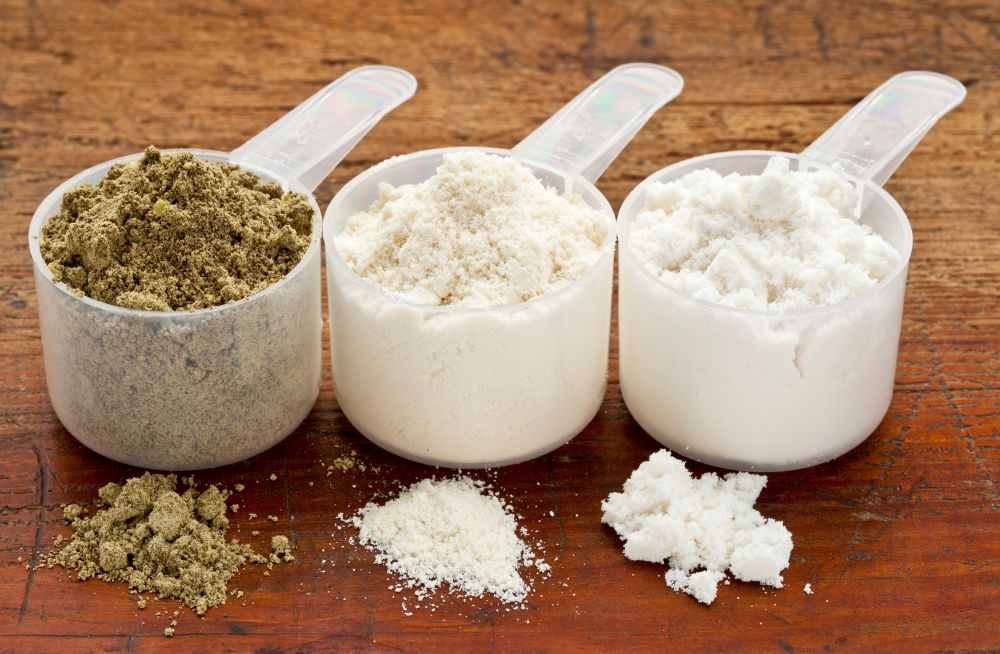
For example, a whey protein powder may contain ingredients that are not genetically engineered, allowing it to carry a non-GMO claim. However, if the dairy ingredients are conventionally farmed or the product does not meet Organic certification requirements, it would not qualify as Organic.
Non-GMO status relates specifically to the absence of genetically engineered ingredients. Organic certification encompasses broader standards related to farming practices, approved inputs, processing methods, and ingredient handling.
What Does “Organic” Actually Mean?
USDA Certified Organic is a federally regulated designation administered by the United States Department of Agriculture through its National Organic Program.
Unlike non-GMO claims, USDA Organic certification evaluates the broader production system. This includes soil health, crop management practices, pest and weed control, livestock and animal welfare standards, ingredient handling, and manufacturing processes.
Products must comply with federal organic standards throughout sourcing and production to qualify for certification.
The USDA Organic system includes four primary labeling categories:
- 100% Organic: All ingredients are certified organic.
- Organic: The product contains at least 95% organic ingredients.
- Made with Organic Ingredients: The product contains at least 70% organic ingredients and may highlight specific organic components.
- Less than 70% organic ingredients: Organic ingredients may be listed on the ingredient panel, but the product cannot make front-label organic claims.
What USDA Certified Organic Covers for Supplements
For dietary supplements, Organic certification primarily governs how agricultural ingredients are grown, sourced, and handled throughout the supply chain.
To carry the USDA Organic seal, a supplement labeled “Organic” must contain at least 95% of organically produced ingredients, excluding water and salt.
Certified products must also avoid prohibited substances and practices, including most synthetic pesticides, sewage sludge, irradiation, and genetically engineered ingredients during cultivation and processing.
The certification focuses on compliance with federally established organic standards for agriculture and ingredient handling. It does not evaluate a supplement’s efficacy, quality, or structure-function claims.
Does USDA Certified Organic Guarantee Non-GMO?
Yes. USDA Organic standards prohibit the use of genetically engineered ingredients and practices throughout production, including farming, ingredient sourcing, animal feed, and processing.
As a result, products that are certified Organic must meet requirements that exclude genetically modified organisms.
However, Organic certification extends beyond GMO avoidance. It also establishes standards related to agricultural practices, approved inputs, soil management, and ingredient handling.
For this reason, many consumers view the USDA Organic seal as a broader claim because it addresses multiple aspects of production rather than focusing solely on the absence of genetically engineered ingredients.
Non-GMO vs Organic: A Direct Side-by-Side Comparison
The following table provides a detailed comparison of Non-GMO and Organic, including definition, pesticide use, regulations, animal welfare, and price considerations.
| Feature | Organic | Non-GMO |
| Definition | Grown according to strict USDA standards covering soil quality, pesticides, and fertilizers | The product’s DNA was not altered through laboratory genetic engineering |
| Pesticide Use | Prohibits most synthetic pesticides and fertilizers | May use synthetic pesticides/fertilizers (no restriction) |
| Regulations | Government-regulated certification (USDA Organic seal) | Verified by private organizations like the Non-GMO Project |
| Animal Welfare | Strict standards prohibit growth hormones, routine antibiotics | No specific animal welfare guidelines |
| Price | Higher cost due to comprehensive regulatory requirements | Usually less expensive (fewer regulatory hurdles) |
Why Supplement Brands Need to Understand the Difference
Understanding the distinction between Non-GMO and Organic certifications is important for supplement brands because each can influence product development, sourcing decisions, manufacturing requirements, and marketing strategies.
The certification a brand chooses can affect ingredient availability, production costs, label claims, supply chain considerations, consumer perception, and retailer requirements. Selecting the right certification, or pursuing both, depends on a brand’s goals, target audience, and overall market positioning.
Label Claims and Regulatory Risk
Understanding the distinction between Non-GMO and Organic certifications is important because the two claims are governed by different standards and verification processes.
Misusing or conflating these certifications can create misleading marketing, increase compliance risk, and potentially lead to labeling challenges or consumer complaints.
Organic certification is regulated under USDA standards, while non-GMO claims may rely on third-party verification programs or company-supported substantiation.
Clearly distinguishing between these certifications helps brands maintain accurate labeling, improve transparency, reduce legal and reputational risk, and build consumer trust.
Impact on Sourcing, Cost, and Speed-to-Market
Certification requirements can significantly influence ingredient sourcing, production costs, and product launch timelines.
Organic certification often requires access to certified suppliers, extensive documentation, and ongoing audits. These requirements can increase sourcing complexity, limit ingredient availability, and raise overall production costs.
Organic ingredients may also require longer procurement lead times, which can affect development schedules and speed to market.
By comparison, non-GMO products may provide greater formulation flexibility and fewer sourcing constraints while still aligning with certain consumer preferences.
Understanding these differences can help brands make informed decisions about formulation, pricing, supply chain management, certification investments, and launch timing.
Matching Certification to Your Consumer
Choosing the right certification starts with understanding your target consumer.
Different consumers prioritize different product attributes. Some focus on avoiding genetically engineered ingredients, while others place greater value on standards related to agricultural practices, ingredient sourcing, and environmental stewardship.
Because these certifications communicate different messages, brands should avoid treating them as interchangeable. Misalignment between certification claims and consumer expectations can create confusion and weaken brand positioning.
Clearly communicating what a certification represents helps brands connect with the right audience, strengthen consumer trust, and support purchasing decisions in an increasingly label-conscious marketplace.
Supply Chain Transparency and Manufacturing/Handling Requirements
Certification requirements can influence supply chain management, supplier selection, and operational processes.
Organic certification typically requires more extensive documentation, ingredient traceability, and audit procedures throughout the supply chain. These requirements can increase administrative oversight and affect supplier qualification decisions.
Maintaining certification may also require specific segregation, cleaning, storage, and handling practices designed to preserve certification integrity and prevent contact with prohibited substances.
Understanding these operational requirements can help brands better evaluate certification costs, manufacturing considerations, and long-term supply chain commitments.
Brand Positioning, Market Identity, and Retailer and Distribution Expectations
Certification choices can play an important role in shaping a brand’s market position and long-term identity.
Organic certification is often associated with broader values related to environmental stewardship, agricultural practices, and ingredient sourcing. By comparison, non-GMO positioning typically focuses on avoiding genetically engineered ingredients.
These distinctions can influence how consumers perceive a brand and help determine which market segments are most likely to engage with its products.
Certification strategy may also affect retail and distribution opportunities. Some natural retailers, specialty wellness channels, and international distributors may prefer or require Organic certification for certain product categories, merchandising programs, or premium placement opportunities.
When to Choose Non-GMO vs Organic (Or Both) for Your Supplement Line
When evaluating organic vs. non-GMO certification options, supplement brands should consider several strategic factors.
Budget is often a key consideration because organic certification generally involves higher sourcing, auditing, and compliance costs than non-GMO verification.
Your target market also matters. Consumers shopping in premium wellness and natural retail channels may expect Organic certification, while mainstream consumers may place greater value on non-GMO positioning alone.
Product category can influence feasibility, too, since some ingredients are more readily available in non-GMO form than as certified Organic ingredients. Brands should also consider retailer requirements, as certain natural retailers and specialty channels may prefer or require Organic-certified products.
In some cases, pursuing both certifications may be the right strategy. This approach can appeal to consumers who value ingredient transparency, agricultural standards, and clean-label positioning.
Conversely, non-GMO certification alone may be sufficient for brands prioritizing faster speed-to-market, lower formulation costs, greater ingredient flexibility, or product categories where organic certification offers limited competitive advantage.
How Vitaquest Supports Both Non-GMO and Organic Manufacturing
At Vitaquest, we offer extensive capabilities in formulating and manufacturing dietary supplements under both non-GMO and USDA Organic certification frameworks. As a leader in nutritional supplement contract manufacturing since 1977, we support brands through ingredient sourcing, custom formulation, finished product quality assurance, regulatory guidance, and large-scale production across multiple dosage formats, including capsules, tablets (including chewable tablets, orally disintegrating tablets, and effervescent tablets), and powders.
Our manufacturing operations are supported by robust quality systems, FDA cGMP compliance, NSF and USP GMP certifications, FSSC 22000 food safety certification, and experience producing certified Organic and Non-GMO Project Verified products.
We also leverage established relationships with certified ingredient suppliers and global sourcing partners to help brands secure compliant raw materials while maintaining quality, traceability, and supply chain transparency.
From concept through commercialization, we work closely with brands to evaluate certification strategies, formulation feasibility, regulatory considerations, and scalable manufacturing solutions that support long-term business objectives.
Wrapping up the Discussion on Non-GMO vs Organic
So, is non-GMO the same as organic? No. While the two labels are often associated with clean-label positioning, they represent different standards, verification processes, and production requirements. Understanding non-GMO vs. organic can help supplement brands make smarter decisions about sourcing, formulation, certification strategy, cost, speed to market, and consumer positioning.
For brands pursuing certified Organic products, working with experienced organic supplement manufacturers is essential. At Vitaquest, we support Non-GMO and USDA Organic supplement manufacturing with sourcing expertise, formulation guidance, quality systems, regulatory support, and scalable production capabilities.
Ready to create a non-GMO, Organic, or dual-certified supplement product with an experienced manufacturing partner? Call 800-526-9095 to speak with one of our knowledgeable production specialists or request a competitive nutraceutical manufacturing price quote if you have finalized your project requirements!
Frequently Asked Questions (FAQs) about Non-GMO vs Organic
Why should supplement brands consider both Non-GMO and Organic certifications?
Some brands pursue both certifications to support premium positioning and appeal to consumers who value ingredient transparency. Combining the two certifications can address concerns related to genetically engineered ingredients, sourcing practices, and overall product quality standards.
How does the cost of Non-GMO and Organic certification affect pricing strategies?
Certification costs can increase expenses related to sourcing, audits, documentation, testing, and compliance. As a result, many brands position certified products at premium price points to help offset costs and align with consumer demand for verified products.
What factors should brands consider when choosing between Non-GMO and Organic certifications?
Brands should evaluate their target market, product positioning, ingredient availability, retailer requirements, certification costs, and sourcing complexity. They should also consider how each certification may affect manufacturing, speed to market, and long-term growth strategies.
Why is it important to communicate the difference between Non-GMO and Organic to consumers?
Many consumers mistakenly assume the two terms mean the same thing. Clearly explaining the differences helps consumers make informed purchasing decisions while improving transparency, strengthening trust, and supporting accurate product positioning.