





























Key Takeaways
- Some sports nutrition supplements may contain undeclared pharmaceutical agents, anabolic steroids, stimulants, or substances banned by anti-doping organizations.
- A 2023 study published in JAMA Network Open found substantial discrepancies between label claims and actual contents among tested sports supplements containing certain purported performance-enhancing botanical ingredients.
- NSF Certified for Sport is a voluntary third-party certification program that helps verify label accuracy, product quality, contaminant screening, and banned-substance testing.
- Certification includes laboratory testing, facility audits, GMP compliance reviews, and ongoing surveillance testing to help support long-term manufacturing quality and consistency.
- For sports nutrition brands, working with an NSF Certified for Sport manufacturer may help strengthen consumer trust, retailer acceptance, and overall product credibility in a competitive marketplace.
NSF Certified for Sport supplements help address growing concerns surrounding supplement quality, ingredient accuracy, and banned substance contamination in sports nutrition products.
According to a 2023 article published in the scientific journal Nutrients,1Jagim AR, Harty PS, Erickson JL, Tinsley GM, Garner D, Galpin AJ. Prevalence of adulteration in dietary supplements and recommendations for safe supplement practices in sport. Front Sports Act Living. 2023 Sep 29;5:1239121. doi: 10.3389/fspor.2023.1239121. PMID: 37841887; PMCID: PMC10570429. some sports nutrition supplements may contain undeclared pharmaceutical agents, anabolic steroids, stimulants, or substances banned by anti-doping organizations. This may create serious health risks and increase the possibility of doping violations for athletes.
Furthermore, a study published in JAMA Network2Cohen PA, Avula B, Katragunta K, Travis JC, Khan I. Presence and Quantity of Botanical Ingredients With Purported Performance-Enhancing Properties in Sports Supplements. JAMA Netw Open. 2023;6(7):e2323879. doi:10.1001/jamanetworkopen.2023.23879. reported that nearly 90% of tested sports supplements were inaccurately labeled, highlighting major discrepancies between label claims and actual contents. Clearly, consumers and athletes face a real risk of unknowingly consuming contaminated or mislabeled supplements.
The good news is that the NSF Certified for Sport program was specifically developed to help address these concerns. NSF Certified for Sport certification provides athletes, consumers, coaches, and sports organizations with added confidence that a supplement has been independently tested for banned substances, label claim accuracy, and contaminants.
This article will introduce NSF International and explain what NSF Certified for Sport testing involves, what the certification process looks like, and other important considerations brands should understand when developing NSF Certified for Sport supplements.
What Is NSF Certified for Sport?
NSF Certified for Sport is a voluntary third-party certification program administered by NSF International for dietary supplements, sports nutrition products, and functional foods intended for athletes and active consumers. The program is designed to help verify that NSF Certified for Sport supplements contain the ingredients listed on the label, do not contain unsafe levels of contaminants, and are tested for substances banned by major athletic organizations.
NSF Certified for Sport differs from other NSF certification programs, such as GMP certification, because it is specifically focused on the quality, purity, and banned-substance screening requirements of the sports nutrition industry.3Cohen PA, Avula B, Katragunta K, Travis JC, Khan I. Presence and Quantity of Botanical Ingredients With Purported Performance-Enhancing Properties in Sports Supplements. JAMA Netw Open. 2023;6(7):e2323879. doi:10.1001/jamanetworkopen.2023.23879.
The certification is widely recognized as an industry-standard trust mark within professional and collegiate athletics. Major organizations, including the National Football League (NFL), Major League Baseball (MLB), National Hockey League (NHL), Canadian Football League (CFL), and many collegiate athletic programs, reference or recommend NSF Certified for Sport products as part of their supplement safety protocols.
As a result, NSF Certified for Sport has become an important independent verification system for brands seeking to strengthen consumer confidence in product quality, label accuracy, and compliance with anti-doping standards.
What Is NSF International, and Why Does Its Endorsement Matter?
NSF International is a globally recognized independent public health and safety organization that develops standards, tests products, and provides certification services across industries, including food, water, consumer products, and dietary supplements.
Founded in 1944 as the National Sanitation Foundation, NSF has established significant scientific and regulatory credibility through its role in developing consensus-based safety and quality standards used by manufacturers, regulators, and public health agencies worldwide.4Cohen PA, Avula B, Katragunta K, Travis JC, Khan I. Presence and Quantity of Botanical Ingredients With Purported Performance-Enhancing Properties in Sports Supplements. JAMA Netw Open. 2023;6(7):e2323879. doi:10.1001/jamanetworkopen.2023.23879.
NSF is also accredited by the American National Standards Institute (ANSI), meaning the organization operates under rigorous auditing, laboratory testing, and certification protocols designed to support impartiality and scientific integrity.


As a result, NSF certifications are widely recognized by government agencies, healthcare institutions, retailers, and professional sports organizations as trusted indicators of product quality, safety, and compliance with established standards.5The American National Standards Institute oversees standards and conformity assessment activities in the United States. ANSI. Retrieved May 18, 2026 from https://www.ansi.org/.
What Does NSF Certified for Sport Actually Test For?
The NSF for Sport certification process includes a comprehensive review of product formulations and label claims, verification that the product contents match the ingredient declaration, and analytical testing to confirm the absence of unacceptable contaminants and prohibited substances.
Testing protocols screen for compounds banned by organizations such as the World Anti-Doping Agency (WADA), National Collegiate Athletic Association (NCAA), and major professional sports leagues, including anabolic steroids, stimulants, narcotics, diuretics, and other prohibited performance-enhancing substances.
Products are also evaluated for heavy metals, microbiological contaminants, and other potentially harmful substances that could create safety concerns for consumers and athletes. In addition to laboratory testing, the certification process includes ongoing facility inspections, manufacturing audits, and periodic retesting of products purchased directly from the marketplace to help support continued compliance over time.
This combination of label verification, contaminant screening, banned-substance testing, and manufacturing oversight has helped establish the program as one of the most recognized third-party quality assurance systems within the sports nutrition industry.
Banned Substances Screening
NSF Certified for Sport testing includes screening for more than 270 substances on the World Anti-Doping Agency (WADA) prohibited list, in addition to substances banned by major professional sports organizations. These analyses use highly sensitive analytical methods designed to detect trace amounts of anabolic agents, stimulants, diuretics, masking agents, narcotics, and other prohibited performance-enhancing compounds.
It is important to understand that when a banned substance is reported as “not detected,” this does not necessarily mean the substance is completely absent at every possible concentration. Instead, it means the substance was below the laboratory’s validated limit of detection under the testing conditions used. This distinction is important for scientific and regulatory transparency because all analytical testing methods have measurable detection thresholds.
In practice, the program establishes stringent detection standards intended to help minimize the risk of inadvertent exposure to prohibited substances while providing athletes and consumers with a high level of confidence in product testing and manufacturing quality.
Label Claim Verification
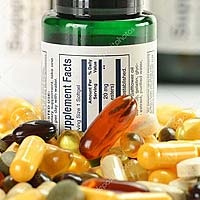
A key component of NSF Certified for Sport certification is confirming that the ingredients listed on the Supplement Facts panel are present in the product and appear in the stated amounts within established specifications. This includes analytical testing to verify ingredient identity, potency, and composition, helping ensure that products are not diluted, underdosed, or inaccurately formulated.
This aspect of the certification directly addresses one of the most common consumer concerns surrounding dietary supplements: that products may be mislabeled, contain lower ingredient levels than claimed, or include undeclared substances not disclosed on the label.
Independent label verification provides an additional layer of consumer confidence beyond basic regulatory compliance by helping validate formulation integrity and label accuracy.
Contaminant and Heavy Metal Testing
To answer one of the most common questions consumers ask about NSF Certified for Sport, yes, the certification includes testing for heavy metals such as lead, arsenic, cadmium, and mercury, to help verify that contaminant levels fall within established safety limits.
In addition, products are screened for microbiological contaminants and other impurities that could compromise product safety or quality. This may include testing for bacteria, yeast, mold, and other microbial contamination risks, along with broader contaminant assessments related to manufacturing quality and ingredient sourcing practices.
Good Manufacturing Practice (GMP) Audit
NSF Certified for Sport does not rely solely on laboratory testing of finished products. The process also includes extensive inspection and auditing of manufacturing facilities to help verify that supplements are produced under appropriate quality and safety standards.
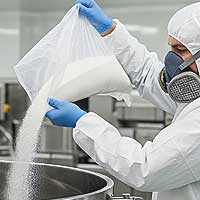
As part of the certification process, on-site facility inspections evaluate whether sports supplement manufacturers comply with current Good Manufacturing Practice (cGMP) regulations and established quality-control procedures. These inspections assess areas such as raw material handling, sanitation practices, equipment maintenance, ingredient traceability, documentation systems, and procedures designed to help prevent contamination or product mix-ups.
In summary, the certification process evaluates the following areas:
| What’s Tested | Why It Matters |
| Label claim accuracy | Ensures potency and ingredient transparency |
| Banned substance screen | Protects athletes from inadvertent doping violations |
| Contaminants and Heavy Metal Testing | Screens for harmful contaminants, including heavy metals |
| GMP facility audit | Validates manufacturing quality at the source |
What Does the NSF Certification Process Look Like for a Supplement?
The NSF Certified for Sport certification process follows a structured, multi-step quality assurance program designed to evaluate product safety, label accuracy, and manufacturing compliance.
Each stage is intended to help verify that certified products meet established testing and quality standards before entering the marketplace:
- Application and documentation review – This stage includes submission and review of detailed product information, ingredient specifications, formulation records, product labels, and manufacturing documentation.
- Product sample testing – Product samples are collected and analyzed in NSF laboratories to verify ingredient identity and potency, confirm label accuracy, and screen for contaminants and banned substances.
- Manufacturing facility audit – NSF conducts an on-site inspection of the manufacturing facility to evaluate compliance with current Good Manufacturing Practice (cGMP) standards and quality-control procedures.
- Review and certification decision – NSF reviews all analytical testing results, facility audit findings, and supporting documentation to determine whether the product meets NSF Certified for Sport standards.
- Ongoing surveillance testing – Certification is maintained through continued oversight, including periodic facility audits and ongoing testing of product samples, including products purchased from the marketplace.
How Often Are NSF Certified Products Re-Tested?
An important strength of NSF Certified for Sport is that certification does not end after the initial approval process. NSF conducts ongoing, unannounced surveillance testing and facility monitoring to help ensure that NSF Certified for Sport supplements continue to meet program standards over time.
This continued oversight is designed to identify any formulation changes, contamination risks, manufacturing inconsistencies, or quality-control failures that could emerge after a product first receives certification.
According to NSF, certified products undergo ongoing annual compliance testing, while manufacturing facilities are audited annually or biannually, depending on risk grading and certification status.6The American National Standards Institute oversees standards and conformity assessment activities in the United States. ANSI. Retrieved May 18, 2026 from https://www.ansi.org/.
Is NSF Certified for Sport Necessary for Sports Supplement Brands?
Although this certification is not legally required for dietary supplements or sports nutrition products in the United States, there are several practical and commercial reasons why many brands choose to pursue it.
In today’s competitive sports nutrition market, third-party verification may help strengthen product credibility, support retailer acceptance, and build consumer confidence:
- Market differentiation — In a crowded sports nutrition marketplace, NSF for Sport certification may help distinguish your products from competitors by signaling a stronger commitment to transparency, testing, label accuracy, and quality assurance.
- Retail and distribution access — Many premium retailers, professional sports teams, collegiate athletic programs, and sports performance organizations either require or strongly prefer NSF-certified products because of the program’s independent testing and banned-substance screening standards.
- Liability reduction — Independent certification creates a documented quality-control and testing trail that may help reduce exposure to recalls, contamination incidents, consumer complaints, or regulatory scrutiny associated with mislabeled or adulterated products.
- Validated quality and safety — Certification provides external verification that products have undergone testing for ingredient identity, potency, banned substances, heavy metals, and contaminants, helping validate both product quality and safety claims.
- Consumer trust — The NSF Certified for Sport mark is particularly influential among serious athletes, coaches, trainers, and informed consumers who closely research supplement labels and actively seek products with credible third-party verification.
Vitaquest’s NSF Certified for Sport Status
Vitaquest’s NSF Certified for Sport status demonstrates that our company operates under a rigorous quality assurance and compliance framework designed specifically for sports nutrition and dietary supplement products.
NSF Certified for Sport certification reflects adherence to stringent standards involving ingredient verification, label claim validation, contaminant screening, banned-substance testing, and manufacturing quality controls. It also confirms that our facilities and production processes have undergone independent auditing and evaluation by NSF International, a globally recognized public health and safety organization.
Working with an NSF Certified for Sport sports nutrition supplement manufacturer, such as Vitaquest, can give your brand greater confidence in the quality, safety, and manufacturing standards behind your products.
For sports-focused products in particular, this level of manufacturing oversight and independent verification is increasingly important because athletes and consumers often seek assurance that products are both safe and aligned with anti-doping expectations.
Wrapping Up the NSF Certified for Sport Conversation
NSF Certified for Sport certification plays an important role in addressing some of the biggest concerns in the sports nutrition industry, including mislabeled products, contaminant risks, and banned-substance exposure. As discussed throughout this article, the certification process involves extensive testing, facility audits, label verification, and ongoing surveillance designed to help support product quality, safety, and manufacturing compliance.
For supplement brands targeting athletes and active consumers, working with an experienced NSF Certified for Sport sports nutrition supplement manufacturer, such as Vitaquest, may provide a valuable competitive advantage by helping strengthen consumer trust, retailer acceptance, and product credibility in the marketplace.
Are you ready to develop NSF Certified for Sport products? Call 800-526-9095 to speak with one of Vitaquest’s knowledgeable production specialists or request a nutraceutical manufacturing price quote if you have already finalized your project requirements.
Frequently Asked Questions (FAQs) about NSF for Sport Certification
Is NSF certification required for all sports supplements?
No, NSF Certified for Sport certification is not legally required for dietary supplements or sports nutrition products in the United States. However, many brands pursue certification for important commercial and quality-related reasons, including market differentiation, retail and distribution opportunities, enhanced consumer trust, and independent verification of product quality and safety standards.
How does NSF certification help with legal and regulatory compliance for supplement manufacturers?
Independent NSF certification means that a manufacturer can tout a documented quality-control and testing trail that may help reduce exposure to recalls, contamination incidents, consumer complaints, or regulatory scrutiny associated with mislabeled or adulterated products. It also offers third-party verification of adherence to GMPs, which is required by regulations associated with the Dietary Supplement Health and Education Act of 1994.