













































Key Takeaways
- Probiotic benefits are strain-specific, making clinical validation essential for product differentiation and credibility.
- Clinically supported CFU levels and viability testing are critical for substantiating claims and meeting consumer expectations.
- Stability is a key challenge, requiring specialized manufacturing, packaging, storage conditions, and delivery technologies to maintain potency.
- Probiotic shelf life must be validated through real-time stability testing, reinforcing the need for experienced manufacturing partners.
- Brands that prioritize science-backed formulations and transparency are better positioned to compete in the premium probiotic market.
The global probiotics market was valued at $113.97 billion in 2025 and is projected to reach $301.17 billion by 2033, growing at a compound annual growth rate (CAGR) of 12.8%. This sustained growth reflects increasing consumer demand for scientifically validated, clinically studied strains supported by transparent labeling, regulatory confidence, and adherence to evolving probiotic guidelines.
As the category matures, particularly in North America and Europe, brands are moving away from generic formulation designs and toward premium, strain-specific products backed by clinical research. Consumers are willing to pay more for probiotics that deliver verified efficacy, clean-label positioning, and trusted sourcing and manufacturing practices.1Probiotics Market (2026 – 2033). Grand View Research. Retrieved April 7, 2026 from https://www.grandviewresearch.com/industry-analysis/probiotics-market. 2Peters B. The Art—and Science—of Choosing the Best Supplement Brands. Vogue. March 6, 2016. Retrieved April 7, 2026 from https://www.vogue.com/article/best-supplement-brands.
This shift creates an opportunity for both established and emerging brands to differentiate through science-backed formulations, transparent positioning, and strict adherence to established standards, enabling them to capture premium market share and build long-term consumer trust.
This article explores key probiotic supplement manufacturing guidelines, including best practices for formulation, packaging, quality control, and testing, as well as strategic considerations for scaling production.
Best Practices in Probiotic Formulation
Best practices in probiotic formulation include selecting the appropriate strain and clinically supported dosage, as well as evaluating delivery technologies and the potential benefits of combining probiotics with prebiotics and/or postbiotics.
Selecting the Right Probiotic Strain
Clinical evidence must be established for each probiotic strain and its intended use.3Sanders ME, Merenstein DJ, Reid G, Gibson GR, Rastall RA. Probiotics and prebiotics in intestinal health and disease: from biology to the clinic. Nat Rev Gastroenterol Hepatol. 2019 Oct;16(10):605-616. doi: 10.1038/s41575-019-0173-3. Epub 2019 Jul 11. Erratum in: Nat Rev Gastroenterol Hepatol. 2019 Oct;16(10):642. doi: 10.1038/s41575-019-0199-6. PMID: 31296969.
In fact, according to the International Scientific Association for Probiotics and Prebiotics (ISAPP), “The benefits of probiotics are strain-specific and cannot be generalized to other strains.”4Hill C, Guarner F, Reid G, Gibson GR, Merenstein DJ, Pot B, Morelli L, Canani RB, Flint HJ, Salminen S, Calder PC, Sanders ME. Expert consensus document. The International Scientific Association for Probiotics and Prebiotics consensus statement on the scope and appropriate use of the term probiotic. Nat Rev Gastroenterol Hepatol. 2014 Aug;11(8):506-14. doi: 10.1038/nrgastro.2014.66. Epub 2014 Jun 10. PMID: 24912386.
Key considerations for strain selection include:
- Reliable suppliers – Probiotic strains should always be purchased from reliable suppliers familiar with appropriate fermentation, drying, handling, and storage of these microorganisms.
- Strain documentation – Proper documentation (i.e., genus, species, strain ID) ensures the product contains the exact strain used in clinical trials, not just a related organism.
- Certifications – Probiotic strains should be publicly deposited at the American Type Culture Collection (ATCC) or other repositories (DSMZ, CNCM) to confirm strain authenticity.
Defining Dosage and Potency
Probiotic activity is measured in colony-forming units (CFU), and effective dosage is determined by clinical research on the specific strain. If research supports 10 billion CFU for a given application, that level should be included to align with substantiated outcomes and support structure/function claims.
Using a lower dose than what is supported by research may reduce product credibility and effectiveness. In a competitive market, informed consumers are increasingly evaluating CFU levels to ensure they are selecting products with clinically relevant potency.
Enhancing Delivery with Encapsulation Techniques
Because probiotics are live microorganisms, they are highly sensitive to degradation from stomach acid and bile. Probiotic strains should be selected from those with high resistance to such degradation. Encapsulation technologies such as minimal tamping and the use of delayed-release capsules can play a valuable role in protecting viability and improving stability throughout shelf life.
Microencapsulation techniques using materials such as alginate, chitosan, gelatin, or carrageenan can form protective matrices around probiotic cells and shield against stomach acid and bile.5Anal AK, Singh H. Recent advances in microencapsulation of probiotics for industrial applications and targeted delivery. Trends Food Sci Technol. 2007;18:240–251. doi: 10.1016/j.tifs.2007.01.004. 6Cook MT, Tzortzis G, Charalampopoulos D, et al. Microencapsulation of probiotics for gastrointestinal delivery. Journal of Controlled Release. 2012; 162(1):56-67. https://doi.org/10.1016/j.jconrel.2012.06.003. Additionally, enteric coating technologies utilizing pH-sensitive food-grade polymers help prevent breakdown in the stomach and enable targeted release in the intestine, supporting improved delivery and performance.7Champagne CP, Ross RP, Saarela M, et al. Recommendations for the viability assessment of probiotics as concentrated cultures and in food matrices. Int J Food Microbiol. 2011; 149:185–193. doi: 10.1016/j.ijfoodmicro.2011.07.005.



Using Prebiotics in Combination
Synbiotic formulations combine probiotics with prebiotics to support a more comprehensive approach to gut health. Prebiotics serve as a nutrient source for probiotics, helping to support their survival and activity within the gut environment. The further addition of postbiotics can add another dimension to a formulation by including beneficial metabolites such as short-chain fatty acids and bacteriocins.
These synbiotic combinations can also support the growth of beneficial existing microorganisms, contributing to greater microbiome diversity. From a product development standpoint, synbiotics offer expanded formulation opportunities and allow for broader structure/function positioning, which can enhance consumer appeal and overall satisfaction.
Probiotics Packaging and Storage Best Practices
Understanding how to store probiotics is essential for maintaining product stability and label claim integrity. Probiotic viability is highly sensitive to environmental conditions, particularly temperature, light, moisture, and oxygen exposure.
High temperatures can significantly reduce the viability of live probiotic strains. According to USP data,8<659> Packaging and Storage Requirements. Official Date: 01-May-2017. Retrieved August 29, 2024 from chrome-extension://efaidnbmnnnibpcajpcglclefindmkaj/https://www.uspnf.com/sites/default/files/usp_pdf/EN/USPNF/revisions/659_rb_notice_english.pdf. the probiotic storage temperature range for optimal survival of most strains is generally 68°–77° F, consistent with a controlled room temperature environment. Exposure to light, especially ultraviolet radiation, can also degrade probiotic stability, while moisture and oxygen may further compromise potency over time.9Piqué N, Berlanga M, Miñana-Galbis D. Health Benefits of Heat-Killed (Tyndallized) Probiotics: An Overview. Int J Mol Sci. 2019;20(10):2534. Published 2019 May 23. doi:10.3390/ijms20102534 10Protecting Probiotics from Moisture. Clinical Applications of Scientific Innovation. April 9, 2019. Retrieved August 29, 2024 from https://www.casi.org/node/992#:~:text=At%20face%20value%2C%20this%20may,before%20they%20reach%20the%20gut. 11Talwalkar A, Kailasapathy K. The role of oxygen in the viability of probiotic bacteria with reference to L. acidophilus and Bifidobacterium spp. Curr Issues Intest Microbiol. 2004;5(1):1-8.
Effective supplement packaging plays a critical role in mitigating these risks and preserving probiotic stability throughout shelf life.
- Opaque high-density polyethylene bottles or amber glass can protect against UV exposure from natural and artificial light sources.
- Blister packaging creates a microenvironment designed to limit exposure to oxygen and moisture, supporting product stability throughout shelf life.
- Incorporating desiccant packs within bottles can help absorb ambient moisture and preserve probiotic viability.
Best Practices for Quality Control and Testing
Best practices for quality control and testing include potency and viability testing, stability testing, and microbial contamination control.
Potency and Viability Testing
Understanding how to test probiotics is essential for verifying potency, viability, and the accuracy of label claims. Multiple analytical methods are used to assess colony-forming units (CFU) and overall product quality.
The plate count method remains the gold standard because it measures only live, culturable cells, consistent with the probiotic definition.12United States Pharmacopeia <61> and <1223> Flow cytometry uses fluorescent dyes to differentiate live and damaged cells, providing a broader view of cell viability. Quantitative PCR enables strain-specific identification and quantification of DNA, while viability PCR incorporates propidium monoazide (PMA) to exclude dead-cell DNA. Each method offers distinct advantages depending on the formulation and testing objectives.
Stability Testing
Unlike many other nutraceuticals that can be evaluated using both real-time and accelerated stability testing, probiotics require real-time stability testing. Accelerated methods rely on elevated temperature and humidity conditions, which can compromise the viability of most probiotic strains and lead to misleading results.
Real-time stability testing, in contrast, evaluates products under standard temperature and humidity conditions that reflect typical storage environments. Over a defined period, such as 6 to 24 months, manufacturers can measure changes in viable CFU to accurately determine probiotics’ shelf life based on actual product performance under expected conditions.
Microbial Contamination Control
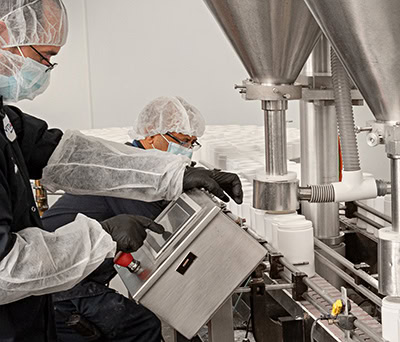
When manufacturing any dietary supplement, the contract manufacturer must implement Current Good Manufacturing Practices (cGMPs). This is particularly critical for probiotic supplements, which often require additional controls to minimize the risk of microbial contamination.
These controls may include using clean rooms to manage airborne microbes and particulates, HEPA filtration systems, positive air pressure, and ongoing environmental monitoring. Routine testing for pathogens such as Salmonella and E. coli is also required, consistent with broader supplement manufacturing standards.
For brands entering or scaling in this category, selecting an experienced probiotic contract manufacturer is one of the most important decisions, as it directly impacts product quality, stability, and regulatory compliance. Manufacturers with specialized probiotic capabilities, such as Vitaquest, bring added value through advanced environmental controls, technical expertise, and scalable production infrastructure tailored to the unique requirements of live microorganisms.
Best Practices for Choosing a Probiotic Supplement Contract Manufacturer
Best practices for selecting a probiotic supplement manufacturer include evaluating expertise and technical capabilities, assessing quality control and regulatory compliance, confirming production capacity and scalability, and understanding cost structure and pricing transparency.
Evaluating Manufacturer Expertise and Capabilities
Probiotic supplement manufacturing requires specialized expertise that not all dietary supplement manufacturers possess. Beyond holding appropriate current good manufacturing practices (cGMP) certifications, such as NSF GMP, you should choose a manufacturer that has deep experience in the storage, handling, and processing of probiotics.
Brands should prioritize U.S.-based contract manufacturers with a proven track record and decades of experience in probiotic manufacturing. This level of expertise helps ensure proper strain handling, product stability, and consistent quality throughout the production process.
Assessing Quality Control and Regulatory Compliance
While quality control is critical for all dietary supplements, it is especially important for probiotics, which are live microorganisms highly sensitive to environmental conditions. Improper handling or storage can significantly impact stability and viability.
Key considerations include adherence to cGMP standards and validated testing for potency and viability. Proper storage protocols are also essential to prevent exposure to light, moisture, and elevated temperatures. For this reason, it is critical to work with a manufacturer experienced in probiotic-specific requirements.
Production Capacity and Scalability
When selecting a probiotic contract manufacturer, production capacity and scalability should be carefully evaluated. Manufacturers should be able to meet initial production requirements while also supporting future growth.
If demand exceeds expectations, the manufacturer must be able to scale production efficiently without compromising quality or timelines. Inadequate scalability can lead to stockouts, which may affect your brand’s reputation and revenue.
Cost Structure and Pricing Transparency
Cost structure and pricing transparency are essential considerations when selecting a manufacturing partner. It is important to understand all components that contribute to the total cost of goods.
Brands should inquire about tiered pricing based on order volume and whether finished product testing is included. Additional factors such as packaging, shipping, and ancillary services should also be clearly defined. A comprehensive understanding of these costs helps prevent unexpected expenses and supports more accurate financial planning.
As brands evaluate manufacturing partners, investments in infrastructure and specialized capabilities can serve as key differentiators for long-term success.
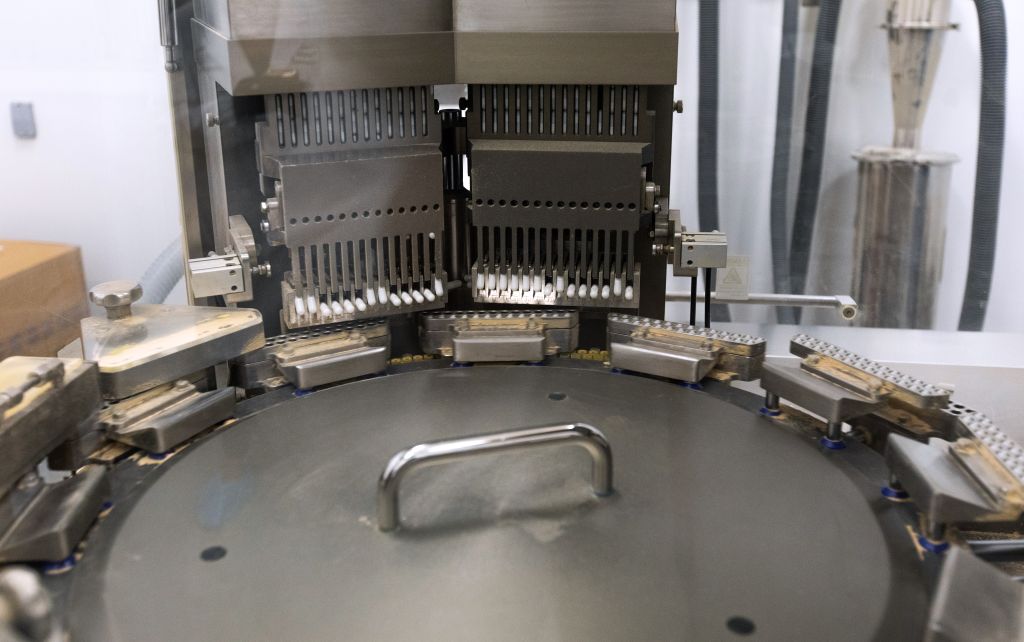
Vitaquest continues to invest in advanced probiotic contract manufacturing capabilities to support the evolving demands of the category. The recent launch of our state-of-the-art Probiotics Manufacturing Suite in Parsippany, New Jersey, reflects this commitment, delivering expanded formulation capabilities, advanced environmental controls, and a 100% increase in probiotic manufacturing capacity. Purpose-built for the precise handling and stability requirements of live microorganisms, this facility enables brands to scale efficiently while maintaining product integrity, potency, and compliance with global quality standards.
Conclusion: Ensuring Success with the Best Formulating and Manufacturing Practices for Probiotics
Successfully bringing a probiotic product to market requires more than a strong concept. It demands strict adherence to probiotic guidelines, from strain selection and clinically supported dosing to packaging, stability, and scalable manufacturing. For brand owners, these decisions directly impact product performance, consumer trust, and long-term market positioning.
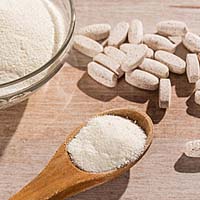
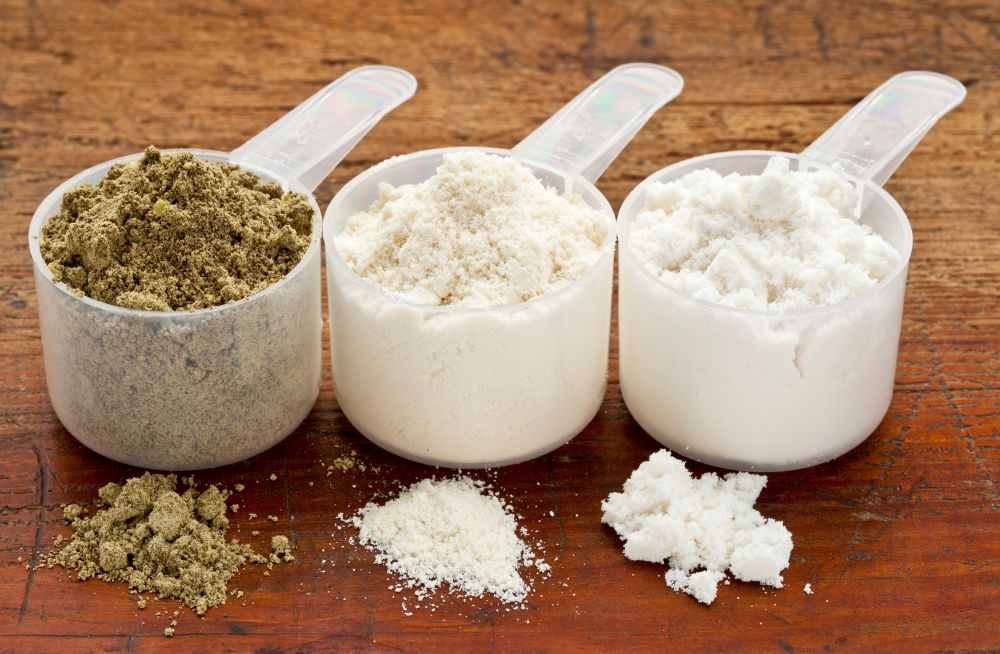
As the category continues to evolve, there is a clear opportunity to differentiate through science-backed formulations, transparent labeling, and high-quality, shelf-stable probiotics that meet consumer expectations for efficacy and convenience. Delivery format also plays a key role in product success, with options such as capsules, tablets, and powders offering flexibility to align with brand positioning and consumer preferences.
Executing this opportunity requires a manufacturing partner with both deep technical expertise and the infrastructure to support precision, stability, and growth at scale. Vitaquest brings more than 45 years of experience across formulation, manufacturing, packaging, and testing, supported by continued investments in specialized probiotic manufacturing capabilities designed to meet the evolving demands of live microorganism products.
Are you ready to create high-quality probiotic supplements for your brand or adjust your existing formula to meet current consumer demand? If so, call 800-526-9095 to speak with one of our knowledgeable production specialists or request a competitive nutraceutical manufacturing price quote!