



















































Key Takeaways
- Choosing the wrong label can delay your product launch. Learn when the FDA requires a Nutrition Facts panel versus a Supplement Facts panel, and how to avoid costly compliance mistakes.
- Nearly identical products may require different labels. Discover why protein powders, meal replacements, and other borderline products are classified differently based on their intended use and marketing.
- Accurate labeling builds trust and protects your brand. Understand how clear FDA-compliant labels improve transparency, strengthen consumer confidence, and reduce regulatory risk.
- Your contract supplement manufacturer can help simplify the labeling process. Read to learn how an experienced nutraceutical manufacturer can help translate your formulation into an accurate, compliant label, helping you avoid revisions and accelerate your path to market.
Consumers often confuse Supplement Facts vs. Nutrition Facts, making clear and accurate labeling essential for informed purchasing decisions. Understanding the differences between these two label formats helps consumers distinguish dietary supplements from conventional foods while building confidence in product quality and regulatory compliance.
For supplement brand owners, compliant labeling is more than a regulatory requirement; it’s an opportunity to educate consumers, communicate product value, and strengthen brand credibility in an increasingly competitive marketplace.
In this article, we’ll answer the questions, “What are Nutrition Facts?” and “What are Supplement Facts?”. We’ll also explain the key differences and similarities between Supplement Facts and Nutrition Facts labels, along with common labeling mistakes brand owners should avoid.
What Are Nutrition Facts?
When comparing Supplement vs Nutrition Facts, it’s important to first understand what each label is designed to communicate. The Nutrition Facts panel is the standardized, FDA-required section of a conventional food or beverage label that provides per-serving nutrient information. It helps consumers evaluate and compare the nutritional profiles of different food products.1https://www.fda.gov/food/guidance-regulation-food-and-dietary-supplements/food-labeling-guide
When Nutrition Facts Panels Are Used
Nutrition Facts panels are required on most packaged foods and beverages sold in the United States. Regulated by the FDA under the Federal Food, Drug, and Cosmetic Act and its implementing regulations, these labels appear on products such as snacks, cereals, dairy products, frozen foods, and beverages.
Certain products may qualify for labeling exemptions,2https://www.fda.gov/food/food-labeling-nutrition/changes-nutrition-facts-label including some fresh produce, seafood, foods manufactured by qualifying small businesses, and products sold in very small packages.
Layout and Structure Requirements
A Nutrition Facts panel must include serving size, servings per container, calories, macronutrients, selected vitamins and minerals, and the % Daily Value (%DV) for most nutrients. Serving information is displayed prominently because it serves as the basis for all nutrient values listed on the label.
FDA regulations also specify standardized typography, nutrient order, spacing, and overall layout to ensure labels are consistent, easy to read, and allow consumers to accurately compare the nutritional content of conventional food products.3https://www.fda.gov/food/new-nutrition-facts-label/serving-size-new-nutrition-facts-label 4https://www.fda.gov/food/new-nutrition-facts-label/daily-value-new-nutrition-and-supplement-facts-label 5https://www.ecfr.gov/current/title-21/chapter-I/subchapter-B/part-101/section-101.4
How Nutrition Facts Support Consumer Understanding
Nutrition Facts panels help consumers monitor portion sizes, calories, and key nutrients so they can make more informed food choices. Because the format is standardized across conventional foods, shoppers can easily compare similar products based on calories, fat, sodium, fiber, added sugars, protein, vitamins, minerals, and % Daily Value.
This consistency makes it easier to evaluate products, support balanced meal planning, and better understand overall dietary intake.
What Are Supplement Facts?
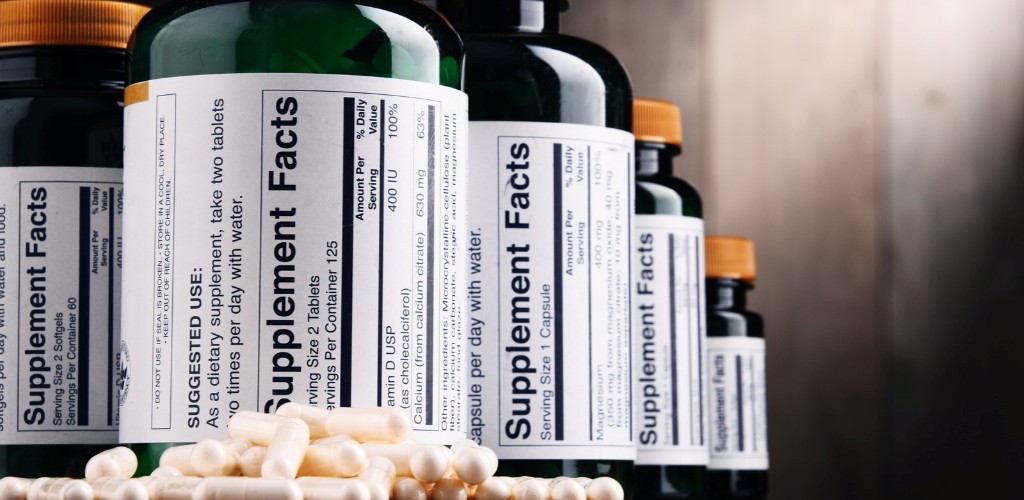
To better understand the Supplement Facts label vs Nutrition Facts label, it’s important to know the purpose of each. The Supplement Facts panel is the FDA-required label for dietary supplements that identifies the composition and amount of dietary ingredients provided per serving. These ingredients may include vitamins, minerals, botanicals, amino acids, probiotics, and other bioactive substances.6https://www.fda.gov/food/dietary-supplements-guidance-documents-regulatory-information/dietary-supplement-labeling-guide
When Supplement Facts Panels Are Used
Supplement Facts panels are required on dietary supplements marketed as capsules, tablets, softgels, powders, gummies, liquids, and other dosage forms. The FDA regulates these labels under the Federal Food, Drug, and Cosmetic Act, as amended by the Dietary Supplement Health and Education Act (DSHEA), with specific labeling requirements outlined in the Code of Federal Regulations (21 CFR 101.36).




Unlike conventional foods, dietary supplements use a Supplement Facts panel to identify dietary ingredients and their amounts per serving rather than a Nutrition Facts panel.7Dietary Supplement Health and Education Act of 1994. Public Law 103-417. 108 Stat. 4325. Enacted October 25, 1994. Available at: https://www.govinfo.gov/content/pkg/PLAW-103publ417/pdf/PLAW-103publ417.pdf
Layout and Structure Requirements
A Supplement Facts panel includes serving size, servings per container, the amount of each dietary ingredient per serving, and the % Daily Value (%DV), when established. Dietary ingredients, including vitamins, minerals, botanical extracts, amino acids, and other substances, are listed individually. Proprietary blends must disclose the total blend weight and list their constituent ingredients in descending order of predominance.
A separate Other Ingredients section identifies inactive components, such as excipients, capsule materials, tablet coatings, flavors, colorants, and preservatives.
How Supplement Facts Improve Ingredient Transparency
Supplement Facts labels identify the dietary ingredients in a product and disclose the amount of each ingredient per serving, helping consumers understand exactly what they’re getting. This standardized format makes it easier to compare formulations, ingredient strengths, and serving sizes across products.
Transparent labeling also helps consumers identify potential allergens, evaluate proprietary blends, recognize key active ingredients, and make more informed purchasing decisions based on a product’s composition and intended use.8https://www.fda.gov/food/food-allergensgluten-free-guidance-documents-regulatory-information/food-allergen-labeling-and-consumer-protection-act-2004-falcpa
Supplement Facts vs Nutrition Facts: Key Differences at a Glance
Understanding Nutrition Facts vs Supplement Facts is easier when you compare the two labels side by side. While both are regulated by the FDA and provide important information to consumers, they serve different purposes and apply to different product categories.
The table below highlights the key differences in purpose, content, structure, and intended use.
| Feature | Nutrition Facts | Supplement Facts |
| Product Type | Conventional foods | Dietary supplements |
| Purpose | Nutritional value disclosure | Supplement composition disclosure |
| Label Usage | Packaged foods & beverages | Capsules, tablets, powders |
| Content Focus | Calories, macros, vitamins | Dietary ingredients, active compounds |
| Structure | Standardized nutrition format | Ingredient-focused format |
| Consumer Goal | Diet evaluation | Supplement intake understanding |
Where Supplement Facts and Nutrition Facts Overlap: Common Borderline Product Confusions
Understanding Nutrition vs Supplement Facts becomes more challenging when products fall into regulatory gray areas. Categories such as protein powders, fortified beverages, and meal replacement products may qualify as either conventional foods or dietary supplements, depending on their intended use rather than their physical form alone.
As a result, two nearly identical formulations may require either a Nutrition Facts panel or a Supplement Facts panel based on how the product is marketed, labeled, and positioned under FDA regulations. This distinction can create confusion for brand owners during product development, compliance, and label design.
Common Labeling Mistakes Brand Owners Should Avoid
Common labeling mistakes include using the wrong panel type, misclassifying products, listing ingredients incorrectly, declaring inaccurate serving sizes, omitting required information, and creating labels that are difficult to read. These errors can lead to regulatory noncompliance, confuse consumers, and increase the risk of costly label revisions or enforcement actions.
Many of these issues stem from a disconnect between product formulation and label development. An experienced supplement contract manufacturer, such as Vitaquest, helps bridge that gap by translating formulation specifications into accurate Supplement Facts or Nutrition Facts panels with proper ingredient declarations, serving sizes, and FDA-compliant formatting.
Involving manufacturing and regulatory experts early in the product development process can help streamline label creation, minimize compliance risks, and reduce the likelihood of costly revisions before launch.9https://www.ecfr.gov/current/title-21/chapter-I/subchapter-B/part-111
Why Understanding Label Differences Matters
Understanding Supplement Facts vs. Nutrition Facts is essential for developing compliant products, communicating ingredient information clearly, and building consumer confidence. Selecting the appropriate label format early in the product development process can help reduce compliance risks, improve label accuracy, and support a smoother path to market.
Whether you’re searching for an experienced tablet supplements manufacturer or a trusted supplement powder manufacturer, Vitaquest can help. Our regulatory, quality, and manufacturing teams work together to translate your formulation into an accurate, FDA-compliant label that aligns with your product and supports a successful launch.
Ready to create your first dietary supplement product or expand your existing product line? Call Vitaquest today at 800-526-9095 to speak with one of our knowledgeable production specialists or request a competitive nutraceutical manufacturing quote to get started.
Frequently Asked Questions about Supplement Facts vs. Nutrition Facts
Is it better to get nutrition from food or supplements?
Food should always be the primary source of nutrition because it provides a wide range of essential nutrients, calories (energy), and other beneficial compounds. However, many Americans fall short of recommended dietary intakes of macronutrients (i.e., protein, carbohydrate, fat) or micronutrients (i.e., vitamins, minerals, antioxidants, etc.). Carefully selected dietary supplements can help fill nutritional gaps and support overall health when used alongside a balanced diet.
Can a product display both Supplement Facts and Nutrition Facts panels?
No. A product must display either a Nutrition Facts panel or a Supplement Facts panel based on its regulatory classification. Conventional foods use Nutrition Facts, while dietary supplements use Supplement Facts. Although the two labels share some similarities, FDA requirements do not allow both panels to be on the same product.
Why do Supplement Facts labels often include ingredients not shown in Nutrition Facts?
Unlike conventional foods, dietary supplements may contain dietary ingredients such as botanicals, amino acids, probiotics, and other bioactive substances that are not typically listed on Nutrition Facts panels. Many of these ingredients do not have established Daily Values but must still be identified and quantified on the label.
Can health claims be made with a Supplement Facts or Nutrition Facts label?
Dietary supplements and conventional foods are subject to different rules for health-related claims. Supplements may use structure-function claims that describe how a nutrient or ingredient supports normal body structure or function, such as “supports bone health” or “helps maintain digestive health.” Conventional foods can also make certain structure-function claims, but they are more commonly associated with FDA-authorized health claims, such as the relationship between fiber and heart disease, which link a food or nutrient to a reduced risk of a disease or health-related condition when specific regulatory requirements are met.
How can incorrect labeling impact a supplement or food brand?
Incorrect labeling can result in regulatory action, warning letters, product recalls, and costly label revisions. It can also confuse consumers, undermine confidence in a brand, and increase the risk of purchasing decisions based on inaccurate, incomplete, or misleading product information.
Why is clear label communication important for supplement brands?
Clear labeling helps consumers understand a product’s ingredients, serving information, and intended use while supporting informed purchasing decisions. Accurate, easy-to-read labels also strengthen brand credibility, reinforce consumer trust, demonstrate FDA compliance, and reduce the risk of confusion or labeling-related regulatory issues.